2 minutes ago
The Viking mysterious stone warns climate change
Periskopi(6 years ago)
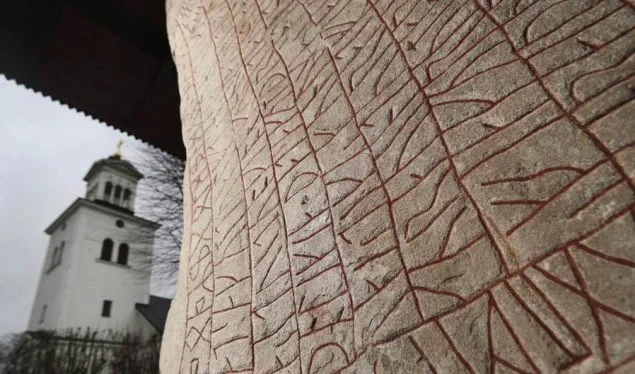
(6 years ago)A Romanian inscription of the Viking era, carved in stone, may be a footnote of a ninth - century climate disaster in Scandinavian, shows a new study by a team of Swedish experts. On the rock called “Rock”, near Lake Watern in central Sweden, it has been carved, it is believed, “the most long runic”
On the rock called “Rock”, near Lake Watern in central Sweden, it was carved, it is believed, “the world's longest invite “It is made up of more than 700 “runic” letters of the Old German alphabet.
Researchers have long considered the five-ton rock, 2.5m long, as a memorial to a dead boy, with a heroic story about the Viking kings and the battles they fought, Kosovo Presses broadcast.
But four Swedish scholars who have joined in interpreting the inscription say in a paper published this week that parts of the text mention a natural danger, not a military battle.
“We believe this is a matter of cosmic balance,” said University of Gotthenburg Professor Per Holmberg, who conducted the study.
“So far we may have focused very much on the importance of military force in that text, but that in this inscription it is the most important religious power to hold the cosmos together”, Holmberg added.
An inscription on the rock for the sun's <x0) death nine generations ago” could refer to the extreme cooling of climate 535-536, which caused a lack of crops and hunger worldwide.
The powerful Viking era “saw itself as guarantor of a good harvest,” said Olof Sunquist, professor of religious history at Stockholm University.
“They were the leaders of a cult believed to have maintained the fragile balance of light and darkness,” he explains.
“Norwegia” ) German North Mythology describes “Fimbulvinter” The brutal winter that preceded the world's “In the 9th century, there was reason for the Vikings to fear that such a winter would come and wipe out all life on Earth, said Professor of Archaeology at the University of Uppsala, Bo Grasund.
Before rising the rock with the motor inscription, there were many events that probably looked extremely ominous: a strong solar storm painted the sky in dramatic shade with red, harvest yields were low due to extremely cold summer, and an eclipse later occurred one morning after dawn, “the Grassund.
“Even one of these events would be enough to create fear among Vikings for another” Fimbulvinter “,” he said.