9 minutes ago
Qasem Solejmani: Why was he killed now, and what will happen next?
Periskopi(6 years ago)
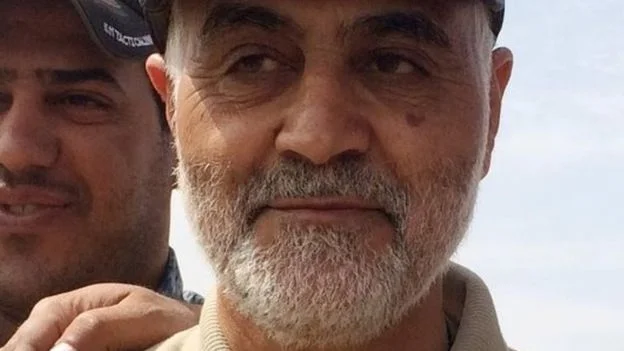
(6 years ago)The murder of Gen Qasem Solemann, commander of Iran's Wood Forces, is a dramatic transition to the level of conflict between the US and Iran. Expiation is expected. A number of shares and penal measures could result with bringing two states closer to confrontation. Washington's future in Iraq can also be questioned. [...]
The murder of Gen Qasem Solemann, commander of Iran's Wood Forces, is a dramatic transition to the level of conflict between the US and Iran.
Expiation is expected. A number of shares and penal measures could result with bringing two states closer to confrontation.
Washington's future in Iraq can also be questioned. The strategy for President Trump's region, if there is one, will be tested as never before, the BBC writes.
Former Middle East White House co-ordinator Philip Gordon has said this is a declaration of war by Americans against Iran. The most interesting thing isn't that Soliman was on President Trump's watch but more than why should the U.S. kill him now?
An American civil contractor was killed. But earlier in Iranian countertank operations in Gulf; the collapse of an American air vehicle; even the mayor's attack on a Saudi oil company were delivered without any direct response from the US.
The Pentagon's statement about the murder of Solejman was that plans were constantly being made to attack US diplomats in Iraq and the region.
Now the big question arises. President Trump will now hope that with such an act, he has proved to Saudi Arabia that the US is still strong. However, it is almost impossible that Iran will not respond, even if not immediately. Five thousand American troops in Iraq are potential targets. Tensions will be higher in Gulf, while the US and its allies will seek their protection.
Washington has already sent a small number of reinforcements to the embassy in Baghdad. It will plan to boost its military influence in the region if necessary. But it is possible that Iran's response is not just a blow. He may want to play with the support he has in the region through what Soleman has created over the years.
For example, he could surround the American Embassy in Baghdad, leaving the Iraqi government in a difficult position, or he could organise demonstrations as coverage of other attacks.
The assault against the Kurdish forces was a clear demonstration of US military intelligence and capabilities.
But was it the smartest thing to do by President Trump? How much is the Pentagon prepared for the inevitable consequences? And what does this attack tell us about the region's Trump strategy? Has this changed in any form? Is that zero tolerance for Iranian operations? Or was it just that the President got rid of an Iranian commander who named him a very bad “man, ”, follows the periscope.