2 minutes ago
Political stalemate in the country creates serious economic damage that has not been repaired for years

Periskopi(6 years ago)
(6 years ago)The political crisis in Kosovo as a result of the delay in forming new institutions stemming from the 6 October elections, has created multidimensional effects on the area of the economy and is expected to be a difficult year for our country. Political noise that our country is facing now and []
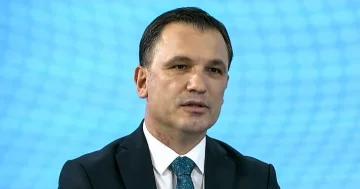
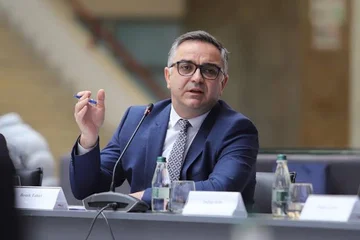
The political figure our state is facing now and for many months, according to the chairman of the Kosovo Economic Ode, Berat Rukiqi, has negative effects on all processes in society in general, but also the economy in particular.
Rukiqi in an interview for KosovoPress claims it is the third time the country has such a situation with post-election delays for the government's constitutionalisation, which, according to him, is making the functioning of the government and parliament impossible.
This institutional vacuum, according to Rukiqi, does not only pose a problem for the state budget, but also the risk is economic depression that poses consequences throughout society.
The “is not only budgetary problem, but it is the overall problem of functioning the state, the discouragement that then creates that can lead to an economic depression and that there are other consequences in society and general developments in the society”, Rukiqi says.
The head of OEK adds that on the basis of research done earlier, even in past periods when there has been political and gas-lots in the assembly, there has been a notable reduction of the privacy of doing business country, even on the part of local and foreign companies, so these current political circumstances reflect in all sectors.
The decline in foreign investments, unemployment and exports, according to Rukiqi, are the elements that connect with the current situation in the country and repair these damage takes years.
Even according to the OEK leader, there is a tendency to increase migration in general due to a lack of perspective for young people in Kosovo.
We have a decline in foreign direct investments, we almost have no export growth at the same time, and we have a trend of reducing population numbers. All of this is noted in important indicators that can easily prove and repair these damage is not a matter of months or a short term, but it takes much longer than at the same time we have a much more pronounced stability in countries in the region that have become much more competitive, especially in terms of foreign investment”, he says.
Rukiqi also says that in the past three to four years, there have been more policies that serve more daily consumption, but do not advance the country's development agenda.
All of this is related to what is the basic function of Government, to create good policies and to adopt laws that enable the implementation of these policies through parliament, these are actually inespective in the circumstances that there is a government in resignation and that has only a cautionary or fundamental role for reform or positive changes for businesses, we almost have no activity”, Rukiqi says.
The Haradinaj government has resigned since July last year, while elections have been held on 6 October and the new government has not yet been formed due to the failure of the two largest parties out of parliamentary elections, which are in negotiations for more than three months.