a minute ago
Kosovo's ethnic-type tax and market
Periskopi(6 years ago)
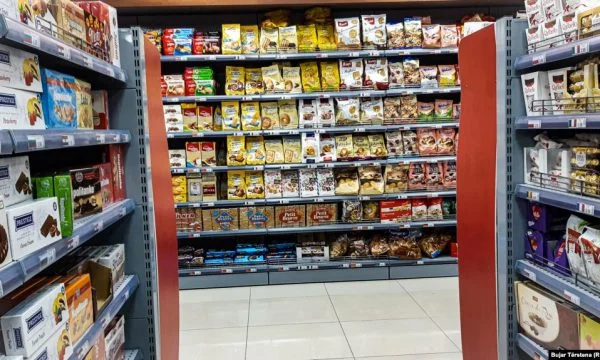
(6 years ago)After more than a year of tax enforcement to all imports from Serbia and Herzegovina, the Kosovo market, for the most part, has been emptied of products imported from these two countries. While in ten municipalities inhabited with Serb populations, the stores are encountered in quantity [...]
According to official data, about 6m euros are reportedly imported goods from Serbia and Bosnia and Herzegovina.
The Adriatic Stavileci, spokesman in Kosovo Customs, told Radio Free Europe that of the total amount, 4m euros are goods from Serbia, while 2m others from Bosnia and Herzegovina.
Otherwise, before the tax was imposed, the amount or value of Serbia's imported goods in Kosovo amounted to about 450m euros, or over 1.2m euros per day.
Stevilec says that if compared with the first tax period, there is a drop of up to 99 percent of products from these two countries.
However, although the decline in imports from Serbia, according to official figures is 99 percent, in Serb-run municipalities inhabited by majority, in four northern municipalities, but even in those in the central part of Kosovo, products from Serbia can readily be encountered. That is how Serbian citizens themselves claim to live in these municipalities.
Verica, a citizen of northern Mitrovica, says it can be supplied with all the items, as well as before the tax.
It's all... it's all money. It's the money.
Serbia's products are also found in Gracanica, located about 10km east of Pristina.
Milica, also from Northern Mitrovica, says there are products, but she prefers to provide for herself in Serbia, due to cheaper prices than in the Kosovo market.
I don't buy anything here. All the things I get from Serbia because here are twice as expensive. All the things I need, I drive in the car and I pick them up in the District and bring them here. Here I buy milk and bread, and I bring these other things from Serbia”, Milica said.
That products or goods from Serbia and Bosnia and Herzegovina are present at stores in Serb majority municipalities, has not denied even Kosovo Customs Director Bahri Berisha. He in an interview with Radio Free Europe has said that These goods are in small quantities and does not influence Kosovo's legal trade.
The Kosovo Government's decision on the tax on imports from Serbia has also affected citizens or buyers in Kosovo, especially the majority population. They say they do not prefer products from Serbia, which even for much of the market in Kosovo, exempting Serb-run municipalities, have already disappeared from sales windows.
Nezafete Jakupi of Pristina, who works in the education sector, acknowledges that prior to the tax setting, it has been supplied with several products from Serbia, but after implementing this tax, she says neither has she bought any more products from Serbia nor is it eating at these goods in stores.
“After taxes even though I don't see aSerbia's flagsI am no longer stocked with products from these countries. Prices in some products have increased, but not much”, Jakupi said.
Another tax effect is precisely its impact on rising prices on the Kosovo market.
Fidani Cerkini from Pristina says there are no goods from Serbia and Bosnia and Herzegovina in stores, but prices in some articles have increased.
What is noted is that from tax implementation prices have increased, some with reason and some without reason. For example, the coffee imported from Italy has been expensive, which I find unreasonable. Even for necessary daily products, prices have increased, as most products have been imported from Serbia”, Fidan said.
Local production capacities increase, but prices
For the lack of products from Serbia, but also those from Bosnia and Herzegovina, traders have been careful to replace them with imported goods from other countries. Based on Kosovo Customs statistics, Germany has increased exports to KosovoFollowing are Turkey, China, Albania and Italy.
Before the customs tax was imposed, Serbia was the largest exporter of products in Kosovo. This state, before November 21st, of 2018 when taxes were imposed 100 per cent during one day has exported goods worth about 1.2m euros or about 450m euros in one year to Kosovo. Implementation of the measure for products from Serbia, according to representatives of producers in Kosovo, has contributed to increased production capacities, increased employment rates, and therefore increased financial revenues.
Tax effect, Serbia's goods decrease markedly on Kosovo market
According to a survey conducted with businesses by the Producer Club, some of the production businesses have increased employment by up to 30 percent, as well as expanded their activities.
Astrit Panja, executive director of the Club of Producers, has told Free Europe Radio that the decline in competition from Serbia has contributed to the specific production sectors being beneficial by imposing a 100 per cent tax.
“The impact has been multidimensional in terms of the benefits the producers have received from setting the 100 per cent fee on Serbia. There are many sectors that have benefited. I would isolate him food processing sectorDrinks fresh, oil and many more. There has also been growth in wood processing, plastic processing sector. These have been sectors that have had competition from Serbia”, Panja says.
Meanwhile, two former opposition parties -- Vetevendosje Movement and the Democratic League of Kosovo -- are expected to come to power in Kosovo. These subjects, aimed at forming the ruling coalition, have warned that tax or customs duties could be replaced more fully in reciprocity measures against Serbia and Bosnia and Herzegovina.
The tax is expected to turn into reciprocity
But outgoing Kosovo Prime Minister Ramush Haradinaj has asked the new government not to remove the tax, as according to him, such an action can only happen when Serbia recognises Kosovo's citizenship.
The future government makes a lot of mistake if it experiments to remove the tax, but no debt is due to the international tax factor”, Haradinaj has declared.
In contrast, along with economic effects, the tax has borne political effects. Placing the government's tax on Kosovo's secession was in response to the policies of Serbia and Bosnia and Herzegovina against Kosovo citizenship and its membership in international mechanisms and organisations.
The European Union and the United States of America have consistently demanded suspension or annulment of this tax, naming it contrary to principles CEFTA agreement for the freedom of circulation. The tax setting, Belgrade has named it an obstacle Even for continuing dialogue between Pristina and Belgrade, relieved by the European Union. For this reason, since the establishment of this move, dialogue between Pristina and Belgrade has remained interrupted.
On the other hand, authorities in Pristina, the outgoing Government, respectively, had consistently declared that the 100 per cent tax on goods imported from Serbia and Bosnia and Herzegovina does not pose an obstacle to continuing dialogue, but the obstacle lies in Serbia's unwillingness to recognise Kosovo.