2 hours ago
Kosovo joins the late LNG regional project, we support gasification of American coal
Periskopi(2 days ago)
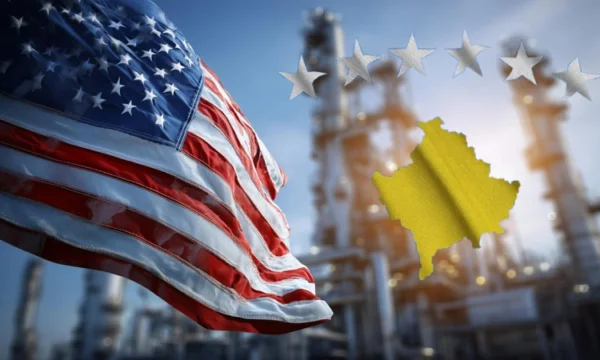
(2 days ago)The United States is inviting Kosovo to join regional liquid natural gas projects (LNG), arguing that energy security is essential for economic development and attracting foreign investment.
In an interview for Kosovo, the official for economic issues at the American Embassy in Pristina, Micah Savidge, says Kosovo risks losing significant investment opportunities if it does not secure sustainable energy supply. It speaks of the role of US LNG, the potential of lignite gasification, investments in renewable energy and regional gas projects, stressing that Kosovo's energy future should be based on a combination of resources and not on a single technology.
Can you tell us, please, why are the United States of America so interested in selling liquid natural gas (LNG) to Kosovo?
Micah Savridge: Thank you for the question and welcome to the embassy. So in February of this year, during the Transatlantic Gas Security Summit held in Washington, D.C., twelve Eastern European countries signed the joint declaration for strengthening the safety of natural gas supply to Europe. So the goal was to diversify gas sources and routes, in the context of the European Union's gradual departure from Russian natural gas dependence on European partners and allies, so that natural gas infrastructure using liquid natural gas (LNG/LNG) from the United States is planned to cover all Western Balkan countries, except Kosovo. So when we talk to American businesses, and we do that often here at the embassy, they express interest in expanding to Kosovo because of the new population, the recognition of English, the good level of education and skills, but they require sustainable energy supply. Kosovo risks losing US investments in the absence of reliable electricity supply, and for this reason, Kosovo -- as the most pro-American country in Europe -- is being invited to join the United States regional project to work together in strategic investments and strengthen our partnership for a long-term period in the future.
Why can Kosovo not simply exploit its lignite reserves for energy supply?
Micah Savridge: Yes, of course, for decades, Kosovo has benefited from its local energy resources and they remain an important part of the country's energy system. American companies, such as General Electric, have been involved in the current coal power plants. Real energy security, however, is not achieved by relying on a single source of energy. A more varied mix of energy resources offers stability, increases the system's credibility and gives Kosovo more opportunities as regional and global energy markets continue to change. The question is not simply „The question is how Kosovo builds sufficient and reliable energy capacities for the future. Economic growth, industrial development and increased investment require sustainable and competitive supplies with electricity, and additional energy generation opportunities can reduce Kosovo's exposure to costly electricity imports, especially during regional high demand periods, especially during winter in Kosovo.
For this reason, we are promoting access to liquid natural gas (LNG) and to regional gas infrastructure not because this would replace Kosovo's existing resources, because it does not, but would add Kosovo another tool in its energy portfolio, improve the flexibility of the system and reduce dependence on a single resource, which is coal. I would like to point out that states with various power supply systems around the world are generally in a better position to cope with unexpected price movements, supply cuts and market conditions, and that we would like for Kosovo.
What is coal gasification and can Kosovo use this?
Micah Savridge: There have been many media reports, so let me explain that the possible coal gasification project and the possible LNG gas pipeline project are separate projects, but we fully support both. In particular, coal gasification is the process that turns coal, including lignite (which Kosovo has) into synthetic gas, also known as syngas, which can be used for electricity production, can help produce industrial products, chemicals, synthetic fuels, and other valuable by products. Since Kosovo has so many sources of lignite, the United States supports researching the use of innovative technology and opportunities that can help Kosovo make better use of its local resources. The United States has even engaged in American companies to understand better what it can be technically and commercially feasible, and we welcome opportunities for further discussions on the issue. Once again, however, Kosovo's long-term energy security will require mixed energy sources, including additional production capacities and access to multiple energy sources. No single technology or energy source is the only solution.
What about renewable energy? Can Kosovo produce more such energy?
Micah Savridge: Yes, of course, Kosovo can produce more renewable energy and we fully support the growth of production capacities from renewable sources. We hope that these capacities will continue to expand to help meet the future energy demand, strengthen energy security and support Kosovo's economic growth. Renewable energy is certainly an important part of Kosovo's strategy for a diverse energy portfolio. Also, we have assisted American companies operating in the renewable energy sector and they are making new energy investments in Kosovo. In particular, I would mention the Millennium Challenge Corporation's compact program (Millenium Challenge Corporation MCC) worth $202 million, which concerns the battery storage project. This $202 million is the United States. The Kosovo government has contributed $34m. The battery energy storage project will help improve energy network credibility, lower energy costs and enable Kosovo to better integrate new energy sources. I've asked my colleagues at the MCC and they have confirmed that the programme is currently continuing according to plan. They have completed projects and preparations, including providing necessary permits and carrying property. The procurement process for building the battery system is under way. Also, they are working with Kosovo and have established a new body, the Energy Conservation Corporation, which will be responsible for managing the battery system in the future.
If Kosovo agrees to import LNG, will it be competitive in terms of price? Who gives the money?
Micah Savridge: We believe that access to liquid natural gas, supported by a long-term supply agreement with an American supplier, has the potential to provide Kosovo with more predictable energy costs and to support the competitive local electricity production even in the future. I think that Kosovo's current dependence on electricity import exposes consumers and businesses to regional market fluctuations, especially during high demand periods and limited supply. I would like to stress that, according to customs data, Kosovo has spent approximately 735m euros on electricity imports, including 259m euros during the past four years alone during 2025. Without additional production capacities, Kosovo will likely continue to rely on electricity imports to meet its future requirements. Therefore, here is an important question for Kosovo: how best to strengthen long-term energy security? Is it better to provide predictable energy supplies for local electricity production, where expenses can be predicted more easily, or is it better to depend on the import of electricity from neighbouring market prices that Kosovo cannot control and remain vulnerable to external fluctuations?
What is the regional context? Are all of Kosovo's neighbours connected to US LNG?
Micah Savridge: Not yet, but there are plans to connect all of Kosovo's neighbours and most of Europe with gas pipelines that will be supplied to US LNG. Since infrastructure will be built over the next few years and then supply contracts will be finalised, the sooner Kosovo decides to join regional integration, the better the conditions will be with the contracts it can secure. If Kosovo waits, then opportunities will be lost. An example of this is the pipeline from Greece's Alexandroupolis in Skopje, North Macedonia, which is currently being completed. But in May, at the end of May, half of the planned final capacity that will pass through that pipeline has already been earmarked by Serbia, which will receive it through another link. So if Kosovo had acted earlier, it could have been able to secure a larger portion of the future supply capacity.
What is your position regarding the latest proposal that Kosovo be linked to the gas terminal in Vlora?
Micah SavridgeYes, as far as I know this project has not yet been fully finalised, so it is difficult to discuss it with more details. However, we welcome Kosovo's readiness to invest in natural gas infrastructure in the region and see as a positive sign of the fact that Kosovo can decide to build natural gas infrastructure within the country once in the future. But, I would like to stress that the energy decisions Kosovo makes today will be echoed in its future, so ensuring the sustainable energy supply is essential to Kosovo's development path and the speed with which it can meet the European Union's living standards. For this reason, we strongly urge Kosovo to consider further investments in natural gas, including the possibility of building a natural gas plant in Kosovo, which, if built with sufficient capacity, could cover Kosovo's domestic energy needs and even create the possibility of exporting electricity to neighbouring countries.
I believe, like many energy experts, the future will be increasingly intense in terms of energy. The more processes and technologies are electrified, the greater the demand for energy. Kosovo must prepare properly for this future. As Jobwork has said in its editorial: energy security is national security, and the United States is willing to start a structured dialogue to discuss ensuring Kosovo's energy future through a mixture of different energy sources involving coal, gasification, LNG and renewable energy sources.