5 minutes ago
Kosovo with full challenges on track to UN, NATO, EU
Periskopi(6 years ago)
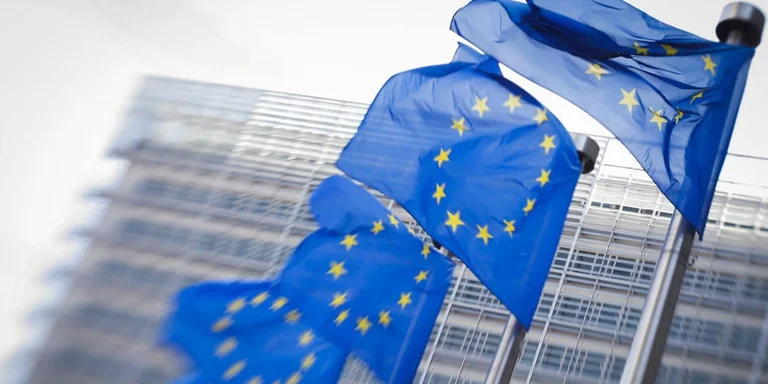
(6 years ago)The goal of Kosovo institutions, according to repeated statements by the heads of state, is to have the country as soon as it is a member of the United Nations Organisation (OKB), NATO member and integrated country in the European Union (BE). Awareers of political developments estimate that Kosovo is in a very delicate situation for [...]
Awareers of political developments estimate that Kosovo is in a very delicate situation to move towards membership in these international organisations and mechanisms. According to them, an agreement with Serbia on normalising relations would pave Kosovo's way towards membership or its approach with key organisations and mechanisms in the world today.
Analyst Butrint Berisha from the Pristina Institute for Political Studies tells Radio Free Europe that ideal for Kosovo would be its membership in the UN as an equal state with other member states.
According to him, UN membership means that a state is fully integrated within the international system and that it is willing to be part of any other mechanism by taking on international law obligations and responsibilities.
But, he recalls that to get a seat at the UN, Kosovo could face the challenge of supporting Russia and China in the Security Council, which, according to him, could block its application from appearing at the General Assembly at all, where it takes two-thirds of the vote that a state needs for membership.
Whatever the case, Russia and China's veto would block everything even before it came so far”, Berisha says.
Naim Rashit, director of the Balkan Policy Group in Kosovo, tells Radio Free Europe, that the current obstacles Kosovo has before itself for UN membership or other international organisations and mechanisms could be avoided if the agreement on normalisation of reports with Serbia is already reached.
He stresses that with mutual recognition that could be achieved through a Kosovo agreement, Serbia would remove other obstacles that could be created by countries that do not recognise Kosovo's independent state, including Russia.
Then each other path would be resolved. The next step would be NATO membership and the opening of negotiations in the EU”, Rashi points out.
He thinks that the eventual agreement with Serbia would also greatly help Kosovo's integration into the EU, easing the refusing attitudes of some countries like Spain, which do not recognise independent Kosovo.
An agreement between Kosovo and Serbia on the two German model or something less, Rashi points out, would suffice for Spain to recognise Kosovo by what it underlines, it would pave the way for Kosovo to exceed other barriers on its path to NATO integration, where not all member states also recognise it as a state.
Rashit considers that recognising Kosovo by all EU member states would pave the way for it to apply for EU membership candidate status.
“The UN seat would accelerate Kosovo's integration into NATO first and then into the EU. Kosovo's top international friends in a quick phase, if there is an agreement with Serbia, would be careful that Kosovo will quickly be prepared for NATO-bound”, Rashi estimates.
Life Krasniqi, analyst from the Kosovo Democratic Institute, tells Radio Free Europe, that Kosovo has all its policy designed towards European integration and Euro-Atlantic integration.
Krasniqi also claims that before any process, the issue of Kosovo-Serbia dialogue will currently play a very important role in relation to the five non-recognising states of Kosovo and in relation to Kosovo's position in the international arena.
The “should be seen how this process of dialogue will go along, since we know that in the UN, membership will be difficult until Russia's veto opportunity is lifted. While in NATO as well, we have the issue of the rest of Kosovo's non-recognising states. For us, the important thing is that Kosovo does not remain isolated and that it does not remain the only state in the region or even in Europe, which still looks like a state with an unconvented citizenship”.
What we're looking for must be that we get recognition from non-EU states. Have clear European perspectives and certainly seek UN membership and then NATO “, Krasniqi claims.
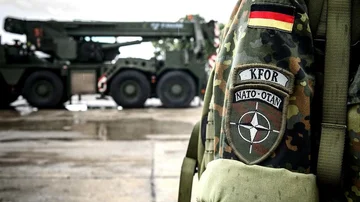
The Atlantic Alliance, NATO, is present in Kosovo through the KFOR peacekeeping force, which in Kosovo is deployed with the Security Council mandate through Resolution 12 44. Despite the fact that all neighbouring Kosovo countries have joined NATO's Partnership for Peace programme, Kosovo is the only country left out of this programme and NATO's enlargement process.
Analyst Butrin Berisha says after Kosovo's declaration of independence, NATO has maintained strong neutral approach to it, due to the four member states that do not recognise Kosovo.
“In this situation, I find it difficult to have concrete moves for contractual agreements with NATO, even because of the current mandate KFOR has under Resolution 1244, even because of non-recognition by four member states”, Berisha says.
Kosovo has contractual relations through the signing of a Stabilisation and Association Agreement. But when it comes to Kosovo's EU membership, analysts say Kosovo is still far from that goal.
First, they say, Kosovo is still far away in the process as the last country in the region, which has neither submitted the application for membership, nor have we even received visa liberalisation.
Second, according to them, the EU's approach to enlargement is changing and will likely have a modified enlargement policy at the Zagreb Summit, which will make membership dedication even more difficult.
And third, even if the membership process starts and it goes in the best way, according to analysts, the whole process takes years to finalise, with the opening and closing of 35 chapters. / REL