4 minutes ago
US-Iran relations over the years
Periskopi(6 years ago)
(6 years ago)From the orchestra for the removal of Prime Minister Mossadeq in 1953 to tensions and confrontations during President Trump's mandate, the BBC brings back a look of more than 65 years of relations between the US and Iran. 1953: The end of the US and British intelligence agencies of Mossadeq are organised to leave his post, [...]
From the orchestra for the removal of Prime Minister Mossadeq in 1953 to tensions and confrontations during President Trump's mandate, the BBC brings back a look of more than 65 years of relations between the US and Iran.
1953: The End of Mossadeq
US and British intelligence agencies are organised to drop off his post, Prime Minister Mohammad Mossadeq. The secular leader had sought to turn the oil industry into a state.
1979: Iranian Revolution
Iran's Shah, Mohammed Reza Pahlev, is forced to leave the country on 16 January, after months of demonstrations and attacks against his rule by religious and secular opponents. After two weeks, the Islamic leader, Ayatolah Khomeni, returns from exile.
Under a referendum, the Islamic Republic of Iran is announced on 1 April.
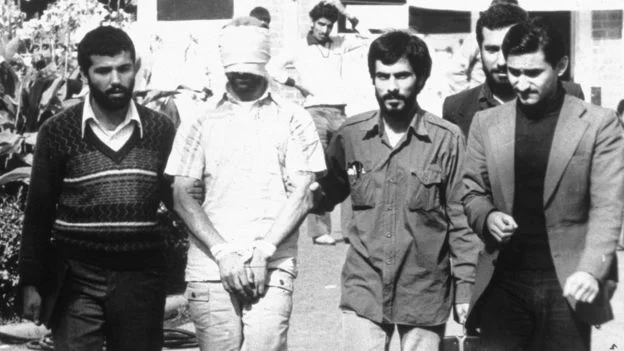
1979-81: Hostage Crisis of US Embassy Members
The US Embassy in Tehran is taken by protesters in November 1979 and taken American hostages within the facility for 144 days. The last 51 hostages released in January 1981 on the day of the inauguration of American President Ronald Reagan.
1985-86: Iran's Contra scandal
The US secretly sends weapons to Iran in exchange for Tehran's help in freeing hostages held by Hezbollah militants in Lebanon.
But profits illegally go to the rebels in Nicaragua, creating a political crisis in Reagan.
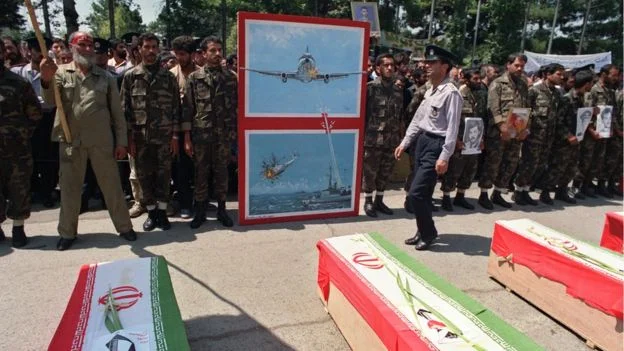
1988: Iran passenger plane crash
The American warship USS Vincennes crashed an Iranian plane in Gulf on August 3rd, leaving 290 people dead on the plane. The U.S.A. said he was confused by a military jet. Most of the victims were Iranian pilgrims who were on their way to Mecca.
2002: What the hell?
President George Bush had denounced Iran for being part of the Evil Box, along with Iraq and North Korea. This statement had caused frustration in Iran.
2000: Nuclear fears and sanctions
In 2002, an Iranian opposition group claims Iran is preparing nuclear equipment, including uranium-rich factories. The US accuses Iran of a nuclear weapons programme Iran opposes. Several successive sanctions are imposed by the US and the EU against conservative President Mahmoud Ahmadidead.
2013-2016: Closer ties and nuclear agreement
In September 2013, a month after President Hassan Rouhan, he and US President Barack Obama speak on the phone, the first time in a conversation of this high level in more than 30 years. In 2015, after some diplomatic activities, Iran accepts agreement on the nuclear programme with a group of world powers, such as P5+1, the US, Great Britain, France, China, Russia and Germany. Under the deal, Iran agrees to limit sensitive nuclear activities and accepts international inspectors in exchange for lifting economic sanctions.
2019: Tension in Gulf
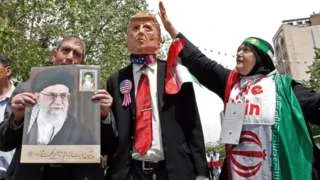
In 2018, US President Donald Trump overturned the nuclear agreement before the restoration of economic sanctions against Iran and threatened to do the same for states that continued to buy oil from Iran.
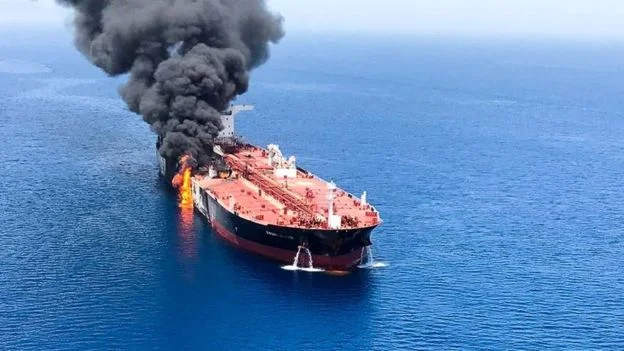
Iran's economy falls seriously. Relations between the US and Iran are difficult in March 2019, when the US tightens sanctions for Iran's oil export. In response, Iran begins anti-pression campaign. In May and June 2019, six oil tankers are bombed in Gulf and the US accuses Iran. On June 20th, Iranian forces down a US military threat, with the explanation that it was on their territory.
2020: The murder of Qasem Soleman
On January 3, 2020, Iranian Army Commander Gen Qasem Solejmani is killed by a US attack. Iran cheers for its death and brings back the 2015 nuclear agreement. /Periscopi/