37 minutes ago
EU's crucial year in relation to Western Balkans
Periskopi(6 years ago)
(6 years ago)The year 2020 has been warned in Brussels as a <x0 decision-making> ” for the fate of the Western Balkans. The European Commission has warned that in January it will propose a new methodology for enlargement. Brussels plans until the May summit in Zagreb to draft an efficient plan for the enlargement process. On the other hand, countries like [...]
The year 2020 has been warned in Brussels as a <x0 decision-making> ” for the fate of the Western Balkans. The European Commission has warned that in January it will propose a new methodology for enlargement. Brussels plans until the May summit in Zagreb to draft an efficient plan for the enlargement process.
On the other hand, countries like France and some others are reluctant to support without reservation this process, due to domestic political problems.
The start of this “]eficiate process comes in the period when Great Britain will leave (at the end of January) the European Union and when many things are unknown. As elections approach Serbia, Montenegro, Northern Macedonia, and perhaps some other Western Balkan countries. It is therefore thought that any enormous BP approach to the EU is not possible under these conditions.
Support of the fastest process?
My “aim is for next year and during my five-year mandate to accelerate the process of bringing the Western Balkans closer to the European Union and strengthen membership perspective“, Enlargement Commissioner Oliver Varhely said in December for Deutsche Welle.
He claims the European Commission will support opening negotiations with Albania and Northern Macedonia. The important thing is that the positive decision is made long before the Zagreb summit in May”, says Oliver Varhely.
„First, powerfully we will accelerate reforms in all countries of the region. These reforms should be manifested on the ground and enable economic development and a better life for citizens, enabling access to the EU”, the Hungarian commissioner states.
Second, according to him, the process should be more objective, to remove some countries' concerns. But not changing the rules of the game.
And the third important point, according to the Hungarian commissioner, is supporting the economic development of this region from investment funds. My “ambition is to promote economic development and that by the end of my mandate, at least one of these countries can join the EU. As others go too far in this negotiation process“, Oliver Varhely finds out in his DW statement.
“crucial “
Representatives of European institutions have indicated that negotiations for the membership of Albania and Northern Macedonia can open in the spring, with the explanation that “would be correction of historical error“. But France still has reservations and states that the process can only be opened if agreement on reform of the membership process is reached earlier.
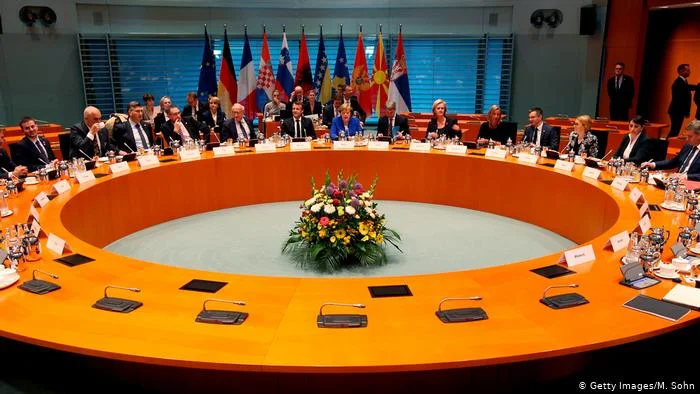
This theme should be addressed at the EU summit in March, but it is a big question whether all EU member states will support the process of opening negotiations with Tirana and Skopje. The success of the Zagreb summit in May of this year depends largely on this decision. EU member states and leaders of Western Balkan countries are expected in Zagreb to determine the frameworks of the EU's developments and enlargement process in the next ten years.
But those who convey developments in the Balkans know that this region's prospect for membership has opened since 2003 in Thessaloniki. And that promise was only fulfilled in Croatia, which was member in 2013. The summit, held in 2018 in Sofia, has been praised as <x0 vs”, but it was this summit where French President Macro for the first time publicly demanded that EU internal reform be made prior to enlargement.
The strategy published in 2018 said that Serbia and Montenegro could join the EU by 2025. In time, doubts about this are increasing.
Greater Problems in the Region
The Western Balkan region itself says it is not known at all which direction it should go and how long this road will last. Montenegro and Serbia, which are considered leaders in the process, will face parliamentary elections this year. Not all political forces in these countries support reforms. In 2019, Montenegro has not opened the last chapter remaining in negotiations, while Serbia has opened only two chapters.
Both countries have major problems with law enforcement, all of which stress progress reports.
Commissioner Oliver Varhely and new European diplomat chief Josep Borelli have warned that they will be strongly engaged in continuing dialogue between Kosovo and Serbia. But the government in Kosovo has not yet been created, which has forced Borelli to cancel anticipated visits to Pristina and Belgrade.
Borrell claims that besides Belgrade-Pristina dialogue, one of the priorities in his work will be the situation in Bosnia and Herzegovina. Brussels has called for the establishment of the Council of Ministers in Sarajevo, with the explanation that 2020 will be very important even because of local elections in this country.
All these processes must be developed at the time when Great Britain will leave the EU, which will certainly not simplify the BP's approach process with the EU.