5 hours ago
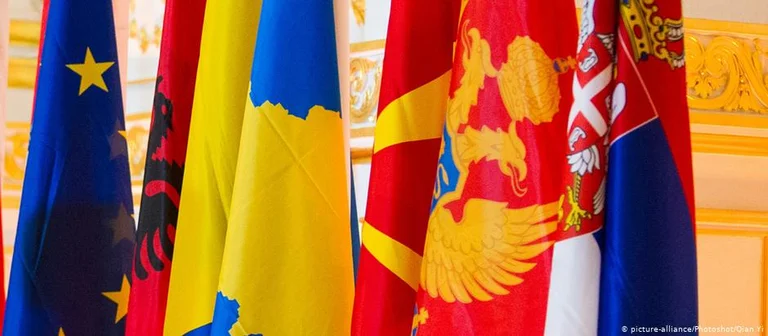
Is the European Union losing its influence in the Balkans?
Periskopi(6 years ago)
(6 years ago)With “cooling from enlargement”, the European Union is losing a lot of its influence in the Balkan region. Other actors want to seduce these countries, but can they replace the EU? “Pestine youth”, says one expert. The year 2019 was not a good year for people in the European Union suburb of Southeast Europe. [...]
With “cooling from enlargement”, the European Union is losing a lot of its influence in the Balkan region. Other actors want to seduce these countries, but can they replace the EU? “Pestine youth”, says one expert.
The year 2019 was not a good year for people in the European Union suburb of Southeast Europe.
Contrary to promises, the European Union at the October summit did not give the green light for opening negotiations with northern Macedonia and Albania, German news agency writes, The DPA in an analysis of the situation in the Balkans at the beginning of this year. France and other countries went against them.
The Danger of Breakdown
In Serbia and Montenegro, two countries that have already opened negotiations have strengthened authoritarian tendencies of governing forces. Pressure on intellectuals and critical media has increased. The situation in Albania is no better, a country this non-democratic example. In November, Albania was rocked by a severe earthquake of dozens of victims. But “JO” of membership talks was very serious. In Macedonia this brought early elections to be held on 12 April.
In the Balkan region, no opening of negotiations is seen as a breach of confidence, as a threatening expression of “enlargement resolution” in the EU's core countries. At a time the EU had decided at its summit in Thessaloniki in 2003, that all Western Balkan countries have the prospect of membership. But so far, it has only succeeded Croatia, which joined in 2013. For other Balkan countries, the prospect is being brought to the horizon, even at risk of losing it, but is the EU personally risk losing the Balkans?
Russian, Chinese, Turkish Attempts
Other options, such as Russia, China or Turkey, are pending.
“The EU has left a vacuum, which Russia willingly fills. China comes from the other side with a lot of money, offered in the form of loans, without standards and without criteria”, notes Sonja Biserko, who heads the Helsinki Committee for Human Rights in Belgrade.
While Moscow is especially supportive of Serbia, which will not accept Kosovo's defeat. It is known that Moscow blocks Kosovo's admission to the United Nations with its veto. In Bosnia and Herzegovina, Russia supports Bosnian Serb strong man Milorad Dodik. In this war-torn country in the 1992-1995, Dodik paralyses developments with his separatist stances. Without forgetting Montenegro, where in October 2016, a stamp organised by Russian agents, but failed, would have to undermine the country's NATO membership.
Russia's “goal is to create in the Balkans a generation of military neutral countries”, the Russian ambassador to Skopje, as seen by the Foreign Ministry's internal documents in Skopje since 2017, has said.
But Moscow could not stop the membership of Montenegro and North Macedonia. Serbia excludes membership after the 1999 bombings. In Bosnia, Dodik tries to prevent any rapprochement with the northern-Atlantic alliance.
China, in turn, is pursuing economic interests with its cross-border concept. The Balkans have the role of a transit area in this context. Beijing has managed to acquire a majority stake in the port of Piraeus and is modernising the railway between Belgrade and Budapest. Projects are financed with not much free loans from Chinese state banks. Chinese firms take them in, often with workers “imported” from China. The balance of creating value for these lending countries is weak. Montenegro is in danger of a China-funded highway entering dangerous debt.
Even Turkey with its Ottoman president, Recep Tayip Erdogan, demands approach with Muslim policy actors, but not only with them. The SDA party, which controls mainly the Bosniak-Muslim part, honours Erdogan as fate. But Serbian President Aleksandar Vuciq also has good relations with Erdogan. Erdogan's interests are mainly economic: a market for Turkish goods. On the other hand, he also seeks to increase geopolitical influence.
Are Russia, China and Turkey really trying to attract the Balkans?
“Of course the enthusiasm in the region for the EU is evidently cooling”, says Florian Bieber, professor at the Southeast European Institute at the University of Graz.
But one must say another, that foreign actors like Russia and China don't have much to offer. The often corrupt and authoritarian Balkan elites would accept their projects willingly, not only to enrich themselves. „But if you look at their investments, compared to those of the EU then they don't have that importance”, Bieber points out to the DPA.
Bieber cites another factor to highlight the importance of the EU.
“It's enough to ask young people in the Balkans where they want to live. They will not mention Beijing, Istanbul or St Petersburg, but Berlin or Vienna”, he says.