2 hours ago
Challenges creating new Kosovo government
Periskopi(6 years ago)
(6 years ago)The Vetevendosje and Democratic Movement failed this week to find a solution to the formation of the new government, while more than three months have been marked since holding parliamentary elections either this week, the two political subjects, the Vetevendosje Movement and the Democratic League of Kosovo (LDK), failed to find a solution for [...]
Even this week, the two political subjects -- the Vetevendosje Movement and the Democratic League of Kosovo (LDK) -- failed to find a solution to form the country's new government.
The two subjects for three days were involved in negotiations to draw up positions for a ruling coalition agreement, but without success.
The Democratic League of Kosovo said after the last meeting that in confidence and willful to reach agreement it has submitted to the Vetevendosje Movement the bid for co-government, but without providing any details about this offer.
While the Vetevendosje Movement said the talks have become more intense and that there are newer possibilities on the table now. Since these statements, both subjects have no longer held meetings.
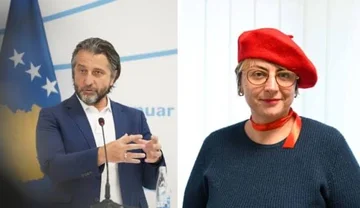
Talks between the Vetevendosje Movement and the Democratic League of Kosovo resumed after a long break following the first parliament meeting to be held on December 26th, where Glauk Konjufca of the Vetevendosje Movement was elected at the helm of the Kosovo Democratic League, though during negotiations since the 6 October elections it has been said to belong to the Democratic League of Kosovo.
It deepened the gap between the two parties that were not agreeing about the request of the Democratic League of Kosovo to include the post of president of the country under the agreement for co-ordination.
Over the negotiations, ideas have been drawn from a variety of backgrounds regarding the agreement, while the only unchanged position so far is the insistence of both parties that there is no alternative other than the coalition between them, provided this implies new elections, reports the Voice of America.
Kosovo has long experiences of the process of negotiating governing coalitions.
After the 2014 elections, it had taken six months to find a solution.
Observers, meanwhile, say the country is currently in a period when processes must be accelerated to avoid extending an institutional vacuum or even avoiding the possibility of the country going to elections instead of finding a solution.
Kosovo held its fourth consecutive elections since its 2008 declaration of independence.