5 minutes ago
Voted, 21 went to prison, 41 sentenced to fine

Periskopi(7 years ago)
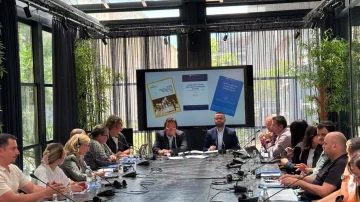
(7 years ago)Nongovernmental organisations in Kosovo, which have expressed their interest in monitoring the October 6th early parliamentary elections, say they are focusing on several issues, which were also counted on past processes as irregularities and violations. Family delays and pressure on voters are just two of the issues mentioned [...]
Family delays and pressure on voters are only two of the issues cited as weaknesses following election processes in Kosovo.
“Democracy in Action” is a network of 10 member organisations and 38 partner organisations that will monitor the election process. Eugen Cakoli from the Kosovo Democratic Institute (which is part of the Democracy Network in Action) tells Radio Free Europe that on Election Day more than 2,000 observers will be engaged.
Given past parliamentary elections, but local ones too, he says expectations are actually that irregularities, eventually, are repeated.

We expect that we can have group voting, family voting and other types of voting, which are not allowed under the Law for General Elections, but also under other Central Election Commission regulations”, Cakolli said.
He says political parties will also be monitored during the pre-election campaign, since even there they often commit violations of the law and election rules. According to him, in recent elections, political parties have made various mistakes and abuses ranging from children's participation in campaigns to exploiting state resources for party purposes.
Cakoli says expectations, however, are to have improvements, as political parties themselves have pledged that some of the violations that have conveyed election processes in the past will not be repeated.
“They must respect the numerous memorandums that have been signed to improve the election process. We expect that the campaign will be calm and smoothly”, Cakolli said.
The executive director of the Kosovo Institute for Justice, Ehat Miftaraj, told Radio Free Europe that security in elections and their prosperity should be guaranteed by security organs and justice mechanisms in order to prevent actions that could undermine the election campaign and the voting process itself.
“Based on past elections, which we like the Kosovo Justice Institute have monitored, we have seen that mainly in villages or in deeper areas, family voting still occur, in some way when certain persons are allowed to vote several times. There may still be pressure on voters. But all of this can be overcome if we have a proper police and prosecution response”, Miftaraj said.
The campaign for parliamentary elections will begin on 25 September and last until 4 October. On 5 October, there will be electoral silence. While, 6 October, polls will be held for the composition of Kosovo's 7th legislature, which will then elect Kosovo's new government for a four-year term.
Civil society as well as international representatives from Quint countries have called on all participating subjects in the elections to ensure that on their lists of MPs there are no names of incriminating persons or having open files in the courts.
Early parliamentary elections are the result of Ramush Haradinaj's resignation from the position of Kosovo prime minister in July of this year.
His resignation had followed an invitation by the Kosovo Special Court with headquarters in The Hague, where Haradinaj was invited to interview in the quality of war crimes suspect.