12 minutes ago
Daka: Early elections are challenging due to deadlines

Periskopi(7 years ago)
(7 years ago)The process for early parliamentary elections on 6 October will be a challenge for the Central Election Commission, due to short-term access, CEC head Valdete Daka said in an interview for Radio Free Europe. The Central Election Commission in collaboration with all other actors, Daka underlined, will [...]
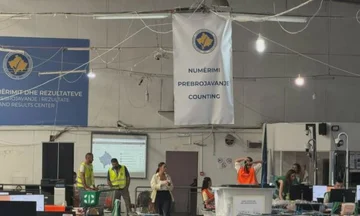
The Central Election Commission in co-operation with all other actors, Daka underlined, will try to create a safe, secure environment for all those with a vote right and who want to vote on 6 October.
The election process will be monitored by a European Union mission, as well as civil society in Kosovo.
REL: Lady Daka, the Kosovo government has already allocated the budget of about 6m euros for the October 6th early parliamentary elections. How are preparations going about this process?
Valdete Daka: We immediately after the Kosovo president's election proclamation we have started preparations and are now implementing the operational plan for the 6 October election day. So far we've completed everything that's been foretold with this operational plan. I hope the rest of this plan goes as planned. We are in the deadlines envisioned on this plan and so far have not violated these deadlines, which is a pleasure to me that these are extraordinary elections.
REL: The Central Election Commission has to determine the deadlines for election activities for early elections, which are in a short period. How successful can these deadlines be?
Valdete Daka: Regular parliamentary elections should be held from 4 to 6 months. Now we've only had 40 days, even counting on the day elections were announced, and this naturally requires that all the first deadlines by law be cut. These short deadlines are a challenge both for us and for all election actors, as are political subjects, because all long-standing deadlines are now cut short and all should act the same way. For the CEC, this is a challenge, but we'll probably get through it.
REL: Due to the specifics of election processes in northern municipalities, what will be the role of O The SEU in this process?
Valdete Daka: The person who was last time meant only an advisory role. So, the OSCE will advise the Election Commissions. Meanwhile, on election day it will be present at the polling stations and will advise members of the election councils in case of need. So when there's some uncertainty because we know elections in the north are only being held in 2013 and we have new commissionors, and in the rest of the state we've had elections and the commissionors have been more experienced. So, the OSCE has no organisational role, it has an advisory role, as has it in the past two processes.
REL: Does the CEC have any additional commitments to municipalities in the country's north regarding the election process?
Valdete Daka: We know that the northern part is a specific part of the Republic of Kosovo, and we know that there always, to say so, an event is expected. But, I said, we've arranged (election) in 2013 successfully, in 2014, 2017. Now late in May, we had elections for mayors in the northern part and we didn't have any serious problems.
Of course, the political background is part of which does not belong to the CEC. We only organise the elections, while political issues, the political scene, security issues are issues that we don't have in our hands, but still we in co-operation with the law and security bodies, as well as with all other actors who are responsible for security, we will try to create a safe, quiet environment for all those who have the right to vote and who want to vote on October 6th.
REL: Are international monitors interested in this election process?
Valdete Daka: Yes, we have signed an administrative agreement with the European Union yesterday on the arrival of an observer mission, which at the invitation of the president of the Republic, have expressed readiness to be present once again, as well as in the past two election processes and which will have the opportunity that, from today's election day, because as far as I know today, they will begin their arrival and are logistical issues until they are accommodated in Kosovo from now to begin monitoring the entire election process, so not just on election day, but they will observe the work of the CZ, the Co-ZA, the work of the Elections, the Elections, the Elections to the elections, but in particular on the days of the results. After that, they will issue a detailed report on all their findings, as well as the eventual recommendations for the CEC's work and for elections in general.
REL: Nongovernmental organisations dealing with diaspora organisation have consistently complained that the diaspora has faced obstacles in exercising their right to vote in the 2017 parliamentary elections. Are the facilities made for voters from the diaspora?
Valdete Daka: I regret to say that the blame is not CEC's. The CEC cannot bear responsibility for the fact that every time we have organised extraordinary elections. We do our best to give all of us fair votes to offer you equal opportunities. Even this time as well as other times we've gone beyond the law, since the Law on Vote outside Kosovo provides two ways of recording via mail and fax, we've gone beyond that and we've opened our email website, our emails, where citizens from the diaspora can register through emails, and this time over the years we've added to the number of these e-mails.
At present with reports that I have from the voter service we have no problem, the emialas are coming regularly, there is no decline in the system as they are commonly said, now let's see how many who have sought to register as voters outside Kosovo and how many of them will receive our announcement that they are successfully registered to be voters outside Kosovo.
We have to assume that voting procedures outside Kosovo are legally complicated, as the law requires it, but we cannot overlook these procedures because we would now have remarks from political subjects. The deadlines are extremely short, procedures are complicated and that's what we can't change against. We're working with full capacity in three shifts to register citizens who have a right to vote.
REL: The June 11th elections, in general, were deemed successful, ruled out some remarks that were given about the unrenewed voter list and some irregularities, but which, according to observers, had not affected the process. Have these problems been eliminated?
Valdete Daka: We didn't have serious problems in 2017. We've only had 30 days in 2017, it's beyond the imagination of organizing such a process in just 30 days and everyone's happy. Election organisation is an extraordinary project even for democracies more achieved than Kosovo's, but we have managed to organise elections for 30 days, and this time again we will be able to overcome them all. However, we will try this time to eliminate all the challenges we've had in the 2017 election process.