6 minutes ago
About 100 people interviewed by the Special Prosecutor

Periskopi(7 years ago)
(7 years ago)Kosovo's special war crimes prosecutor, headquartered in The Hague from December 2018 to now, according to data from the Kosovo Liberation Army Veterans' Organisation, has interviewed about 100 people, while experts on international criminal cases estimate that this prosecutor is on the way [...]
Kosovo's special war crimes prosecutor, headquartered in The Hague from December 2018 to now, according to data from the Kosovo Liberation Army Veterans' Organisation, has interviewed about 100 people, while experts on international criminal cases estimate that this prosecutor is working with added dynamics.
Hysni Gucati, chairman of the KLA War Veterans Organisation, tells Radio Free Europe that most of those interviewed so far, during the war have been civilians, while the number of former members of the interviewed KLA who have been shown to this organisation is smaller.
The “those who have been informed of us, so far, are close to 100 people who have been invited to the Special Court, of whom there are in witness quality, but there are also in the quality of the suspects. So far, those of us who have been notified, there are seven persons who have been part of the fight”, Gucati says.
He adds that there is no precise data concerning the number of people who were invited by the Special Prosecutor in the quality of witnesses and of those invited to the quality of the suspects.
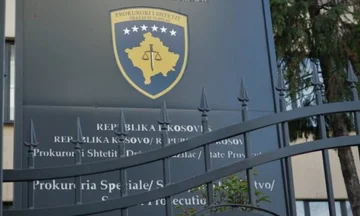
The Specialised Chambers and the Specialised Prosecutor's Office, otherwise known as the Special Court for War Crimes in Kosovo, has been functional overall in July 2017, but only in December 2018, the Special Prosecutor's Office has started interviewing the first people invited.
So far, the Specialised Prosecutor's Office has not answered Radio Europe's free questions about the exact number of persons interviewed, in what quality were interviewed, and when the first indictment could be expected.
Ismet Salihu, professor of International Criminal Law, tells Radio Free Europe that the dynamics of interviews in the past nine months have been added and are already expected to bring the first charges.
It is clear that dynamics have intensified, which means that this court, now soon, will also file charges against those of whom they allegedly have evidence, facts and arguments. This is related to the work so far, while the second, those with invitations, it's good not to refuse them”, Salihu points out.
He commends the KLA War Veterans Organisation, which has invited all guests to interview by the Special Prosecutor, not to refuse invitations.
The chairman of this organisation, Gucati, says that so far, there are two people who have refused to respond to such invitations. According to him, Remzi Shala from the Suhareka municipality had refused such an invitation, while the second person has managed to persuade him to respond.
“Remziu (Shala) of Suhareka has been, has had the nickname Red Apple and he has refused the invitation. The second one to refuse is Union Gashi. But we have invited the Union to the organisation, where Deputy Chairman Nasim Haradinaj has talked to him for a long time and convinced him that it is good for the sake of opinion and for the sake of war to be informed of justice, so that some of us are not said to be against justice. We are not against justice, but we are against the Judge who is biased and we have always said that. We are not against justice, so the Union has agreed to report to court”, Gucati suggests.
However, Professor Salihu says that in the event the Special Prosecutor's invitation to interview, whether in the quality of the witness, the quality of the suspect or even the accused, the Special Court has the authorization to tell Kosovo Police to bring them in.
If Kosovo police do not perform this, then EULEX Police members will do this. If EULEX does not, then KFOR members will be engaged. So, however, the Special Court's order or invitation must be executed. They left nothing at all. This should be completed as envisioned by law and should be done. It may be considered a serious circumstance for the person appointed if he does not respond, escape, or hide. It will, however, fall into the hands of the Special Court, and this situation will be taken as a serious circumstance”, Salihu explains.
Meanwhile, the candidates for political party deputies' lists for early parliamentary elections on October 6th also have the names of some of the people interviewed by the Special Prosecutor.
Ehat Miftari of the Kosovo Democratic Institute tells Radio Free Europe that this institute has done the analysis of all lists of candidates proposed for MPs from political parties, including persons who have problems with the law in Kosovo, but also guests from the Special Prosecutor with headquarters at The Hague.
From what we have observed as the Kosovo Justice Institute, at least 3 candidates for MPs, on electoral lists for the October 6th elections, were interviewed by the Special Prosecutor in the quality of the suspects, always based on what the persons who were interviewed have said themselves. Four individuals --” -- are invited to witness quality, Miftar points out.
The Special Prosecutor, from December of last year until now, has interviewed some of the former top KLA figures who have been and are part of the Kosovo political scene, as did Sami Lushtaku, Shukri Buja, and finally the outgoing prime minister, Ramush Haradinaj.
The Special Court for War Crimes in Kosovo is responsible for investigating crimes against humanity, war crimes and other crimes related to charges by the Council of Europe's 2011.
That report tells of the alleged crimes made by members of the Kosovo Liberation Army between 1998 and 2000.