9 minutes ago
North remains the most problematic area for combating smuggling

Periskopi(7 years ago)
(7 years ago)Since the Kosovo government imposed a 100 per cent customs tax on imports from Serbia and Bosnia and Herzegovina (on November 21st, 2018), the flow of smuggling with goods has been ongoing, especially from Serbia. But, according to Kosovo Customs and Border Police, the tax has not affected [the] rise.
Since the Kosovo government imposed a 100 per cent customs tax on imports from Serbia and Bosnia and Herzegovina (on November 21st, 2018), the flow of smuggling with goods has been ongoing, especially from Serbia.
But, according to Kosovo Customs and Border Police, the tax has not influenced the level of smuggling from these states. Meanwhile, business community representatives say smuggling as a phenomenon is present, but not at a disturbing level.
Kosovo Customs spokesman Adriatic Stavileci said that recently, especially after the tax was introduced, Dogana has noted there is a decline in smuggling goods.
“In terms of smuggling goods we have seen a decrease in smuggling, even though despite the 100% protection measure from the Government of Kosovo from January 21st, we have expected a tendency to increase smuggling, but fortunately thanks to Dogan's commitment and work we have not noticed there is a significant increase in smuggling”, Stavileci said.
Before the tax was imposed, statistics showed Serbia leading to export of goods to Kosovo. This export amounted to up to 1m euros a day. So, following the Kosovo Government's decision to impose a 100 per cent tax on all imports from Serbia, allegations were that smuggling could increase as a phenomenon.
But, according to Stavileci, although the most problematic area in terms of smuggling with goods is the northern part of Kosovo, which extends to the border with Serbia, no one sees the increase compared to the previous years.
There's actually no precise measure of smuggling, but we measure it is that in the moment we have increased revenues, there can be no increase in smuggling. If there is an increase in smuggling, then there should necessarily be a decrease in revenues, but as we grow in revenues, that means there is a reduction of informality”, Stavileci said.
Kosovo customs says it continues to increase control capacities at all border points to prevent smuggling.
The chairman of the Kosovo Chamber of Economics, Berat Rukiqi, in a conversation for Radio Free Europe, says that from information from the field, but also from competent authorities, smuggling is present, but not in disturbing proportions.
After the tax was issued, there has been a little more complaints [from smuggling businesses] especially about the northern part, and especially other forms that have tried to exploit the region's countries to introduce products even repacked. So the last few months are slightly less present on the ground. But, again, based on what we see on several brands (dices) in areas where Serbs live, we see that Serbian products can be introduced in various forms, Rukiqi said.
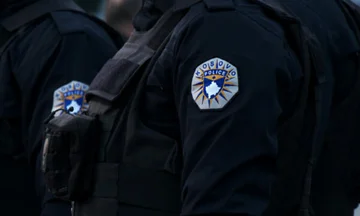
Meanwhile, Kosovo Police, based on its operational tasks and planning, says it takes action to prevent criminal activities, including smuggling with goods.
“In concrete cases of preventing and combating smuggling phenomena with goods are locked up the Border Police units, including the commitment of other additional additional forces as necessary. It is noteworthy that thanks to police engagement, as well as bilateral co-operation with Kosovo Customs and other relevant institutions, from the police point of view, depending on the time period it sees the drop in smuggling cases”, it is said in a written response by Kosovo police.
Otherwise, Kosovo police at the end of May had held a share in several locations in the north, but in other parts of Kosovo, with the aim of combating crime and smuggling.
The Kosovo Police Action has resulted in the ban on 21 police officials and some citizens. The police operation was conducted mainly in Zvecan municipalities, Zubin Potok, Leposaviq, North Mitrovica, South Mitrovica, but also in Skenderaj and Drenas. The main suspects for these works are still being held under detention.