8 hours ago
Mark Johnaj: Diaspora cannot be spectator of developments in Albania, Kosovo

Periskopi(7 years ago)
(7 years ago)Mark Gjonaj, member of the New York Municipal Council and active personality of the Albanian community, urges political leaders in Albania and Kosovo to embrace the diaspora, as it is a great asset. In an interview from New York, Mr. Gjonaj says that the diaspora on its part should engage when between [...]
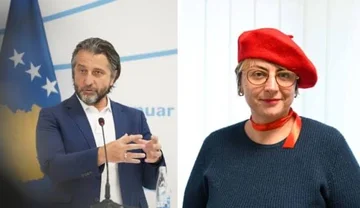
Mark Gjonaj, member of the New York Municipal Council and active personality of the Albanian community, urges political leaders in Albania and Kosovo to embrace the diaspora, as it is a great asset.
In an interview from New York, Mr. Gjonaj says the diaspora on its part should engage, when there are disputes among politicians in the region for selfish reasons and try to unite both sides in the best interests of the country.
Voice of America: Mr. Gjonaj, both Albania and Kosovo are going through some difficult times. Especially Albania faces a multiple political crisis. The Albanian-American community has been active in the past when it came to the mother country, but now it seems to be less active. How do you see his role?
Mark Johnaj: I don't think we're any less active. What is happening in Albania, political unrest is undoubtedly disturbing for many of the Albanians worldwide, without even speaking about the Albanians of America. We will continue to be engaged, but we need a relationship with Albania, so the government or political parties will finally embrace the diaspora as an asset, as it really is. Albania's greatest national wealth is Albanians, especially when we have more Albanians living abroad than within borders. This is real wealth, tangible. But we haven't been embraced by them.
Voice of America: And how do you plan to play this new role?
Mark Johnaj: It's not a new role. The diaspora cannot observe what is happening as a spectator, as if it were a football match. We should be engaged and participate actively in shaping the direction where the country goes. For the sake of our people and our country, we've always been a ready partner, but we just have to embrace as a real partner. There are several steps the government can take to strengthen the bridge that currently exists between our countries, in order to play a better role. We've achieved so much over the past few decades, and when we look at the crisis that Albania currently faces, it doesn't look good in the eyes of the international community, nor do Albanians anywhere in the world.
Voice of America: But perhaps one problem is that the Albanian community here in the United States is not unified enough to play this role effectively. What do you think?
Mark Johnaj: The Albanian-American community in particular has always shown willingness and willingness to co-operate. We've always been on the forehead. For example, Kosovo's independence, or reconstruction, of Albania after the fall of communism in 1991. The Albanian-American community has always been engaged and active. We are united. The question we need to ask ourselves is how to engage when there are political disputes among politicians for selfish reasons. We need to be careful as a community here. We're not here to choose this or that side. We are here to make the diaspora, and especially the Albanian-American community a voice of opinion, when our leaders and political parties do not act in the interests of the people and the country, for the national cause. And in this regard, our political leaders are not acting in the best interest of their people.
Voice of America: As far as I understand, you say that the Albanian community, the diaspora should play some kind of mediating role in Albania or Kosovo. What makes you believe that the community can be politically impartial if it tries to play such a role?
Mark Johnaj: Security, government and political leaders in my home countries are able to accept the Albanian-American community and the diaspora as partners. We can seize this opportunity to unite both sides. It's time for the diaspora to play this role, as if it were the village's <x0 minute elder, to unite both sides for the better. If they really appreciate the Albanian-American community, they should let us play the role of bringing all parties to the table. No conditions, no warrants, because that's the right thing.
Voice of America: Who would represent the community in this case?
Mark Johnaj: In this direction, we first have the experience and the relevant ties with both Washington and the EU to allow them to participate as observers. I would use the mechanisms we already have. The word is for Albanian-American organisations currently existing, about 60 across the country, to form a committee that would act as the way to bringing the parties together. We have to make elections in any country where we have a large number of Albanians, so they choose an ambassador to that country. And this should be done fairly, transparently with a certain date. These people would be the spokespersons, if I could say so, of this community. Thus we could form a congress of Albanian diaspora leaders, selected by the diaspora, to represent its best interest. From that body, we should be able to elect two ambassadors, if we can call them, one for Albania and one for Kosovo.
Voice of America: So you're talking about a serious attempt by the diaspora, but who would sponsor this financial effort because that seems to be a problem?
Mark Johnaj: The financial investment needed is minimal compared to the benefits. There would be no greater benefit for Albania or Kosovo than investment in the diaspora. The diaspora has the experience, knowledge, wealth and a great commitment to people in their mother country. So this would be a small investment if we thought this could bring a big change for our people in the Balkans, would bring economic stability, social and political stability, and a tremendous wealth for our future. And I would imagine that, with the resources we have, even the United States, and maybe the EU would be willing to invest in something that would help alleviate difficulties, solve our problems, without the need of the international community.
Voice of America: Mr. Gjonaj, you have been part of two diaspora summits in Albania, while other members of the community have refused to participate, calling them a facade for the government. Is such activities worthwhile?
Mark Johnaj: Any well - aimed efforts and initiative should be exploited as opportunities. Let us look no further than Portugal, South Korea, Ireland, or Israel, or countries that benefited from diaspora participation, both economically and socially. We always owe our country and our people to engage. We're able to bring about change. We simply need to be invited to the table and become a real interested party while trying to implement these initiatives.