3 minutes ago
Greece removes faculty cysal

Periskopi(7 years ago)
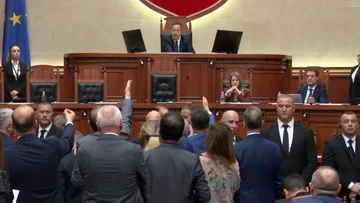
(7 years ago)Greek MPs today rejected a legal regulation under which the faculties were areas in which the police could not enter. Authorities have described the move as a fight against lawlessness, however, critics say it represents a blow to democracy. This is one of the first movements of the new conservative government [...]
Authorities have described the move as a fight against lawlessness, however, critics say it represents a blow to democracy.
This is one of the first movements of the new conservative government led by the New Democracy Party.
Prime Minister Kiryakos Mitotakis has strongly defended the abolition of this legal rule, clarifying it will contribute to public security.
We don't want the police in college. However, we want to be rescued from groups that monitor student life,” said Mitcotakis in Parliament, alluding to anarchists.
Conservators have long argued that the idea of faculties as asylum has long lost its meaning and is being misused by criminals, and that numerous university professors complain about violence and drug trade openly and without hiding.
Micotakis also added that during their college schooling, students have the opportunity to see how these spaces are controlled by various drug-related groups, and that faculty basements are used to produce Molotov cocktails.
“Azili of faculty” is a historical heritage, whose causes stand in the reign of dictator Papadopoulos. Police often visited faculty at the time, so in 1973 the students stood up against his regime.
He responded by sending tanks and many students were killed. As Papadopoulos fell from power, police have no access to college.
Under a law dating back to 1982, and in time was revoted and returned from past governments, Greek faculties were out of control of the police.