a minute ago
Bloomberg draws details from US-Iran deal background
Periskopi(2 hours ago)
(2 hours ago)Sunday evening, June 14th, on the southern lawn of the White House, the eyes were turned from a UFC confrontation. Under the metal construction that the organizers had baptized “fruture”, Justin Gattze marked the victory by taking a spectacular tour outside the altar.
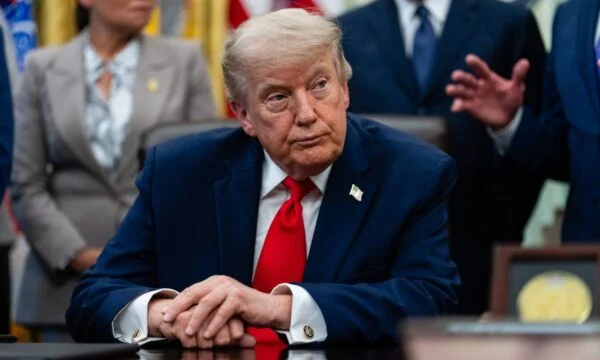
Donald Trump was in the front row of the tribunes and attended the show shortly after he had declared that the war with Iran was over and that the Strait of Hormuz was opening again.
Just hours earlier, as he was about to celebrate his 80th birthday with his family on the White House, the American president had triggered major international reactions through a post in Truth Social.
The accord with the Islamic Republic of Iran is complete. Congratulations to all. I fully support the opening of the Hormuz Strait without transit fees and the immediate removal of the United States naval blockade. World ships, start your engines. Let oil flow”He wrote.
But, as in many other episodes of this war, the president's statements had gone ahead of reality on the ground. The full agreement had not yet been published, the official signing ceremony remained several days away, while the most complex nuclear programme, sanctions and Lebanese fronts continued to be unresolved.
The strike that threatened to bring down the entire diplomatic process
That morning, the deal got too close to collapse. About 6:45 a.m., according to Washington's time, Israel hit targets in southern Beirut. The Iranian side in the negotiations had warned several times that such a step could lead talks towards eventual failure.
Israeli authorities said the attack was countering the missiles issued by Hezbollah. However, in the West and the Arab capitals, many interpreted it differently: as a recent attempt by Benjamin Netanyah to sabotage an agreement from which, in practice, it was left out.
Tehran temporarily suspended communications. After four hours, Trump came out publicly and criticised the Israeli crackdown, saying that “should not have happened”.
Disgusting his once close ally is now no longer hidden. According to reports, he spoke to Netanyah on the phone and expressed his anger because he felt that bombings were putting months of diplomatic work at risk.
Qatar leads to mediation
After that, months of mediating efforts remained. Since March, Qatar had been a supportive role along with Pakistan, Egypt and Turkey, but by mid-May it had been reluctant to take the lead in the process.
This approach changed when Washington and Tehran asked Doha to engage more actively.
To avoid public attention, Qatar secretly sent a high-level delegation to Tehran via Turkey. The mission was intended to understand the Iranian leadership's real intentions and find room for possible compromises. Catarian middlemen were in the Iranian capital just as Trump publicly reiterated the threat of military action, saying “koha is ending for Iran”.
A day later, the US president announced that he had postponed a planned attack at the request of Qatar, Saudi Arabia and the United Arab Emirates, as serious negotiations were under way. /Periscope