6 hours ago
The state of government did not think well of returning 110 Kosovars from Syria.

Periskopi(7 years ago)
(7 years ago)Months ago over 100 Kosovars were repatriated from the conflict zone in Syria, most of which were women and children. Since then, women are under house arrest while there are 20 cases that have sought social assistance. Some of the children are part of the family housing scheme, but this shelter [...]
Of the 110 Kosovars whom the state of Kosovo arrived in co-operation with the United States of America, to return to the country, among them are 74 children who have stayed in dangerous hearths. Some of these Syria - returned children are also without parental attention.
While such a thing is seen as <x0) success” for the country's authorities, in the social perspective, their return is viewed as ill-organised.
Webi Mujku, a social connoisseur, says that these people's attitude, for only 72 hours at the Vornidoll Asian Research Center, has not been professional, until it adds that before returning from war grounds, their housing would have to be co-ordinated.
“It's been a relatively serious situation, but I believe the situation continues to be that, because to return such a large number of women, and children from the danger zone, and to be held in a camp or in a shelter, call it that for 72 hours and release, it hasn't been very professional. I still don't think it's the level we all wanted. I think all the families that have returned, especially those who have not been in Kosovo for a long time, are facing serious conditions because those children have been in camps without personal hygiene, no health conditions, no adequate social and psychological services. Because all those children who have returned from war zones have seen different scenes”, he says.
A large number of those children who have been repatriated to Kosovo say they were born in these dangerous areas of war, for which, according to him, much work should be done in their reintegration.
For security issues connoisseur, Nuredin Ibishi of the re-advancing can also pose danger to Kosovo.
“E also risk returning the transfer of members of terrorist groups to Kosovo, where we are not part of Interpol, we have no persecution for these people, they can easily pass even to be dangerous for Kosovo. However, prior to this, it had to be considered on a matter of return to members of terrorist groups as well as family members, women, children. Even the aspect of reintegration, rehabilitation, restoration, and time - consuming but also normally other judicial procedures. Because they were involved in terrorist acts there...”, he says.
Out of 74 children returning to Kosovo, seven are without parental attention.
Mentor Morina, director of the Department for Social and Family Affairs at the Ministry of Labour and Social Management, says that only 20 cases have sought social assistance, some children say they have problems with the documentation issue as well.
“According to the data we have from the Social Work Centers, we have about 20 cases that have been handled and received services from the Social Work Center, where most of them are children, so 17 of them are children and three of them are women. As far as child protection services are concerned, out of 17 returning children have received various services, seven of them are carefree children who have received services from the Centre for Social Work. Five of them are assigned custody and are part of the family housing protection scheme, while three others have problems in necessary documentations in the family housing protection schemes or other forms of defence”, he indicates.
But their shelter in the sheltering families turns out not to be long - term, which is why Morina says there should be shelters.
And we don't have persons in the centres, all the cases are housed in the foster family, are families that have kids that are actually sheltering, which are chosen by the Center for Social Affairs, but this is the case with families that children have, and they care about. But we do pay as Minister of Labour and Social Management in the form of family housing. We're thinking we should have a” shelter, Morina points out.
Ombudsman Hilmi Jashar says the state is responsible for the welfare of children, despite the budgetary situation.
No international standard so far has ruled out the state's responsibility, why the state may have had budget problems, or because of infrastructure spaces. The Convention imposes a commitment on the state to ensure even guarantee, why we do some kind of degradation of this standard by saying we don't have a budget, I don't know at which international or standard conventions someone might have found something like this, which rules out the state's responsibility, due to the lack of a” budget, Jashar notes.
It considers that the state commits the greatest legal violations if it leaves these Syria-turned children unattended.
While the biggest challenge is considered the reintegration of children, Minister of Education, Science and Technology Shyqi vows that the same in September will be integrated into the education system, even though it is not known whether proper preparations have been made.
We have the extra lesson planned for them, off school schedule. It's a special teaching arrangement, in order to prepare for the age of children, it's done with a certain group of students, young people who are flocking depending on the municipalities how many municipalities there will be, which we have statistics. So, it's going to be parallel to a preparation that equals their peers... we're going to start right now, there are kids that have even started, but it's working intensively at every step to prepare all the children to be very active in our education system, he says.
Justice Minister Abelard Tahiri is also pledging their integration and re-system.
“The Government of the Republic of Kosovo's engagement in their re-systeming and their integration into our society is very big. Whether in housing facilities that have not been accommodated since they returned, whether in further commitment, or in dealing with their already criminal evidence that has been involved in the Syrian war. All our institutions, including the Ministry of Justice, MPB, Prosecution and Police are at the level of duty to treat these people”, Tahiri says.
And, MP Rexhep Selimi says all problems do not end with their return from Syria, as he says, there may still be returnees.
According to him, there are also 100 Kosovo citizens, who are located at war centres.
“They've been in war zones, and they're mostly women, who've returned, many of them are women who have been killed by men or children whose parents have killed. So it turns out to be a big problem. The main problem is rehabilitation of them, then integration into society. This problem is emerging because they are reluctant to integrate, but even the community is reluctant to integrate them, a challenge arises for Kosovo institutions”, Selimi says.
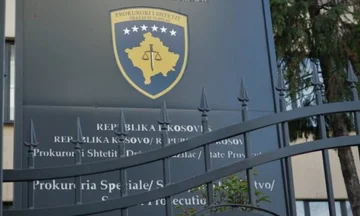
Why it has been four months since 74 children and 32 women have returned from war zones, the Special Prosecutor has failed to specify clearly which one is involved in terrorist acts.
Kosova Prees has tried to talk with them, but the same do not want to speak and have been instructed by institutions not to do so.
While in writing, Fehmije Gashi, a lawyer for one of the women returning from the conflict zone, has told Kosovo Preress that women returning from Syria are being treated well by the state.