5 hours ago
Foreign fighters' return threatens Western Balkan security

Periskopi(7 years ago)
(7 years ago)Reports that the terrorist organisation “Islamic State” is in its last few days does not mean an end to the ideology they spread for years in the wars of Syria and Iraq. The Western Balkans are the most affected region in Europe by this phenomenon, says the latest research by security expert Adrian [...]
The Western Balkans are the most affected region in Europe by this phenomenon, said in the latest research by security expert Adrian Steun. According to him, the danger rate has only increased with the return of jihadists, women and children from conflict grounds. The most alarming situation is in Kosovo, which is driven by the number of returnees.
Reintegration of radicalised people into society is a challenge Kosovo cannot afford, says analyst Steun.
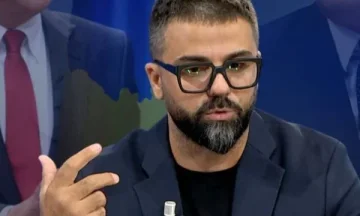
The return of foreign fighters from terrorist organisations, such as the Islamic State “” and Al Qaeda, affects security in the Western Balkans, says Washington foreign policy and security analyst Adrian Steuni.
Before they left the country that in a way reduced the risk in the country, the moment people are no longer going, they, so radicalized ones are going back, that's logical that the level of risk is high. ”
In recent research by the security expert on Western Ballani, published by the West Point Military Academy's Centre for Terrorism, about 460 people are said to have returned gradually to this part of Europe. Over a thousand counts the number of foreign fighters, women and children since this part of Europe have spent time in Syria and Iraq. 260 have lost their lives in battle as 500 continue to be in the conflict zone. As far as statistics are concerned, the most disturbing numbers in the region are in Kosovo.
Kosovo has about 250 returnees. The entire European community has 1,000 and 500. I believe the numbers speak for themselves”, says connoisseur of this case Adrian Steuni.
According to Mr. Stein, Kosovo lacks finances and expertise to fight this phenomenon. Therefore, he says aid from the European Union is the only way.
“Shouldn't have the problem in the Balkans considered isolated and the European Union considers any kind of assistance to the Balkans as a help for the Balkans, but in helping to raise the security level in Europe”, analyst Steuni continues.
Mr. Staten says the focus should not be just foreign fighters. Among the returnees are women, who also have to prove if they're inoctrinationd during the war. Even bigger problems are kids.
You can't get a child to clear his memory just because we're looking for rehabilitation. This is a job that takes time, and if these kids are sent directly to school, let's say if they haven't received a timeline of psychological assistance from people trained to work with these kids, it can bring problems both in class, in school, in communities, or in the family they're returning to because of not forgetting a part of these families are not friendly to those who have returned. ”
The presence of children in war zones, according to Mr. Stein, implies radicalisation is not a matter of money.
There's no rule out the possibility of financial temptation, but these are not mercenaries. We're talking about people who believe in an ideology and who are willing to give up their lives and sacrifice their lives for ideology. I don't see thieves going to rob with the kids”, says Mr. Staten.
Fighting ideology is a very difficult mission, he says.
These are ideologyes that have survived many bombings, many wars, many imprisonments and camps. This should make us realize that it is not a group, it is not a visitor to leave, but it is a gang that has already threatened the Balkan society”, says Mr. State.
Security authorities, according to Mr. Stehni, should also address the community waiting for the returnees. Special care, according to him, should be given to those who have not been on the battlefield but who actively support the activities of terrorist organisations. / VOA/