5 hours ago
Anti-corruption makes criminal charges in about 50 cases

Periskopi(7 years ago)
(7 years ago)The mechanisms dealing with fighting corruption, says they are reviewing various cases suspected of corruption. The Anti-Corruption Agency (AKK) in the first six months alone has sent about 50 cases suspected of corruption to the Prosecutor. Blerim Kelmendi, director of the Corruption Fighting Department at the Anti-Corruption Agency, told [...]
The mechanisms dealing with fighting corruption, says they are reviewing various cases suspected of corruption.
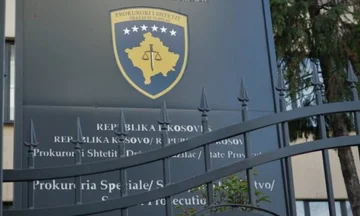
The Anti-Corruption Agency (AKK) in the first six months alone has sent about 50 cases suspected of corruption to the Prosecutor.
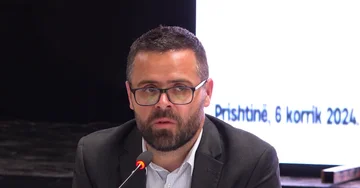
Blerim Kelmendi, director of the Department for Fighting Corruption at the Anti-Corruption Agency, told Radio Free Europe, that cases sent to the Prosecutor's Office concerned criminal acts for abuse of official and related office, which hold public functions.
The submitted allegations primarily concern elements of criminal acts related to official corruption, even criminal acts against official office. Mostly there are issues about illegal employment, cases related to public procurement activities as well as other natures, ranging from giving various permits contrary to legal predictions”, Kelmendi said.
Even in the State Prosecutor's Office, they said that in terms of alleged corruption cases, they have accepted several cases of criminal allegations by the Anti-Corruption Agency in the first quarter of this year.
In a written response to Radio Free Europe, the State Prosecutor's Office reportedly agreed criminal charges for the group of criminal acts, criminal acts involving official corruption and criminal acts against official office, named after criminal prosecution, and, according to the forger of criminal prosecution, have admitted 36 cases to 38 persons.
However, the accepted information allegedly carried out criminal acts involving corruption at other levels have been accepted by the agency and there are three cases of four.
Continued corrupt practices in Kosovo's public and private sector and the improper functioning of the justice system to combat this phenomenon make up the top headlines of local and international reports and estimates now and how long.
At the Kosovo Democratic Institute (KDI), they say corruption and organised crime continue to co-exist at all levels of state organisation and in public perception, while fighting with rhetoric and deficitr integrity of political subjects.
Arben Kelmendi of KDI told Radio Free Europe that the Anti-Corruption Agency is an important mechanism for preventing corruption, but according to him, the agency has serious shortages for a genuine fight against corruption.
“The AKK has small numbers of investigators who would conduct preliminary investigations, collect facts and evidence and compile criminal charges that would be difficult to refuse by the State Prosecutor or for rejecting them by the Court during the court's examinations. Lastly, corruption is a criminal offence, which -- as a phenomenon -- is dedicated to an entire chapter in the Criminal Code of the Republic of Kosovo. As such, the address for fighting corruption is the prosecutorial system and the judiciary, in full co-operation with law and security bodies”, Kelmendi said.
Kelmendi also emphasises, during the coalition rule of the Democratic Party of Kosovo, the Alliance for the Future of Kosovo and the Social Democrat Initiative, further deepening of corruption has been observed.
“One of the most frequent forms of corruption is clienteleism, so as it is: giving public bids to businesses close to the ruling political parties, pardoning debts and other administrative facilities and nepotism that includes mass employment at party bases through ministries and public enterprises. Priors to nearby people have evolved away through the numerous irregularities that have passed the latest swimming exam, when relatives and friends of different political personalities have successfully passed the exam and are currently in the process of recruiting them to notary service from a minister in the resignation of Justice”, Kelmendi said.
According to data from the Anti-Corruption Agency, in 2018, The AKK has conducted preliminary investigations in a total of 390 cases, of which 139 have been borne from the previous year. Of them 114 cases have been forwarded to the Kosovo Prosecutor, Police and Tax Administration for further proceedings, 12 cases have been forwarded to competent administrative bodies at the request for the launch of the disciplinary procedure. Meanwhile, 162 cases have been closed, while 102 cases are still under procedure.
In Kosovo there are mechanisms and organs for fighting corruption phenomenon, but based on reports of international and local organisations, fighting this phenomenon still remains on a very low scale.
Efforts to prevent and fight corruption effectively, according to analysts, depend on political will to establish legal and adequate mechanisms first and foremost.