8 hours ago
Merkel says integration of Western Balkans is EU strategic responsibility

Periskopi(7 years ago)
(7 years ago)German Chancellor Angela Merkel said on Friday that the European Union aims to support partners in the Western Balkans in their European future and facilitate their progress towards integration, because this is the bloc's strategic responsibility. She made these comments at the conclusion of the prime ministers' meeting by the six Western Balkan countries, with [...]
She made these comments at the conclusion of the prime ministers' meeting by the six Western Balkan countries, with colleagues from European Union member states in Poznan, Poland, to discuss the process of membership in the bloc.
The meeting in Poznan is in the wake of what has been called the Berlin Process, organised by German Chancellor Angela Merkel in 2014, to demonstrate the European Union's commitment to the region's aspirations for membership.
So this is not an event we do for others, but it's also in our interest. If you see the wider landscape, the Western Balkan countries are surrounded by member states of the European Union, and we see this as strategic responsibility”, said Mrs. Merkel, under which progress has been noted in the Balkan region, but difficulties remain.
Kosovo, Albania, Montenegro, Serbia, Northern Macedonia and Bosnia and Herzegovina are seeking guarantees that the path to membership is open, as some European leaders raised concerns about the European Union's readiness to expand.
On Monday, French President Emmanuel Macron said that “would reject any enlargement before deep reforms are carried out in the institutional functioning of the European Union”. The enlargement requires unanimous support of member states.
I agree with President Macron's views that EU mechanisms should improve”, Chancellor Merkel said. I don't see this as abandoning enlargement negotiations”.
Poland's president, Andreze Duda, criticised the European Union today for delaying the opening of membership negotiations with Albania and Northern Macedonia and called on the bloc to offer Balkan countries a clear path towards membership in the European Union.
Last month, the European Union postponed its decision to open negotiations with Albania and Northern Macedonia for the autumn, due to concerns by several member states, including France and the Netherlands.
Serbia and Montenegro, considered the favourite, while Northern Macedonia hopes that the agreement with Greece about its name will open the doors of the EU.
Serbia, however, cannot progress in the process without an agreement on normalising relations with Kosovo, whose independence continues to reject.
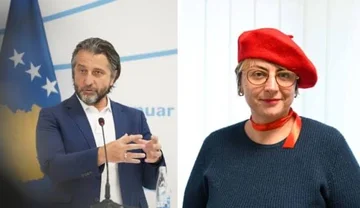
Kosovo Prime Minister Ramush Haradinaj said on Friday in Poznan that the differences between Kosovo and Serbia, though large, could be resolved, but there is a broader political level where bold decisions should be made, he said, stressing that a framework of an agreement on mutual recognition of the two countries on their existing borders is needed.
Serbia's prime minister, Ana Brnabic, said she does not understand “anything means mutual recognition, because we do not need recognition from Pristina”.
Belgrade accuses Pristina of blocking the process of talks on normalising relations with setting 100 per cent tariffs on Serbian goods in November last year and calling for the immediate removal of them, while Pristina accuses Belgrade of conditioning talks.
Unchanged positions on the parties failed even an initiative by German Chancellor Angela Merkel and French President Emmanuel Macron for a meeting in Paris earlier this month to renew talks between the two countries that aspire to European integrations.