5 minutes ago
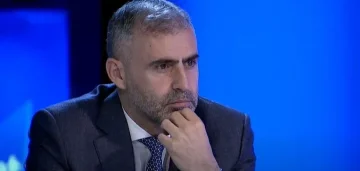
Former Foreign Minister gives the whole speech to Gent Cakaj

Periskopi(7 years ago)
(7 years ago)In a recent research newspaper “Albanian” online, former Foreign Minister Ditmir Bushati, has started selling platforms and political ideas as if they were his. Two days ago, Bushati published a writing in Panorama Journal and social networks for the Berlin Summit, held a few weeks ago, where there is [...]
In a recent research newspaper “Albanian” online, former Foreign Minister Ditmir Bushati, has started selling platforms and political ideas as if they were his. Two days ago, Bushati has published a writing on Panorama Journal and social networks for the Berlin summit, held a few weeks ago, where he has also analysed the so-called change of borders between Kosovo and Serbia.
But in a paragraph of writing, although not originally, the context has been removed from a Cakaj statement during a television interview conducted many months ago in Klan Kosova.
Just enough to read both paragraphs (both the Cakay and the Bushat) to see that the latter uses a certain elaborate plagiarization with the same idea but changes the conflict.
Being in shadow in recent months, with the sole task of the Shkodra district's political direction, Ditmir Bushati wants to still be active in foreign policy as the former minister, but apparently the fantasy to write seems missing.
And in the concrete case, he has found a simpler way to get phrases that are not his from his former subordinate, who seems more experienced in the issue of Kosovo-Serbia dialogue.
Gent Cakay's paragraph:
Because there are three kinds of bilateral conflicts in the region. The first is the historically inherited conflicts since 1940, when Greece adopts the war law in relation to Albania and it is formally still in force. These are inherited conflicts from World War II.
These are the trade-offs between Croatia and Slovenia that today are members of the European Union, which are inherited from the breakup of Yugoslavia, their territorial conflicts, respectively.
And there are other conflicts related to functionality or statehood, as is the case of functionality in Bosnia and statehood in Kosovo.
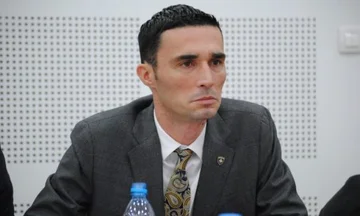
Ditmir Busati's paragraph:
In the Western Balkans, we have three kinds of disagreements that should not be confused with each other. The first nature of disagreements originated in World War II, as is Albania's case with Greece. Since World War II, Greece has imposed a war law on Albania, a law that produces effects even today, despite both countries being NATO members. Both countries are dealing with issues stemming from World War II down to today.
The second nature of disputes originated in the breakup of the former Yugoslavia, as is the case of Slovenia and Croatia, for example. Croatia and Montenegro; Bosnia and Serbia; Croatia and Bosnia, mainly related to border issues and the handling of the consequences of war.
The third nature of the disputes concerns judicial-international subjectivity, such as the case of Kosovo or Bosnia and Herzegovina's functionality.