6 hours ago
Ferdonija's pain stirs Belgrade

Periskopi(7 years ago)
(7 years ago)The two decades' continuing pain of mother Ferdonija for her husband, and four boys lost in the war have sparked strong public emotion within the Belgrade hall. And outside it a crowd of protesters have rejected the show of the documentary testifying to the crimes of the Milosevic regime in 1999, Koha Ditore writes today. “Documentari [...]
And outside it a crowd of protesters have rejected the show of the documentary testifying to the crimes of the Milosevic regime in 1999, Koha Ditore writes today.
The doctor made me nervous, because I'm a mother and I understand very well the suffering this woman has. Each mother feels the pain, and this has nothing to do with nationalism or ethnic affiliation”, has been Jelena's first impression from Belgrade, after the documentary.
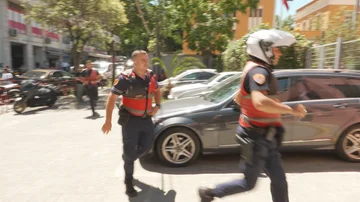
Numerous police forces have not allowed the protesters' entry into the area where the documentary appeared. They have been in greater numbers than the day the festival opened. Consequently, participants have been kept within space for more than an hour, “Dorco Platz Dobriona 59”, until protesters have been distributed by Serbian police.
The documentary, carried out by Gazmend Bajri and February Dauti, has unveiled the 24th hour of Ferdonije Qerquez and the calls of other mothers for their disappearances in this year's edition of the festival, “Goodday, dobar Dan!”.
The film, whose footage has lasted about two years, begins and ends with the privacy of Ferdonija, at the house-muse. There she lives alone, from March 27, 1999, when Serb forces seized her family. The silence of the room is accompanied only by the memories of family members, whom Ferdonija watches with fanaticism.
According to the Fund for Humanitarian Law, it is still considered 1653 persons, including Albanians, Serbs and Roma. Killed by the war are 13 thousand and 535 people. Albanians make up 10 thousand and 812, Serbs 2 thousand and 197, while Roma, Bosniaks, Montenegrins and other non-Albanians make up 526 victims.