44 minutes ago
Experts: Balkans at risk of returning from foreign wars

Periskopi(7 years ago)
(7 years ago)The Western Balkans continue to suffer the consequences of spreading violent religious-based ideologies. Returning to home of foreign fighters poses great danger, security experts say. These comments were made at a conference organised in Washington by the German Foundation '%Berghoff and the University Conflict Management Program [...]
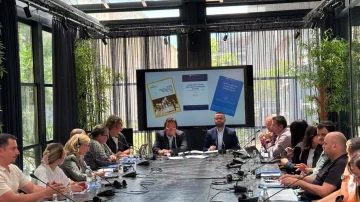
These comments were made at a conference organised in Washington by the German Foundation '%Berghoff and Johns Hopkins University Conflict Management Program.
The Kosovo Centre for Security Studies data shows that only from Kosovo, in 2013-2014, 294 individuals joined terrorist organisations in Syria and Iraq.
From 2015 to 2018, another 82 were added.
Most Balkan states continue to face the problem of violent religious extremism.
There are some 900 people in the region, including foreign fighters, women and children, who travelled towards Syria and Iraq to join terrorist organisations”, says Skender Perteshi, from the Centre for Security Studies.
This data was published at the conference on violent extremism in the Western Balkans, organised by the conflict management programme and the CHArghoff Foundation.
According to Engjellushe Morina from the Berghof Foundation, apart from ideology, one of the main factors that has influenced radicalisation of Balkan youth is also the proper malfunction of state institutions at the local level.
“The factors that helped violent extremism are differences in ideology and religious identity, non-functional institutions and loss of trust in state but religious institutions. The quality of education and the level of religious education is another factor, as is unemployment, although not among the first factors especially among the youth”, says Englollushe Morina.
Experts also stressed that other causes of extremism are the uncontrolled activities of some non-governmental organisations, parallel religious institutions in some countries, as well as social networks.
But today when the terrorist organization I SIS is towards extinction, the Balkans face another danger.
The return home of foreign fighters should be carefully observed”, says Skender Pertesh of the Kosovo Centre for Security Studies.
Their return to Kosovo and the region is at risk because those behind them have a very great experience, taking it to war. They bring about an ideology, or much higher level of radicalism, that they have taken in their countries. Let's not forget that these at the time they stayed in Syria and Iraq have built an international network of terrorists, who have contacts not only with Albanians there but also with individuals from other Middle East and European countries. Even we don't know why they're actually back in their lives, have they really turned against the general ideology of the decision they made or returned because they were disappointed with I SIS as an organization that has failed to achieve their goals in general”, he says.
Reintegration of these persons will take time and will of institutions and society. However, Engelushe Morina from the Berghoff Foundation thinks this process is a major challenge, given that the factors that led to the escape of these people in war zones have not yet improved.
“The reintegration process means not only the arrest and judicial process of these individuals, but other reintegration plans in society, where most of the key factors and actors have not changed, left much to wish for and little to believe returnees will be integrated properly”, says Engjelshe Morina.
Last month, 110 people have returned to Kosovo from war grounds. Most of them are women and children.
About as many people had returned to Kosovo in 2013-2014, but then most of them were foreign fighters.
Kosovo has started implementing the reintegration programme, but experts recommend more co-operation between local and state authorities.