a few seconds ago
Biserko: Serbia should first recognise Kosovo

Periskopi(7 years ago)
(7 years ago)Helsinki Committee for Human Rights in Serbia head Sonja Biserko has said Serbia has had to be the first country to recognise Kosovo as an indication that it is willing to accept the new reality, deal with internal development and thus become a factor in the region. Serbia is [...]
Serbia has had to do this weather and should be the first country to do so at the current borders. That then makes Serbia an important actor in the region. That would be a gesture showing that Serbia is willing to accept a new reality, deal with its development and develop the region as well. The entire region has doubts about what Serbia wants -- this is seen in its behaviour in Kosovo, in Bosnia, in Croatia” -- has said Biserko for N1 television in Sarajevo.
It has estimated that Serbia agrees with the frozen “conflict”, because it constantly estimates that the international conflict will change in its best interests and that time will prove that these communities cannot live together.
In its words, Serbia is trying to reverse the situation in the past, with Russia's entry into the region.
Serbia more serves Russian interests than Serbian ones. Geographically, Serbia belongs to Europe, is linked to the region as it acts as if it does not see itself in the region, constantly sees alliances with great powers, while recently it has turned to the Visegrad group, which has problems with certain EU values, such as xenophobia, Islam...”, is saying Biserko, broadcast Koha.net.
According to her, Kosovo has been the subject since the 20th century, while it says the Serbian issue in Yugoslavia has also been opened in Kosovo.
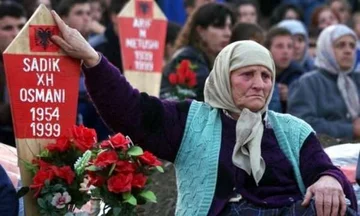
The “was then only found that it is an impossible mission to dominate the Albanian population in Kosovo given the number. He's been trying for the 90s to get a divorce, an amputation. The Kosovo war took place to reduce the number of Albanians, to become ethnic cleansing -- some 700,000 Albanians -- whose documents were burned so they could not be returned later. Intervention of NATO has hampered this kind of scenario, and therefore Serbia lost Kosovo to war”, Sonja Biserko said.
According to her words, following incidents in Kosovo in 2004, the international community brought about criteria through which Kosovo's future status would be resolved, and this meant that screat division, that there is no return to the past and Kosovo's union with Albania.
“Albanians, Kosovars, are in majority against partition. Thaci is alone in this topic. Society is against. Most Serbs oppose partition. In my opinion, I think this is the last phase of the breakup of Yugoslavia, so this should be addressed, and even the international community would have to take this stance, and at the same time work on normalising relations, while Belgrade as much as it can protect the Serb community and their position in Kosovo. They promote specific territories, not people. They deny the multiethnic context, which is guaranteed with our constitution”, said Helsinki Committee for Human Rights Chairman Sonja Biserko.