2 hours ago
Unresolved Balkan Issues Speaking in Washington

Periskopi(7 years ago)
(7 years ago)Officials and former officials, analysts and representatives of non-governmental American and European organisations held a broad discussion of the Western Balkans, which focused mainly on three of its countries -- Bosnia and Herzegovina, Kosovo and Macedonia. The topic of discussion was how to resolve unresolved issues in the Western Balkans, a region where the United States and [...]
Officials and former officials, analysts and representatives of non-governmental American and European organisations held a broad discussion of the Western Balkans, which focused mainly on three of its countries -- Bosnia and Herzegovina, Kosovo and Macedonia.
The topic of discussion was how unresolved issues can be resolved in the Western Balkans -- a region where the United States and the European Union have invested a lot in the last 30 years, but, according to analysts, few success stories are noticed, reports the Voice of America. Experts agreed that the countries of this region are experiencing a difficult period, during which lack of trust in corrupt governments, often led by autocrat leaders, increased unemployment and massive youth evacuations. The discussion discussed ways to help this region with strategic importance for the United States and the European Union to progress.
Hoyt Yee, former US Deputy Secretary of State for European and Eurasian Affairs, voiced criticism of the current strategy for Western Balkan countries. He said that after all these decades, these countries are not at the point where they deserve to be.
I think we should have a better and more efficient strategy for the Western Balkans. After all those years of efforts by excellent diplomats and state men, the Western Balkans are not where they should be. In conditions where we face wars and many problems in the world, the Balkans has not been dedicated to the proper importance of both us and our European friends, even though this region is of great strategic importance”, Hoyt Yee said.
Participants debated some of the issues that continue to remain unresolved in the countries of the Western Balkans, such as the situation in Bosnia, or the Kosovo case, which, after declaring independence 11 years ago, is in a state of familiarity in relation to its future: Serbia still does not recognise its independence, as well as five other EU countries; the debate on the exchange of territories, or changing borders caused another unprecedented concern for the country, and its European future is conditioned by talks with Serbia, which in turn conditioned with the removal of customs duties on Serbian goods.
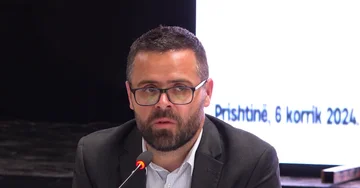
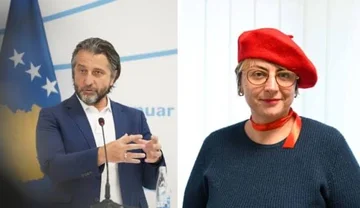
Shpend Ahmeti, chairman of Pristina, said Kosovo needs a more serious commitment from the European Union. He stressed the fact that Kosovo citizens still do not have the right to travel visa-free to EU countries, and said he notes fatigue in the European organisation.
I think there should be a commitment to reforms in the Western Balkans. We do not see a commitment on the part of the European Union to expanding with countries of the Western Balkans”, Ahmeti said.
And the same thought was Sabine as strange, vice president of “Nassa Strankas” in Bosnia and Herzegovina, which said the lack of vision by the EU has created in her country a vacuum being filled by other forces. Experts in general agreed that such a vacuum, in the Western Balkan region, has brought Russian, Chinese and ISIS presence, threatening democracy in these countries.
David Shullman, a specialist for China at the Republican International Institute, said China is pursuing an aggressive investment policy in the Western Balkans, as is Serbia's case. These investments he said, associate with local politicians and promote corrupt relations. Shullman thought China's presence in Serbia relates to the fact that the European Union does not help Serbia.
There is no doubt that China is exercising negative influence and is spreading corruption in Balkan countries. Chinese investment in a high-speed railway that will connect Belgrade with Budapest, with northern Macedonia and Greece, has stalled due to some unacceptable elements from Hungary, as an EU country. Serbian politicians present this project as a gift from China, which is not true”, Shullman said.
Heather Conley, vice president for Europe, Eurasia and the Arctic and Europe Programme Director at the Centre for Strategic and International Studies, CSIS, said that people in the Western Balkans feel hopeless and insecure and that they should end the status quo.
The time has come to think about what we should do in the West... we must bring our ideas. But for that we have to have our vision, which I think has been missing lately. In this region we must support transparent, accounting institutions and leaders who are looking to the international community for support and guidance. Unfortunately, this did not happen”, Conley said.
Conley said that when it comes to the Western Balkans, the West should not simply focus on the goal these countries have to participate in transatlantic organisations, NATO and the European Union, but their journey towards achieving that goal.
Experts in general agreed that the Western Balkan region is of great strategic importance for the West, that this region should emerge again in the spotlight, and efforts must be stepped up to help it emerge from the stalemate created by internal and external factors, such as the current crisis in the European Union.
Voice of America