4 hours ago
History on fire, how was the cathedral of Notre Damit's built?

Periskopi(7 years ago)
(7 years ago)The tower of Paris's famous Cathedral, Notre Dame, has collapsed after a large fire broke out in the afternoon of Monday. By “Le Monde”, the fire started in the attic of the monument before spreading to the roof. Authorities say the flames may have started as a result of restoration works currently under way in [...]
Paris Mayor Anne Hidalgo wrote on Twitter: “A terrible fire has included the Nore Dame cathedral in Paris, while firefighters are trying to control the fire. We've been mobilised at the local level regarding the church authorities. I ask everyone to observe the security perimeter“
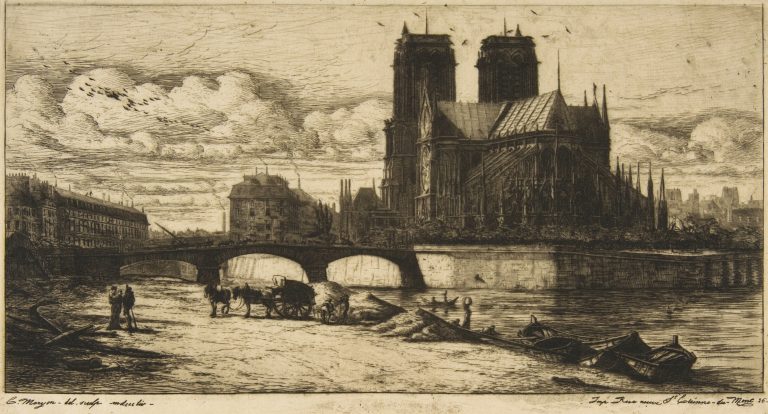
The medieval cathedral was completed in the 13th century, and today, as much architecture as a religious symbol is considered. Situated in Réle de la Cité, a small island in the middle of town, the cathedral is one of Paris's best - known tourist attractions and attracts some 13 million visitors a year.
In 1160, because the church in Paris had become “The family of the kings of Europe”, Bishop Maurice de Sully, named the previous cathedral of Paris, Saint-Étienne, who was founded in the 4th century, as unworthy of its supreme role and destroyed it shortly after assuming the title of the bishop of Paris. According to legend, Sully had a vision of a glorious new cathedral for Paris, and he designed it on the ground outside the original church.
To begin the construction, the bishop had broken down several houses and had built a new route to transport materials to the rest of the cathedral. Construction began in 1163 during the reign of Louis VII, but there are different discussions about whether Sully or Pope Alexander III dropped the cathedral's pebbles. The cathedral's construction was completed in 1345.
Its construction today is still seen as one of the greatest achievements of the Gothic French architecture. The cathedral was part of the WW World Heritage NESCO, but the French had kept it extremely well. Most windows were original, and since the 19th century, they had seen only minor changes.
The cathedral, over 100m high, was especially marked by its three large facades, with images and figures carved that illustrate major theological subjects and Bible accounts. Because of architecture, the Notre-Dame Cathedral continued to be an important tourist destination for religious or secular people.
One of the finest examples of Gothic-classic art, the cathedral was 130m long, 48 wide, 36 high on the inside, while from outside, 69m. It could catch 6550 people. Four rotans, large glass and stone flowers, 13m in diameter, above a 7-meter balloon, were non-renewable masterpieces. The lack of lead gives itself the opportunity to withstand the wind, while the mighty structure of stone and iron held all the weight of the building for centuries.
The cathedral had 10 bells, the largest, Emmanuel, is located in the south tower and weighs a little over 13 tonnes and is tasked with marking daylight and various occasions and services. This has always fallen first, at least five seconds before the rest. /Opinion. al