4 hours ago
Kosovo courts take over EULEX courses for war crimes

Periskopi(7 years ago)
(7 years ago)The Fund for Humanitarian Law in Kosovo, which monitors the war crimes trials, has welcomed the justice bodies' decision to operate within the working strategy of the justice system. Currently, a Special Court [...] is being seized with alleged war crimes cases.
Currently, with alleged war crimes cases being seized by a Special Court with headquarters at The Hague, which mainly deals with the alleged crimes of former Kosovo Liberation Army members against Serb civilians and other civilians during 1998-99.
The Kosovo War Crimes Department, on the other hand, is expected to address other cases in which Serb members who committed crimes against Albanians may be involved. However, the largest number of people suspected of being involved in these crimes are believed to be living in Serbia, so this also makes it difficult for the work of this department, taking into account the low co-operation that justice institutions have in both states.
Amer Alija, legal analyst and monitoring of war crimes trials at the Humanitarian Law Fund, told Radio Free Europe that since 2012, the organisation has recommended that, under the Kosovo judiciary, the war crimes department should function.
Like all states in the region, which have established a special court dealing with the war crimes trial, Kosovo has needed to establish a department or a court that deals with the war crimes trial, as crimes are in large numbers and we have thousands of victims. There is a need for judges, who will be professionalised in this area and deal only with these cases”, Alija said.
The strategy for handling war crimes already envisions the reinforcement of the Special Prosecutor's Crime Department with a total of five prosecutors and support staff, who will serve prosecutors in handling war crimes subjects.
Senior officials from the Kosovo Special Prosecution have confirmed to Radio Free Europe that it is now working on war crimes cases in Kosovo.
Over 60 war crimes files handed over to Kosovo Special Prosecutor
Prosecutor Syla Hoxha, in charge of communications with the media by the Kosovo Special Prosecutor, said that in the strategic plan and in the prosecutorial plan it is set to form the war crimes department.
There are three prosecutors at the moment..., there is an open competition, of course, because it needs to be strengthened, because it needs to and you know that besides the raw materials, a considerable number of subjects from EULEX have now come to us, so it needs to strengthen this department for lighting these cases”, Syla said.
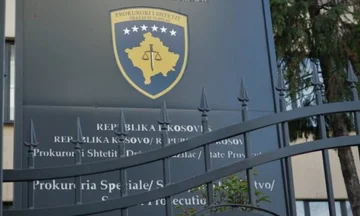
Kosovo's Special Prosecutor has received exclusive competencies in June 2018 to investigate and prosecute war crimes and other violations of international humanitarian law.
Prosecutor Syla says the Kosovo Special Prosecutor himself has taken the initiative to have such a department to investigate cases.
We ourselves have seen such departments and go into the profile of prosecutors and have a more successful job under Special Prosecutor”, Hoxha said.
Meanwhile, Amer Alija from the Fund for Humanitarian Law says for years he has been asked to discuss the topic of international judicial co-operation within the Kosovo-Serbia dialogue.
“We demand that those citizens and evidence, which Kosovo collects, find a form that through the international community be sent to Serbia and those citizens be tried in Serbia”, Alija stressed.
And, speaking of the case, prosecutor Hoxha said that there should be interstate co-operation on this issue.
Two states need to be informed. Of course it's in interest, but so far we haven't had that kind of co-operation”, Hoxha said.
What about the trial of cases linked to war crimes, the Association of Family and Hope, through a public response, shows that it has been three years since it has been addressed to Kosovo's Parliament deputies with public requirements for the Special Court to try Serbia's crimes.
Through this reaction, this association criticises Kosovo MPs and leaders, saying that besides visits to the cemetery, they have done nothing for legal changes that would enable justice bodies to deal with the trial of cases related to these crimes.
Otherwise, cases of serious crimes were at the disposal of UNMIK prosecutors and then passed into the competence of the European Mission for Rule of Law, EULEX.
Under this strategy, it is intended to investigate and prosecute all persons who committed war crimes contrary to international humanitarian law during 1998-1999 throughout the territory of the Republic of Kosovo, as well as establishing justice for victims.