17 minutes ago
Why Kosovars' trust in the EU has wavered

Periskopi(7 years ago)
(7 years ago)Kosovo's institutional leaders, but also the citizens of the country, have generally had full confidence in European Union institutions, but such trust has now become quite dim, assessing connoisseurs of developments in Kosovo. According to them, in recent years reports between Kosovo and the European Union have been violated because there has been no [...]
Kosovo's institutional leaders, but also the citizens of the country, have generally had full confidence in European Union institutions, but such trust has now become quite dim, assessing connoisseurs of developments in Kosovo.
According to them, in recent years reports between Kosovo and the European Union have been violated because there has been no qualitative progress of the country towards the EU, despite the fact that the latter has invested a lot in Kosovo and its presence in institutional development has been significant.
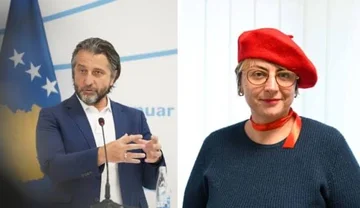
Recognition of political developments, Life Krasniqi from the Kosovo Democratic Institute, speaking of Radio Free Europe, explains that one of the reasons for losing the trust of Kosovo citizens and institutional leaders in the European Union or its mechanisms relates to the issue Visa liberalisation To the citizens of the country.
As she says, Kosovo had received public promises from senior EU officials that, with the ratification of the agreement on demarcation with Montenegro from the Kosovo Assembly, visa liberalisation would be granted to the citizens of the country.
“Should be said that this report has been damaged due to the European Union's lack of visa liberalisation for Kosovo citizens, especially after the approval of Border demarcation Agreement (with Montenegro) in the Kosovo Assembly. On the other hand, another factor that has affected the damage to the reports or perception of citizens in the European Union or to the very lady of EU diplomacy (EU chief Federica), Moghrini is the Kosovo-Serbia dialogue, and especially the statements issued by Mrs. Moghrini. Citizens in Kosovo, in general, have seen it as a statement, somewhat unilateral, where the same stance has not been reflected on both Kosovo and Serbia”, Krasniqi stressed.
Similar thoughts are expressed by political analyst Artan Muhhaxhiri. He tells Radio Free Europe that disrespecting promises the European Union has given Kosovo for visa liberalisation, despite meeting the large number of criteria laid out in comparison with other countries in the region, has damaged the trust of Kosovo citizens and institutions towards the EU. For more, according to him, benefits for Kosovo, in the process of dialogue with Serbia, with the European Union's mediation, have been very small.
“Instead, Serbia has also been factored in terms of nationalism, as well as in the aspect of trying to undo Kosovo's independence, with large investment in severing recognitions. All of this was done in front of the EU and with its silent approval. There have been other cases, such as, for example, the case of the famous religious-nationalist train, which, in the end, surprisingly, Serbia's president, Aleksandar Vuciq, was praised as a person who stopped him and prevented evil”, said Muhramir.
Issue of Trust in the European Union They've been tracking him. Even the institutional leaders of Kosovo. Recently, Kosovo Prime Minister Ramush Haradinaj, at a news conference Tuesday, referring to a statement of Eurodeputes and the rapporteur for visa liberalisation for Kosovo in the European Parliament, Tanja Fajon, that visa liberalisation cannot be linked to the tax Kosovo has imposed on Serbia's goods, has raised questions about whether it can be trusted by EU officials.
Now, how do we trust the Europeans, who once told us "dialog," they now tell us what to do. We know what they tell us next. It has become a little hard to believe that what the lady says is true (Fajon) in question”, Haradinaj said.
However, connoisseurs and political developments estimate that statements by Kosovo institutions should be very discreet, because the country's path towards EU membership and Euro-Atlantic structures, as well as there is no other option.
Krasniqi, estimates Kosovo's demands must be clear towards the European Union, but the way Kosovo relations should be found - The EU is empowered.
The “One thing remains, which must be mentioned, that the European Union has a neutral status towards the state of Kosovo, and this in the perception of citizens is seen a little with scepticism. It is clear and more than necessary that the Kosovo side clearly articulate its EU requirements, but also take on the fulfillment of the obligations it has made. The damage to the reports directly harm us and we must see that we are more pragmatic in the reports we build with the EU, its institutions and EU member states”, Krasniqi said.
Meanwhile, Muhhaxhiri sees the EU as the only alternative to Kosovo and the country's politicians, according to him, must be cautious not to undermine reports with the EU.
“They must raise their voices and be dignified in the requirements based on relation to the EU. All criticisms of the political spectrum must be done to the extent that it does not harm Kosovo's report with the EU, however, by taking responsibility for its major failures to Kosovo politicians in meeting the country's” European agenda criteria, Muhrami praised.
Reactions of leaders and other Kosovo institutions that show distrust, but also strong vocabulary criticism at the EU address, have been made from 2017 onward, either on the issue of visa liberalisation or on issues related to Kosovo-Serbia dialogue.
In October 2017, Kosovo President Hashim Thaci had accused the European Union of isolating Kosovo.
The European Union has led to a position of classical isolation Kosovo, in particular with the issue of visa liberalisation”, President Thaci has said. He, at the time, had stressed that to enable the loose movement of Kosovo citizens, he had asked Albania's president, Ilir Meta, for Kosovo citizens to be givenAlbania's subsumptionIn order to get this country's passports. /REL/