8 hours ago
Jakupi: Kosovo endangered by new forms of violent extremism

Periskopi(7 years ago)
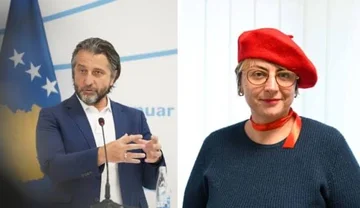
(7 years ago)Rudina Jakupi of the Kosovar Centre for Security Studies has said that Kosovo has not yet finished working on violent extremism. In the Express Interview at KTV, she has said violent extremism has changed shape and that Kosovo can face risks of such extremism that could appear in trends [...]
At Express Interview at KTV, she has said violent extremism has changed shape and that Kosovo may face risks of such extremism that could be presented in new trends.
We can say that Kosovo and other countries in the region have ended up with violent extremism, but have changed forms. We could say there could be problems going to war on I SIS or such places because they have lost a lot of territory, but problems can be introduced in new forms, new trends. It's the problem facing all of Europe”, she said.
It has spoken of a project the QKSS has implemented in six municipalities in the country. For this, he has said he has been behind the debate on the educational-princing triangle to increase awareness of the dangers of violent extremism.
According to her, raising critical thought about this phenomenon is key to prevention.
Speaking of the report QKSS published today “Myths Matching I SIS- How do you react to the ISIS Narrative online? The case of Albanian-speaking states”, Jakupi has said it is a problem in combating violent extremism. According to her, social networking accounts may be closed, but propaganda is continuing with new accounts.
And what we've noticed is that if we compare with the previous years, a much bigger role has been given to women. Riesi was that women are being called on almost directly to stand up for the idea of potassium. I Narratetiva SIS remains the same. In Kosovo they contextise it by speaking against the democratic system and calling on it not to join elections and democratic processes”, Jakupi has explained.
Furthermore, she has said that the reintegration of those who have fought beside the ISIS is a major challenge for the country.
The bottom line is that it is a challenge not only for Kosovo but also for the region and the EU to reintegration. Good practices are missing. Politicalists and those who know this statement disagree about resocializing these people and that should happen one way or another, because they have to go back to places they come from. The Kosovo government and regional ones have pledged to do something, but remains to be seen. Most of them are women and children. If not now, perhaps once they will return to Kosovo and have to have reintegration programmes”, it is complete.