11 minutes ago
Reactions to Re '%ak massacre following Vuciq's denial

Periskopi(7 years ago)
(7 years ago)They have no halt to reactions from Kosovo, but also the international presence about a statement by Serbia's President, Aleksandar Vujiq, who the 1999 Newak massacre in Kosovo named the Albanian factory. Vuic made that statement after a court in Kosovo sentenced the former minister to two years in prison in the Kosovo government [...]
They have no halt to reactions from Kosovo, but also the international presence about a statement by Serbia's President, Aleksandar Vujiq, who the 1999 Newak massacre in Kosovo named the Albanian factory.
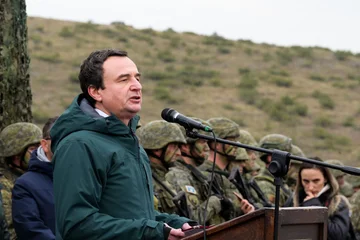
Vuic made that statement after a court in Kosovo sentenced former Kosovo government minister Ivan Todosijevic to two years in prison from the “list. Srpska”, which at a rally in northern Mitrovica, also described the Rejak massacre as fiction of Albanians and the international community.
All members of the Serbian List will repeat the same and I repeat, the crime fabricated in Racank, where everything was forged by that white-haired fraud William Walker”, Vuíq said in Belgrade.
But Kosovo pesident Hashim Thaci decided on International Human Rights Day (10.12) to pay tribute to the cemetery of the Newak massacre, reacting sharply against Serbian President Alexander Vuciq's statement.
Serbia has committed about 400 massacres against Albanian civilians in Kosovo, killing about 1300 children, while their state camera has violated about 20,000 women. At the same time, we have about 13,000 civilian Albanians killed. Rizekso, Recak marks the culmination of massacres and crimes against humanity committed by the state of Serbia in Kosovo. Serbia has committed genocide in Kosovo. Unfortunately, still those who committed this crime against humanity and genocide have not been investigated and brought to justice neither local nor international, said President Thaci.
Thaci urges Serbia to accept responsibility
According to him, the future is not built by denying crimes, even labelling or insulting the civilian killed in Kosovo”. The “Future is built only by accepting responsibility, and at the same time asking for forgiveness of Serbia's leadership for crimes he committed in the state of Kosovo. Unfortunately, I have to say with disappointment that even the silence of internationals, their failure here especially in Recak, which is the culmination of Serbia's state massacres, has opened the mouth and amnised it in some other form or form, and Serbia's current leadership to claim and proudly deny crimes against humanity and genocide in Kosovo”, the Kosovo president said.
The US Embassy in Kosovo reacted first after the Serbian president's statement and said that <x0-retorics and review of history concerning 1999 events are unacceptable”.
“Freedom of expression has long been the fundamental principle of democracy. This week's events also present a reminder of how important Kosovo and Serbia's return to the negotiating table is and to refocus their energy towards the future by normalising relations”, the US Embassy's statement in Pristina said.
EU: There is no place to deny events that took place in Recak
Reactions came from the European Union, which stressed, that “has no room to deny the events that took place in Recak in 1999, and that such views are contrary to the Western Balkans' integration project in the European Union”, said in a reaction it distributed for media, Ana Pisonero, the European Commission's new spokeswoman for neighbourly issues and enlargement.
The Swiss State Embassy also reacted after statements by the president of Serbia that the Reyak massacre named “fabrimation”. In a report by this embassy, it reportedly supports international reactions against Serbian President Aleksandar Vuciq's statements. “Secila declaration of events surrounding the conflict should be based on facts and show respect for victims and their families. The condemnation of war crimes should be challenged, especially when it comes to representatives of state institutions”, the Swiss Embassy statement said.
In 1999, 45 Albanian civilians by Serbian security forces were killed in Recak in a village 20km south of Pristina. Recak's massacre is also known as one of the events that sensationalised the international factor and marked a turning point in international diplomacy in relation to Serbia. This massacre preceded the processes that led to NATO bombing campaign against Serbia's military targets. / DW