a minute ago
KMDLNj: Internationals have experimented with mortore remains

Periskopi(7 years ago)
(7 years ago)The Council for Protection of Human Rights and Freedoms stressed that it has become a mistake that the issue of missing persons has not been considered, and has not been treated as basic human rights and humanitarian issues, but as political issues, politics has been the obstacle to moving forward and successful in this process. [...]
The KMDLNJ in a media communiqué highlighted problems identified since 1990 2019 over the failure to achieve fate for missing persons such as the lack of the international fate factor of missing persons, extreme politicisation of the issue; lack of principle or implementation of double standards of international organisations; lack of a database etc.
KMDLNj points out that internationals, Jose Pablo Barayabar, respectively, have experimented with the mortore remains as if they have taken with them without the permission of Kosovo authorities in a amount of samples, seriously damaging the process of identifying missing persons.
Read the KMDLNJ communiqué full:
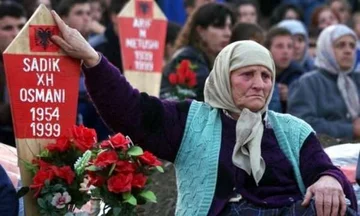
Since the end of the war in the spaces of the former Yugoslavia, there are approximately 12,000 persons named missing, while in Kosovo there are still 1,653 (84% men and 16% women) of all ethnic affiliations on the list of missing ones. Meanwhile, we have several local and regional initiatives that made efforts to contribute to the dawning of the fate of missing persons. These initiatives have shown partial results.
It was an initiative called RECOM (Serbia, Croatia and Bosnia and Herzegovina) that at its beginning expelled Kosovo, so KMDLNI had rejected this initiative as if it did not support it today. What were the reasons that the issue of missing persons ran into these 20 post-war years in Kosovo according to KMDLNI, although according to the statistics of previous wars, since World War I, a percentage , 20 ʹ 30, missing persons have remained unlighted and, possibly, will happen in Kosovo as well.
Problems identified since 1990, 2019, for failing to follow the fate of missing persons:
Lack of the will of the international factor for dawning the fate of missing persons. The international factor has been the decision-makers in Kosovo since the end of the 1999 war and so far, and has had the opportunity to seek information from warring parties to provide information about the fate of missing persons but who have not done so in good measure because of projects and political processes. The fate of missing persons has been sacrificed or put into the interest of talks with Serbia, showing no willingness to put pressure on the two warring sides that objectively bear responsibility for the disappearance of unarmed civilians or captured soldiers and policemen who are protected by the Human Rights and War Laws.
The extreme polytisation of the missing persons case. It has become a mistake that the issue of missing persons has not been considered and treated as basic human rights and humanitarian issues, but as political issues, therefore politics has been an obstacle to moving forward and successful in this process.
Lack of principle or implementation of double standards of international organisations: An impression won that international organisations that have dealt with this issue more have been focused on bleaching (in the name of positive discrimination !! ) of missing persons to non-Albanian victims, rather than addressing the issue as universal right. In a word, they have applied the dual standards of handling this issue by being instrumentalised by international politics. The expectations that these organisations will contribute more have been enormous, so even disappointment has been great.
Lack of a database: There has been missing a database for missing persons or there have been publications, especially from the International Committee of the Red Cross, with incorrect data, overlapsing many names several times by creating an incorrect list. There has been a lack of update on these lists.
Addressing this issue according to ethnic principle: Until recently, there have been separate lists of missing Albanian belonging persons and missing lists of Serb, Roma, Bosnian, Turkish, Egyptian, Ashkali, Goran, etc.
The lack of co-operation of organisations dealing with the issue: Initially, there has been a total lack of co-operation by organisations dealing with the issue of missing different nationals, as if the necessary co-operation of Albanian organisations dealing with the issue of missing persons has been lacking. Now it's a better situation, but we still don't have the right co-ordination and the commitment of politics among these organisations, although they have common interest, the dawning of the fate of missing persons regardless of ethnic, religious, racial, political beliefs or social status!
Prejudice of guilt or innocence: The approach to the fate of missing persons in not a few cases has turned into political war by naming your disappearances to victims, while other Nazi victims have lacked empathy. The opposing side has been charged as criminal because, apart from killing innocent civilians, it has eliminated a large number of them because of national affiliation. Meanwhile, until recently victims or missing persons who share ethnic affiliations with those who have been practicing violence in Kosovo, until genocide, have been relating to the same level as the perpetrators, regardless of the circumstances where they were victimised or disappeared.
The occupation of social solidarity in support of family and organisations dealing with the issue of missing persons. After the end of the war, there has been a major citizenialization with family members who have disappeared through the organisation of protests, rallying, round tables, conferences which have in time begun to fade, leaving this burden of commitment only to families who have been organized into associations or nongovernmental organizations. A reduction in socialization and the family of missing persons has resulted in reduced interest in the matter, and there has been a lack of needed and necessary pressure to address the matter seriously and in line with its weight. The question of clarifying the fate of missing persons has also been relating political interference or politicising protests from politics. As many as have damaged the process of dawning the fate of missing international politicians, so have Kosovo politicians.
The absence of an institution that would make DNA identification. Wrong identification, burial without even being identified through DNA, repetitively interviewing family members, the absence of an institute that would make identification without having to send samples outside Kosovo has delayed, and in many cases has failed to make the fate of missing persons worse. Internationals, respectively, Jose Pablo Barayabar has experimented with mortore remains as if he carried with him, without the permission of Kosovo authorities, an amount of samples seemed severely damaged in the process of identifying missing persons. Even today there are many mortore remains that have not been identified and that are in the Law Medicine Institute, waiting to be identified through DNA.
The lack of readiness of neighbouring states to co-operate with Kosovo on the issue. States that have direct or indirect responsibilities are making it impossible and preventing the whitelight of missing persons' fate so long ago that they are not being sanctioned by anything. The lack of public pressure in these countries encourages politicians who have a 100% responsibility for the disappearance of persons not to co-operate or offer information about the fate of these people. The current policy in the states of the former Yugoslavia has precise information, even in the fate of missing persons as well as the locations where those who were executed were buried, without a regular judicial process.
What should the next Government in Kosovo do for lighting up the fate of missing persons?
The process of handling the issue of whitewashing missing persons' fate should be depoliticised and displaced from the political level to that of human rights. In this context, associations dealing with the issue of missing persons should be supported and strengthened. Government support must be of material nature (ensure of activities funds) and professional (ensure of needed advisers or experts).
Talks on whiteling the fate of missing persons must be unconditional, nor accept conditions nor set conditions! Reciprocity in this area is constitutional measure or political mass, while the principle of universality of human rights does not accept reciprocity in the field of human rights. The conditioning of talks by any party implies that there is a blocking or obstructing the fate of missing persons.
The Kosovo government should make an effort to provide information to family members who have missing persons, as basic human rights as well as the right to justice. Under Transitional Justice, for which previous governments are engaged under options and obligations, the future Government of Kosovo must commit to meeting two pillars (from a total of four) of Transitional Justice; The right to inform and justice rights. In the context of this, the process of forming the Commission for the truth must be accelerated.
Kosovo's future government must ensure full involvement in this process, making no difference as much as discrimination on ethnic, racial, religious, non-compliance grounds. The future Kosovo government must ensure that all those responsible for the disappearance of persons will be brought to justice without making any distinction and ensure that victims will be treated as victims, while those responsible will be treated on the basis of responsibility they have or have.
The future Kosovo government should seek information and files from the International War Crimes Tribunal for the former Yugoslavia in The Hague, national and international human rights organisations that have addressed this issue, embassies that have been involved in these developments, the international Red Cross Committee, KFOR, U n The NHCR, OSCE and neighbouring states in order to have a clearer and centralized mirror otherwise, this data will remain untapped.
Kosovo's government must provide greater support to the Law Medicine Institute so that there is no need to become expensive identification through DNA in other countries that are too late.
Kosovo's government should call on citizens who have members on the list of missing persons to provide samples or samples for identification with the DNA method in order to become the identification of long-standing morto remains at the Legal Medicine Institute in Pristina. The government should provide professional support and material funds for this.
The future government of Kosovo should take care of the welfare of families that have missing persons because the set amount is insufficient and in largecompatible with expenses, even necessary for a family.
The Kosovo government must restore the sense of solidarity with family members who have missing members by solidising with them. KMDLNI proposes that in all primary, secondary and faculty schools, on International Day of Missing Persons, the first hour is dedicated to precisely missing persons. That would be the responsibility of the Ministry of Education, Science and Technology.