8 hours ago
Citizens want dialogue with Serbia to end with recognition, split over tax

Periskopi(6 years ago)
(6 years ago)About 69 per cent of Kosovo citizens demand that dialogue with Serbia be completed with recognition of Kosovo's citizenship at the existing borders. And 44 percent of them think that the new government should remove the tax on Serbian products, while 45 percent think otherwise. This information became [...]
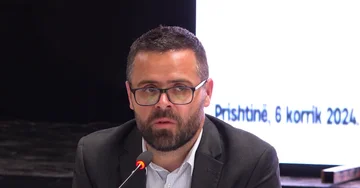
This data was released by the analysis the Pristina Institute for Political Studies (PIPS) and the “Konrad Adenauer” theme “International Policy and Kosovo-Serbia dialogue: The perceptions of Kosovo citizens”.
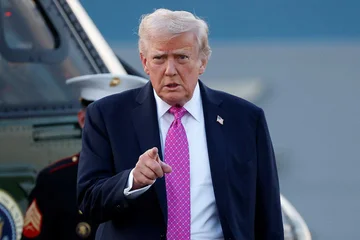
On the basis of this poll as Kosovo's main ally in the international arena is seen by the US, while within the EU, the main ally state is seen by Germany. Angela Merkel remains as Albania's most popular leader, after that Donald Trump and Turkish President Erdogan, while 73 per cent of Serb community residents have Russian President Vladimir Putin.
PlPS researcher Butrint Berisha said that on the basis of the survey, 14 per cent of respondents prefer that no agreement be signed with Serbia at this moment, until 69 per cent demand that Serbia recognise Kosovo as a state on the existing borders.
In the question of whether there was an impact on dialogue with Serbia on the rock of territories, about 39 percent of citizens have said that this topic has weakened the position of the state of Kosovo in talks with the Serbian state, while 45 percent have been neutral.
“Within the results the main option and I can say convincingly and preferably for the residents is that Kosovo seek recognition from Serbia on the existing borders, is an idea which has been proposed by several political parties, while Kosovo's second most favoured option is not to sign any agreement at this moment but to expect a more convenient moment... About 45 per cent have stated that there was no impact either that has not strengthened or weakened within the residents who have received the absolute majority are about 39 per cent the situation in degrees that think the issue of exchange of territories has weakened Kosovo's position in dialogue with Serbia”, he said.
The question of how the new government should conduct a 100 - percent tax based on the responses of the residents about 44 percent prefer to remove it, while about 45 percent prefer to keep it away.
“Citizens seem to be very equally divided in relation to this issue, about 44 per cent have claimed that the tax should be lifted by the coming of the new government, while about 45 per cent have declared it must remain. According to what has been seen when the tariff has been put on popular approval by the people, this figure really has to be declining, and one of the segments that have influenced must also be the aspect of reciprocity, which is a political idea that has been promoted by the two political parties Vetevendosje and the LDK, even in the election campaign”, Berisha said.
By this survey, citizens were asked whether Kosovo is at risk in the event of the founding of the Serb majority of municipalities, over 63 percent of citizens think they are at risk, while 28 percent do not.
According to them, establishing association endangers Kosovo, as Serb majority municipalities require partition from Kosovo.
Granit Ternava from Konrad Adenauer Stifting (KAS), said Germany is considered a top economic partner for Kosovo, while the world's favourite leader is Chancellor Angela Merkel with 63 percent.
“Germania estimates it must be Kosovo's main economic partner by 39 percent, compared to 34 per cent in the preliminary poll, which I believe is a clear message to the future government about where to direct policies and access to foreign investors. Mrs. Merkel remains the world's most popular leader for Kosovo citizens with 63 per cent of confirmation until the preliminary poll in February was 53 per cent, so we have a 10 per cent increase of”, he said.
Poll results were commented by political science professor Armend Muja, who said 83 per cent of Kosovo's citizens for Kosovo's citizenship to be recognised at the current borders.
According to him, the 100 per cent firm tax on Serbia's products and Bosnia and Herzegovina's society has divided opinions.
“The society is split in half as far as the tax was concerned and one of the main points that sent the government down think it was the tax was once thought to be positive, some political parties had hopes that the tax could be the winner of victory, and indeed that when the tax was imposed it had 90 percent support with another research, it fell to 50 to 50. I took a little geographical note of Kosovo's northern municipalities mainly do not support the tax, southern municipalities support the tax. The municipalities like Podujevo, Pristina, Mitrovica suddenly no longer willingly support their recommendation is to remove the” tax, Muja said.
Based on this poll, citizens questioned that when they believe that Kosovo will become a member of the European Union based on options given 48 percent of them believe that Kosovo will be an EU member in 2025.
As for Kosovo's foreign policy and international position, the survey has found that 34 per cent of citizens surveyed are not satisfied with Kosovo's foreign policy and diplomacy, while 30 per cent have expressed satisfaction, 30 per cent have preferred to be neutral.
About 50 percent of residents have estimated that the campaign to attract recognition has damaged Kosovo, while 38 percent have declared it wrong.
And 76 percent of citizens believe that Kosovo's citizenship in the long-term plan does not depend on Serbia's recognition.
According to the survey 60 percent of Kosovars think that NATO is the international organisation that has helped Kosovo most since 1999, followed by the EU by 20 percent.
International policy poll and Kosovo-Serbia dialogue: The perceptions of Kosovo citizens” have taken place in 33 Kosovo municipalities and included 1200 residents.