6 minutes ago
Women made it: Most of them secured seating in uncoupled Assembly

Periskopi(7 years ago)
(7 years ago)In the 6 October parliamentary elections, most of the future women MPs have secured seats in the Kosovo Assembly without having to quote gender. Kosovo's gender equality law stipulates that 40 percent of women are involved in decision-making positions, while 30 percent of Kosovo lawmakers should be [...]
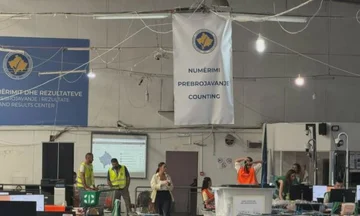
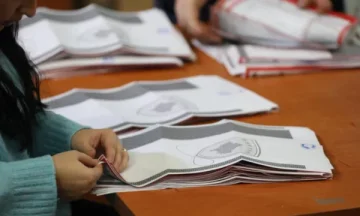
In the 6 October parliamentary elections, most of the future women MPs have secured seats in the Kosovo Assembly without having to quote gender.
Kosovo's gender equality law stipulates that 40 per cent of women are involved in decision-making positions, while 30 per cent of Kosovo lawmakers must be female.
Albert Krasniqi, connoisseur of political developments in Kosovo on the social Facebook network, has written that at least 13 of the 39 elected women in this election will be elected in the gender quota.
According to him, gender quota is gradually losing importance. “Time to think of gender quotas on candidate lists 50/50”, he wrote on Facebook.
All future deputies of the Vetevendosje Movement (11) have written, have secured seats in the Kosovo Assembly on the basis of votes won in the election.
In the Democratic League of Kosovo as future deputies nine have entered as elected, while two MPs have entered through gender quotas.
Eight deputies in the Democratic Party of Kosovo have secured seats as elected, while six have entered through gender quotas. In the coalition Alliance for the Future of Kosovo and the Social Democrat Party, four MPs have secured seats as elected, while five through gender quotas.
Serbian Loja, director of the Group for Juridical and Political Studies, told Radio Free Europe that obtaining seats from most future deputies without the need for gender quotas, points to increased women's political power.
In a way, it shows that in general, public opinion, but even voters are seen as the advantage of women's voting for the contribution they can bring to Parliament and institutions and not necessarily due to quota. However, I consider that gender quotas should remain and for some reason, because Kosovo is a new democracy, it is not that we have a level of awareness among the political parties for the role and contribution women have as in representation, within parties and representation of the” institutions, Loxha says.
Eugen Cakoli from the Kosovo Democratic Institute (KDI) tells Radio Free Europe that there is a trend of increasing the number of MPs, which earn a mandate without having a quota.
However, he adds, the gender quota, though in some respects, can be seen as discriminatory, should continue to be in use in Kosovo for at least some of the elections.
“Numri, now growing on the basis of pre-election trends, of women who have won the mandate, without having to take this mandate through quota, indicates that there is a cultural and civic emancipation of Kosovo voters who have passed the barriers or gender steroids that have existed in the midst of our society. We are still far from the satisfactory figure of women's involvement in institutions in general”, Calcoli says.
Even the Serbian Loxha adds that Kosovo still needs to have gender quotas in force.
She says political parties continue to lack the will and ability to create space for competent and talented women. Loxha adds that if party decision-making structures are looked at are almost unattainable majority for most women
This is best shown by women's participation in electoral lists, where it was only in the legal requirement. Likewise, if we see minimum appointment in party decision-making structures or in leadership positions in Government or public institutions. All this reinforces the need for gender quotas to remain, until our society achieves a maturity that parties and citizens generally value the political power of women”, Loxha says.
The quota system in Kosovo for the first time applied to the United Nations Mission in Kosovo (UNMIK) in 2000. According to a regulation, he was looking for