22 minutes ago
Reeker: America is not focused on correction of the Kosovo- Serbia

Periskopi(7 years ago)
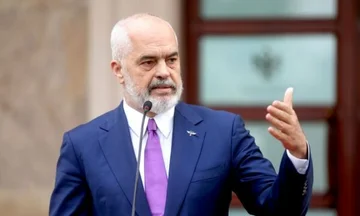
(7 years ago)The United States is not focused on the idea of changing borders between Kosovo and Serbia, says in an interview for Radio Free Europe the task of US Assistant Secretary of State for European and Eurasian Affairs Philip Reeker. According to him, the United States wants Kosovo and Serbia to find one [...]
Radio Free Europe: Mr. Reeker, start with dialogue between Kosovo and Serbia. The United States is showing an added role and interest in this dialogue. What new dimension can diplomats Matthew give this process Palmer and Richard Green?
Philip Reeker: As you know, we have supported the Kosovo-Serbia dialogue from the beginning. We have supported the European Union's efforts. We tried to be partners in that effort. And I think that (American Secretary of State Mike) Pompeii has witnessed this with Matthew's appointment. Palmer, one of my deputy special representatives for the Western Balkans, to focus directly on the matter.
President (American Donald) Trump has supported this with the appointment of our ambassador to Germany, Richard Green, special envoy of the president for peaceful negotiations between Serbia and Kosovo, to add political dimension, to show that we believe this is an important process and that the United States will do everything possible to help this process.
Radio Free Europe: You have long been involved in the mediation process between Kosovo and Serbia. How real are the chances of these two countries reaching peaceful agreements?
Philip Reeker: We believe the odds are real. We believe there is will on both sides. More importantly, there is a strong desire among all the people in the region to live in peace, to find ways to move forward, with the goal of full integration into European and transatlantic institutions, and to find ways for better security, stability and prosperity for all people in the region. I believe that's what leaders in Serbia and Kosovo want to see. The question is finding the right dynamic, finding the skills to move forward. And it's all diplomacy.
Radio Free Europe: For more than a year now, the idea of changing borders has been very controversial in Kosovo. How real is it to expect Kosovo and Serbia to agree on the new border?
Philip Reeker: I think they should see what they can do to move forward and not go with some predetermined notion of how a broad peace deal can be, how they can know each other, how they can work to find better opportunities for their people. This includes economic opportunities that will result from overcoming specific differences, finding ways to increase trade and attract investments from abroad to the region, even more. This is the future for all these people. That is what the United States wants to support, (so) what the two countries can do together to find the way forward, without preconditions.
Radio Free Europe: Do the United States support the idea of changing borders?
Philip Reeker: The United States supports the two countries' co-operation through dialogue, to find a way forward, which would bring better opportunities for people in Serbia, for people in Kosovo, throughout the region. And this, frankly, is good for Europe and then it's good for us, for our vast transatlantic family, to be able to keep going in a more stable, secure situation. This has to do with the future of all people in the region and with generations to come.
Radio Free Europe: But are you concerned with warnings that possible change of borders between Kosovo and Serbia could have a domino effect in the region?
Philip Reeker: I think you're insisting on the idea of changing borders. We're not focused here. We are focused on finding the two countries ahead and determining ideas for the solution. There's no way to do that.
I think it's an excuse for others not to move forward when they focus on things they imagine before they happen. Negotiations are negotiations. And this is the meaning of dialogue: sit down and talk about opportunities, about building trust between the two countries. So we have offered our diplomatic offices, the special representative, the president's special envoy, to help build this and work with our European colleagues, to move the whole process and region forward, for a better future for everyone there.
Radio Free Europe: Mr. Reeker, there is speculation about a kind of peace conference between Kosovo and Serbia, organised by the United States. Is Washington planning something like that?
Philip Reeker: I'm not aware of any specific plan. It depends on what two sides can do to work together. We recently had elections in Kosovo. We're waiting for government creation there. This is clearly an important step in the future steps of the process. The process of dialogue has been very important in the past to help resolve specific issues. We want to see both countries come back to the table together, in dialogue.
Radio Free Europe: Can we wait for a meeting in Washington?
Philip Reeker: I'm not aware of any meeting in Washington right now. I have a lot of meetings in Washington all the time. What two sides have to do is decide how to move forward. We are offering our offices and support to American diplomacy, along with the European Union, so that the two countries can move forward in an agenda they have made priority.
Radio Free Europe: It seems a little hypothetical, but if the deal is blocked, what would be the consequences of continuing some kind of quo status in Kosovo-Serbia relations?
Philip Reeker: As you said, this is hypothetical. So why spend a lot of time talking about hypothetical issues? If there is no agreement, you remain on the status quo and do not move forward. Continue to have instability in a region that needs more stability. Continue to let history guide the future, rather than looking to the future, and make an effort to form a new story about the region that we think is very possible.
I think it's time to move forward, to find ways from which people in Kosovo, people in Serbia, people throughout the Western Balkans can have more stability and, therefore, more opportunities for prosperity. To do this, you must have security. It is important that people in the region acknowledge that they must live together. Geography is real. Neighbors are neighbors. That won't change. This is about finding ways to move forward and exploit what is being offered, in terms of international support, to find solutions and progress in this long-term conflict.
Radio Free Europe: Let us now turn to another issue: Bosnia and Herzegovina. The country has already spent a year without state government. How can Bosnia become a functional state?
Philip Reeker: I think it's important that the people of Bosnia and Herzegovina be heard by their leaders. They have been chosen to govern, to bring functionality to Bosnia and Herzegovina. It has been nearly 25 years since the Dayton Agreement has brought peace to an absolutely terrible situation. People may have forgotten how terrible the war was in Bosnia. True in the heart of Europe you have had a terrible war, so many deaths, so many atrocities, ecstasy, mass migration.
We've found the way to peace through the Dayton process and now, 25 years later, it's really time to move forward and become a more functional state. This is the duty of leaders in Bosnia and Herzegovina, all of them. And we want to work with our European partners to promote this.
Radio Free Europe: You just mentioned the Dayton Accord. It has been a major American contribution to peace in Bosnia. How would you comment on its change?
Philip Reeker: The Dayton Agreement has been reached to bring peace, to end that terrible war. It is never meant to be a permanent situation. What we need is a will from all sides in Bosnia to see what they can do, not only to make the country more functional but also to offer more stability, more security, more prosperity. That's what people want. Moving forward in reforms encouraged by the international community, benefiting from the good will and supporting that Bosnia and Herzegovina has many friends and partners (and) rejecting malicious influences that want to see divisions in the region are important steps in which our diplomacy is also focused.
Radio Free Europe: Next year will be the year of elections in northern Macedonia. The decision on these elections has been made after the European Council has refused to start accession talks with Skopje and Tirana this month. What would be your message to the Macedonian public and political parties there?
Philip Reeker: Northern Macedonia has made remarkable progress. In the United States we were very happy last week to see the US Senate ratify the North Macedonia application to become a full NATO member. Northern Macedonia will be the 30th member, the 30th ally of the transatlantic organisation. This is an extraordinary step. They have made major reforms, made arrangements with neighbours that have enabled them to move forward.
We have already seen the results in northern Macedonia, in terms of a new sense of stability and security, which increases the opportunities and interest of foreign investors. This is important.
We have been disappointed, and Secretary Pompeii has made this very clear that the European Council has not launched accession negotiations with Northern Macedonia and Albania. European prospects, the idea that people in these European countries want to join the European Union, has been a major component of our foreign policy. We are not members of the European Union, but we have supported this idea. Our aid programmes, our diplomacy has supported the reform efforts these countries have undertaken to move in that direction. We believe it is in the best interest of a country in the region and Europe.
It is disappointing to see certain leaders with a 19th - century view of the Western Balkan region. We hope it will only be a temporary obstacle (and) the countries will have opportunities in the spring, as they have said, for a new decision that would enable the opening of accession negotiations. This, of course, would only be the beginning of a long process of a series of chapters, through which new European Union countries have passed, ahead of them, to implement necessary reforms to qualify to meet EU membership requirements.
I have noticed that the Council (European) has not requested new steps, it has simply postponed the decision. I know that in northern Macedonia, they are making big steps in this direction. They are happy to see progress in the NATO process. We will clearly recognise this when NATO leadership meets in December and will continue to support their efforts, both in northern Macedonia and Albania, to move towards the EU road.
Radio Free Europe: Do you think Brussels' negative decision could have a negative effect on the region or open the doors to other countries?
Philip Reeker: I think it is important that this process that the European Union and its member states have encouraged now and many decades should not be questioned. These are European countries and the United States has supported a whole, free, peaceful and promotional Europe since the end of World War II. We are celebrating NATO's 70th anniversary. NATO has clearly been an important key to achieving stability, initially in Western Europe, during the Cold War period, and then, after adopting the post-Cold War period, with new members, expanding partnerships with others, as a defence alliance. This has been an important key to a security level, which has enabled this unprecedented period of prosperity in Europe. That's one thing we're proud of. It's good for the United States, it's good for Europeans.
Until we celebrate this anniversary and remember what we've done together, we believe we should continue on this road. There are those who want to intervene in Western Balkan countries, just to create instability. There are those who do not want to see stability because it affects their negative interests. We will continue to support the people of the region who want to move forward for a better future.
Radio Free Europe: Mr. Palmer has said last week that the lack of decision for northern Macedonia and Albania could open the doors to Russia. Are you worried?
Philip Reeker: I think it's a concern. We have seen the malicious influence ahead of the region. These countries (in the Western Balkans) have clearly declared that the direction they want to take is the West. They are part of Europe and want to be part of institutions and organisations that make up Europe and enable greater prosperity, greater cohesion. They have taken significant steps in overcoming differences with neighbours this is the first step and in undertaking reforms needed to qualify, simply to open the accession process, which will then last until each chapter is closed. But this is a positive process. We believe that they deserve positive answers, as they do exactly what they are asked to do and meet the necessary conditions to move forward.
Radio Free Europe: According to you, what is the biggest Russian influence in the region?
Philip Reeker: It depends on how others view it. Russia is a country that has relations in the region and we accept it. We too want to have better relations with Russia. I've been to Moscow and made an effort to talk about where we can build our relationships. We have many challenges.
One of the most visible places in which Russia's malicious influence is seen is Ukraine. Russia has invaded this country, continued (support) the ongoing war in eastern Ukraine. Thousands of people are dead. They have undertaken obligations through the Minsk Process to find a way forward and fail to comply. We want to see this. The Russians are paying the price for this, for their government's actions. This kind of malevolent influence is something we do not want to see in other parts of Europe and certainly not in the Western Balkans.