8 minutes ago
Media education needed to be introduced as classes in schools

Periskopi(7 years ago)
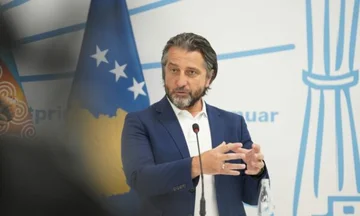
(7 years ago)The Independent Media Commission in co-operation with the Institute for Development Policy has gathered today at a table aimed at marking the global week's media education on media and information. This week is dedicated to freedom of expression in order to have greater diversity and to inform citizens of media content. [...]
This week is dedicated to freedom of expression in order to have greater diversity and to inform citizens of media content.
KPM chief executive chief Luan Latifi said this event is aimed at promoting media education, as well as determining further steps towards developing policies that connected with this area.
Technological development and rapid information in digital time has made online media and social networks have an important role in the impact of creating public opinion, so citizens need to be empowered with the necessary and appropriate skills to tell real news and truth from false and disinformive information. The development of media education will also include KPM, as media regulator to encourage and promote different activities with all institutional actors to promote media education”, Latifi said.
KMP Vice President Violet Hyseni émendi said convinced that the KPM could take an active role, implementing various projects for media education.
For the implementation of this project according to Kelmendi, the KKP will co-operate with media, civil society, academic institutions and other parties that express interest.
“We have just returned from meeting European regulators, this has been one of the main points discussed. So it's a challenge that European regulators are facing, it's a process in which some are intensively engaged, some are only sides. For us as regulators in Kosovo, we think KPM can take a very active role, and this is carrying out projects in co-operation with other parties, including civil society organisations, academic institutions, the media, but also all parties who are interested in getting involved in this process”, Hyseni- Kelmendi said.
Media Council Director Imer Mushkolaj said the media education subject should be introduced into schools, as it would help many media to be aware of the content they offer.
“We must keep in mind the achievement or realisation of an inclusive framework in terms of media education. So we have to do our job outside the institutions. When I'm saying institutions I'm talking about introducing media education in schools, so the pressure shouldn't be missing because from my perspective I think it's very important that it be part of July school, we have people who will make a good contribution to this matter”, Mushkolaj said.
Mosskolaj said that while the focus on new generations should be on introducing media education in schools, among older generations education should be on how to know information whether it is false or true news.
From the Journalism Department at the UP's Philological Faculty Remzije Sahini-Hojaj said teachers play the main role in media education and critical thinking.
“We as a department have insisted since 2010 that Medial Education, seeing developments happening today in the technological and social developments that take place in Kosovo, we have insisted that media education become part of the school program, not only from the university, but also from pre-school, elementary and middle-of-the-size”, Sahini-Hojay said.
She showed that the Journalism Department this year has had a pilot project in co-operation with the organisation. INDEP and U NESTO, for the training of teachers in Medial Education, where, according to her so far, they have managed to train 300 teachers of Kosovo schools.