10 minutes ago
Number of invalid ballotes exceeds election threshold

Periskopi(7 years ago)
(7 years ago)On the basis of the Central Election Commission's preliminary results in the 6 October parliamentary elections, more than 40 thousand and 732 ballots have been deemed invalid. The municipalities leading up to the number of invalid ballots, according to KDI, are Skenderaj, Novoberda, Drenas and Podujevo. But the gap in this huge number of ballot [...]
But the gap in this large number of invalid ballots is considered not to be adequate for voting on the part of the Central Election Commission and political subjects.
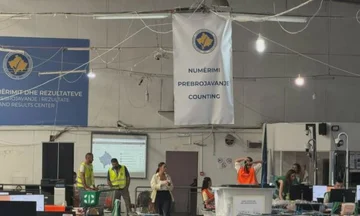
Central Election Commission spokesman Valmir Elezi has told Kosovo Preress that while the results of the 6 October elections have not yet been certified, the CEC has not identified the nature of the unworthiness of votes.
But according to him, a more detailed report on voter worthlessness will be made later.
Elez has not overlooked the possibility that not informing is affecting a large number of these votes, which she reasons with the short term for organising extraordinary elections.
“Even as for this election process, the Central Election Commission is now in this period when the recount of certain locations is under way, finding invalid ballots and seeing their nature. Of course, after we have more time, there's going to be a report on the details of the statistics pertaining to the inadequacy of the ballot... one of them may be about public information, but we have to have that these are premature choices that are organised within a short period of time and therefore it happens that through the days that we have available them and through the information that we distribute and we may not get to all voters to send the message and information right to the proper way of filling out the paper, which will make them worth the <1x> of it, E Himself stressed.
While the Central Election Commission has not yet analysed the nature of invalid balloting in this election, the Commission has analysed more than 70,000 invalid ballots of the 2017 parliamentary elections.
This analysis reveals that about 45 per cent of the cases, the voter has only marked the number of candidates, but not that of the political subject.
The “S have recently been the parliamentary elections of 2017, where the CEC has made an analysis of the inadequacy of the balloting has been investigated during the recount process, somewhere around 7,200 invalid ballots, and the reason or nature of why these ballots are invalid. In 45 per cent of the cases of these 7,200 ballots, they have been declared invalid because the voter has chosen only candidates for MPs, but not the political subject, while in the other 32 per cent of the 7,200 ballots which have been analysed, the voter has chosen more than one political subject which still made the paper invalid. Less has emerged the case of deliberately making balloting, as the voter has made signs everywhere on the” ballot, the CEC spokesman said.
On the other hand, civil society is assessing that the lack of adequate campaigners on the part of the Central Election Commission and that there are no areas where the phenomenon is repeating itself is leading to such a large number of invalid ballots.
Eugen Cakoli from the Kosovo Democratic Institute (KDI) told Kosova Preress that in the last two parties, the number of invalid votes has passed the election threshold since it has reached more than 5 per cent.
According to Colcol, in this large number of invalid ballots, campaigns from political subjects are also being influenced, which are mainly being directed only to candidates.
According to him, considering that no bail votes have been counted and that of persons with special needs, the number of invalid ballots in the 6 October elections could increase.
“Based on the analysis trends of these invalid ballots for these past election cycles 5 to 6 percentage points is the number of invalid votes as a result of the wrong information or party campaigns than when more than one political subject can be identified in deliberate voter-side disruptions, the CEC has to address most of these invalid paper results as a result of Information”, Cacol said.
According to KDI, ten municipalities with the highest percentage of invalid votes in the October 6th extraordinary parliamentary elections are: Skenderaj 9.66%, Novoberde 9.64%, Drenas 9.47%, Podujevo 8.40%, Lipjan 8.31%, Rahovec 8.07%, Dragas 6.67% Ilishevo 6.27%, Kamenica 5.91% and the year at 5.90%.
Reference to these data, KDI researcher recommended it The CEC will focus more on municipalities with greater numbers of invalid votes through their campaign.
“Skenderaj and Drenas, who have had even during past elections large numbers of invalid ballots already have invalid ballots compared to the country's average level, while the country's average is bringing about 5 per cent in these municipalities the number of invalid votes amounts to 10 per cent of the total number of votes. Consequently, the CEC would have to analyse these two aspects so that future voter information and education campaignes will be targeted especially in these municipalities, and why not public opinion can be developed in order to understand the preferences and demographic divisions of voters”, he stressed.
Remember, the occurrence of invalid balloting has been well present on two sides of previous parliamentary elections. In the 2014 parliamentary elections, the number of such ballots had been 30,000 and 725, whereas in the previous elections, there were 42 thousand and 554 invalid ballots.