2 minutes ago
How the Constitution of the Parliament and Government is envisioned

Periskopi(7 years ago)
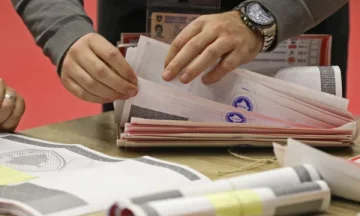
(7 years ago)The October 6th early parliamentary elections are expected to produce the constitutionalisation of the new composition of the Assembly and the formation of the new Kosovo government. The Kosovo Assembly has 120 seats, out of them 20 seats are guaranteed for non-partisan communities, 10 for the Serb community, and as much for other communities [...] respectively.
Kosovo's Assembly has 120 seats, out of them 20 seats, are guaranteed for non-US communities, 10 for the Serb community, and as much for other non-communal communities, respectively.
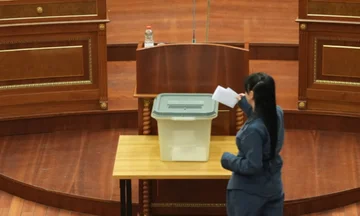
Article 66 of the Kosovo Constitution envisions the manner of the constitution. It stipulates that the Assembly is elected by a four-year term, starting on the day of the constitutional session, held within thirty days of the official announcement of election results.
The president of the Republic of Kosovo calls the first session of the Assembly. And if he is unable to call the first session, the Assembly meets without the president's participation. The first constitutional session is led by two deputies, respectively, by the oldest and youngest MP in the hall.
The Kosovo Assembly from its ranks elects the chairman and the five vice-presidents (head of the Assembly). The Speaker of the Parliament is nominated by the largest parliamentary group and elected with the majority of votes of all Parliament deputies. And the three vice-presidents, proposed by the three largest parliamentary groups, are elected with the majority of votes of all Parliament deputies, while two vice-presidents represent communities that are not the majority in the Parliament and they are elected by the majority of votes of all MPs.
After the constitution, the next procedure follows, that of forming the Government of Kosovo. Given the Constitution of Kosovo as well as an earlier act of Constitutional Court, the Government of Kosovo can only form the party or coalition that has won the elections. The winning subject of elections could form a post-election coalition in order to reach the sufficient number of votes in the Assembly for forming the new government.
As far as political side is concerned, the decision-making power of the coalition or government is estimated to depend on the number of MPs or the support it has in the Assembly. A government that would be created with the support of two-thirds of the Parliament's composition is usually believed to be better able to make decisions, compared to a government that would ensure only the minimum number of votes, meaning 61 votes for survival in the Assembly.
However, Article 95 of the Constitution envisions the form of government selection. It says that after the elections, the president of the Republic of Kosovo proposes the candidate for prime minister, in consultation with the political party or the coalition that has won the necessary majority in the Assembly to form Government.
Analysts predict difficult negotiations on forming government
On the basis of the Constitution, the candidate for prime minister -- not later than fifteen days after the appointment -- represents the composition of the government before the Kosovo Assembly and requires approval on the part of the legislature.
The government is considered elected if it receives the majority of votes (61 and more) of all Kosovo Assembly deputies. If the proposed composition of the government does not receive the most necessary votes, the president of the Republic of Kosovo, within ten days he appoints the other candidate under the same procedure. If the government is not elected the second time, then the president of Kosovo announces the elections, which should be held no later than forty days from the day of their proclamation. Government members, after the election, pledge before the Assembly.
Vetevendosje, LDK from opposition towards forming government
As for the number of ministers or members of the government, the issue is determined by its internal act. In the government, there will be at least one minister from the Serb community and one from any other non-combat communities in Kosovo. If there are more than twelve ministers, then the government will have a third minister, who represents one of the non-communal communities in Kosovo.