5 hours ago
Kosovo's sleepy year of justice

Periskopi(7 years ago)
(7 years ago)The end of 2017, Kosovo had found it in a critical position, and eventually the opposite was the situation 12 months later -- from the attempt at abolishing the Special Court at the start of confrontation with this institution. The work of Specialised Chambers and Specialised Prosecutors was expected to slow down with [...]
The end of 2017, Kosovo had found it in a critical position, and eventually the opposite was the situation 12 months later -- from the attempt at abolishing the Special Court at the start of confrontation with this institution.
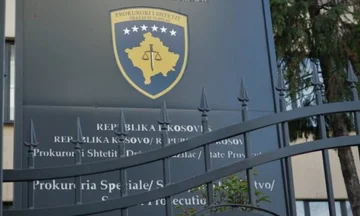
The work of Specialised Chambers and Specialised Prosecutors was expected to slow down with the surprise departure of the Special Prosecutor, David Schunndimann.
Instead, American prosecutor Jack Smith was appointed in May, which brought with him a long experience in addition to the US justice system and international cases.
The spot left empty by Schendian had been temporarily occupied by his deputy until Jack Smith started working in September, and news from The Hague did not delay, KTV reports.
Sokol Dobruna, who had led with the KLA Military Court, and another former colonel of The KLA, Safet Syla, was initially questioned in Pristina, while in January others will be presented near the Specialised Chambers and the Specialised Prosecutor's Office.
Despite calls to respond to special invitations, one of them indicated that he would refuse to voluntarily go to The Hague.
The year 2018 had started with the sentence of Albin Kurt and others for tear gas, which in total took 5 years and 5 months in prison on bail.
The January 3rd conviction of the Pristina Foundation Court confirmed in September.
As was done in 2017, Paul Lekaj, Time Kadriy and Teut Haxhiu were never called to face justice by the Pristina Foundation Court.
However, now Minister Lekaj, in his municipality, Gjakova, appeared before the tribunal on charges of corruption for the time being led by the municipality.
Fatmir Limaj, emerged innocent of the process known as “Bellanica”, which was charged with war crimes.
But for war crimes, at the Constitutional Court of Mitrovica, Zoran Vukotic was sentenced to 6 years and 6 months in prison after torturing Albanian civil prisoners in the Smrekonica prison.
In the murder of his wife and daughter, Peter Ndrecaj was sentenced to 24 years in prison by the Gjakova Foundation Court.
No hearing was held in court this year for the Italian visa case, where Uke Rugova and Astrit Haraqia are among those accused.
Another case, known as “Toka”, which earlier was led by EULEX, dragged on and sessions were barely held by the lack of indictees.
True, there has been an accusation of corruption even for senior state officials. They have always been followed by debate on whether they have been qualitative in view that many of them have been dropped by the courts. But even a clue made by the Law of Justice is true: the almighty act of corruption in the last three years in high profile cases, there is only one former head of a small municipality like the one in Klocott, and that sentence has been conditional.
The founding court in Gjilan did not act differently on a case once high profile.
We sentenced to 1 year in prison on bail for Prizren's former leader, Ramadan Muja, and with lower sentences as well on bail, were sentenced to other former officials who were charged in the case.
In another highly commented case, the Pristina Constitutional Court, in a month it tried and pronounced sentence for former Deputy Prime Minister Musa Cena.
Six months in prison, he was sentenced to a fine of 5 thousand euros, despite being detained in French, demanding a bribe of 30,000 euros.
The case “Pronto” could not start any other way than with the Proto greeting, and for the time being Adem Grabovci, Besim Beqaj and 10 other accused, appeared before the court to face charges of violating the equal status of citizens and residents of the Republic of Kosovo in co-ordination.
Much of the case had also been brought by Chief Prosecutor Alexander Lumez, but nothing compared to the trouble you faced with another case.
For many of you, a hero who had decided to expose a system caught by politics, for someone else a chicken eater.
Elez Blakaj, a prosecutor who as part of the Special Prosecutorship had largely had war crimes cases, was assigned to no easy subject.
The investigation into veterans' lists, after a long and laboring job, had concreteised it with a volumeous indictment.
The findings were scandalous: about 20 thousand fake veterans who cost the state budget tens of millions of euros annually.
The 12 members of the government commission that had approved the veterans' lists were the accused, ministers, deputy ministers, MPs included.
The Act came to the public only after Blakaj's resignation was announced, which prompted a wave of reactions and insults against him from politics.
Blakaj cited the pressure he had received during his work in addition to those involved in the case, including by KP chief prosecutor Lumez and leader Blerim Isufaj.
All his accusations were flatly rejected by all mentioned.
To Blakaj, a vicious campaign was launched, but this situation also brought citizens response and began protests requiring the dismissal of Chief Prosecutor Lumez.
In response to citizen pressure, the Special Prosecutor eventually sent him to the Court with several changes, adding other names, including real veterans.
Now this irritated war-prohibited organisations, who also protested -- and eventually Pristina's Constitutional Court -- sent it back for the fulfillment and improvement of the indictment.
Despite having been available for two months, only on the last day did this prosecutor return the indictment to the court.
The case of false veterans, like no other during this year, has highlighted the fragility of a system that is by no means convincing the citizen that he is righteous and partial.