8 hours ago
Deutsche Welle: Danger Games With Borders in the Balkans

Periskopi(7 years ago)
(7 years ago)Changes in borders and the creation of major states in the Balkans are not possible without war, analysts in Sarajevo think. They also talk about comparisons between Kosovo and Republika Srpska in Bosnia and Herzegovina. Serbian authorities have reacted sharply to Kosovo Prime Minister Ramush Haradinaj's statement, which said that the <x0 limit between Kosovo [...]
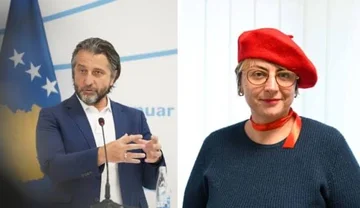
Serbian authorities have reacted sharply to Kosovo Prime Minister Ramush Haradinaj's statement, which said that the <x0 limit between Kosovo and Albania has been removed according to the Schengen principle”.
Serbian Defence Minister Aleksandar Vulin says this is an attempt to create “Greater Albania”, which according to him, “cannot be created without conflicts throughout the Balkans, not only with Serbia“.
Serbia's Prime Minister Ana Brnabiq has accused authorities in Pristina of “threatening regional stability”. It seized the opportunity to compare Kosovo with Republika Srpska in Bosnia and Herzegovina.
The “is clearly talking about borders now, and how can this be applied only to some, not to Republika Srpska“, Brnabiq said.
Authorities in Sarajevo have reacted shortly after these statements. Bosnia and Herzegovina (BiH) Presidency member Zelko Komsic said that B-H <x0 borders cannot be contested in any way, regardless of what happens between Kosovo and Albania“.
Why does anyone think the policy of the 1990s can now produce other results? Instead of turning to co-operation, European integration and stabilisation of the region, they are persistently trying to draw fully unstable parallels between BiH and Kosovo”, says Croatian member of the BiH Presidency Zelko Komsic.
While the Bosniak member, Sefik Xhaferovic, claims that efforts for violating territorial integrity or changes of borders, “would not contest the existence of the BiH, but would affect the peace and stability of the entire region, because it would end the Dayton Agreement -- that is, even the ethnic internal structures of BiH”.
Border corrections are not possible without conflict?
Igman Initiative for Serbia co-chairman Aleksandar Popov in a statement to Deutsche Welle reminds British diplomat and geopolologist Timothy Les, who said he saw the creation of a big “Serbia”, “Large Albania” and “He thinks these scenarios are not possible without new wars.
When it comes to reports between Albania and Kosovo, I think many Americans are involved here and that they have given the idea of removing the border. If this idea really comes true, then the whole region will have serious problems because the whole story doesn't end there. Serbia will immediately join Republika Serpska, while the Herceg-Bosna pursuer (the Croat-run Bosnia and Herzegovina's majority-resident) would join Croatia. Not one stone on stone would remain from the BiH we know today. And such territorial changes have never been realized without war. Such ideas are realised at a peaceful conference after the” wars, Popov says.
The violent process of changing borders in the Balkans has started in the 1990s, has ended with the Dayton Agreement and the creation of Republika Srpska (RS), the conversationor says.
The ongoing “of this process can be done only with war, but it must be known that conflicts today would include a much larger space, including Montenegro, Macedonia and Greece. These are Balkan wars without borders. The wars of the 1990s have ended within the borders of former Yugoslav relics. New conflicts about changing or removing current borders, with the aim of creating major states in the Balkans, would light a fire that would this time include even bigger” spaces, Popov says.
Balkans Destabilisation also affects EU
Popov believes there are powers outside the old continent that want to affect the European Union (BE) as well.
US President Donald Trump has already taken many steps to destabilise the EU and at the moment when Europe is more injured than ever before, because within the EU there are major contradictions. I'm afraid this could affect the very existence of the EU”, claims Aleksandar Popov.
Political analyst in Sarajevo Almir Terzic thinks that comparisons between Kosovo and BiH, respectively, RS as part of B-H and Kosovo, are an attempt by Serb leaders to convince their citizens in Serbia that they are not the biggest losers in the Balkans and that Belgrade still has what to say outside Serbia's territory.
When we take into account other European processes which will inevitably follow, such a policy would mostly harm Belgrade exactly. In addition, Serbia, even at the time of Aleksandar Vuciqi's rule, is insisting on signing with B-H an agreement, with which the Drina River is eventually defined as the B-H border and things end with that end“, Terzic highlights.
Chain action
It also criticises Kosovo's “measures, which are not in the function of strengthening stability in the region”.
“Pristina must honour existing agreements, while Serbian authorities -- primarily Prime Minister Brnabiq -- would do well if they focused on resolving problems in Vojvodina and Sandzak -- not to face things that would not be good for Serbia, the region and Europe. Time of division, incentives, and especially threats of new wars and changing borders should be left behind. The time has come for the union, within the EU”, Terzic says.
The changes, respectively, have not had support in the EU and the US since the 1990s, though some analysts say Washington has been ready to support the reform principle of borders under the normalisation of reports between Belgrade and Pristina. But most EU member states think changing borders according to ethnic principles could cause new conflicts and violence. Experts say this changes to the borders would be a project that would result in “chain action”. / DW/