29 minutes ago
Why did collapse occur in Venezuela?

Periskopi(7 years ago)
(7 years ago)Venezuelan President Nicolas Maduro on Wednesday gave US diplomats 72 hours to leave the country in response to the presidential seat of the country's National Assembly's president, amid mass protests. Hours after President Donald Trump officially recognised opposition leader Juan Guaido as legitimate president of the country, defiant Maduro appeared [...]
Venezuelan President Nicolas Maduro on Wednesday gave US diplomats 72 hours to leave the country in response to the presidential seat of the country's National Assembly's president, amid mass protests.
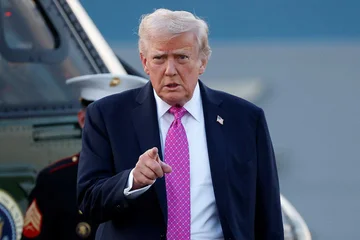
Hours after President Donald Trump officially recognised opposition leader Juan Guaido as the country's legitimate president, defiant Maduro appeared before supporters to accuse the United States of supporting a coup.
Maduro announced he was waiting for the remaining political and diplomatic ties with Washington. “We cannot accept the occupational policies of the empire, the United States, the policies of Donald Trump”, he said amid crowd cheers. “Venesuela is a place of deliverers. ”
“We will not surrender,” added Maduro.
How did the crisis unfold, and how did Venezuela reach this point? Read below a summary prepared by the World.al
P SE HISTORY ECSODI?
Venezuela's economy and social order are suffering collapses, leaving 75 percent of the poor population without sufficient food. The physical currency, bolivari, is worthless, while the petro ʹ the new digital currency Socialist President Nicolaás Maduro presented last year, linked to the price of oil CHA, is largely extinguishable. The IMF forecasts that the country's inflation could reach 10 million per cent this year. Not that there's too much to buy: The shops are empty, and the soldiers guard the warehouses against the robbers. Most Venezuelan people are now deprived of protein, and they're seriously “taining” for the “dies of Maduro”, which has left thin adults and malnutrition children. Hospitals lack basic medicines and supplies, and patients who will perform surgical surgery are told to bring their cleaning products and bandages. The murder rate has increased by 15 times more than the global average and crime is rampant. They steal you on the streets, on the beach, on the market, at the hospital”, says teacher Yamamyeth Marchano. It's terrible to live like this”
THE FOOD FOOD COLPSIN
The radical socialist regime by Hugo Chavez worked well for several years until it destroyed the country. Chosen for the first time in 1998, Savez re-entered the country's land and massive oil wealth to benefit the poor by financing its programmes through the stateisation of the oil industry, which now accounts for 98 per cent of export and banking revenues. But his price checks overwhelmed the country's businesses, and until the time that Savez died in 2013, inflation had increased by nearly 50 per cent. Next, global oil prices dropped dramatically, leaving his successor, Maduro, with a recession that turned into a crisis. Without the flow of foreign oil dollars to be used to buy products, imports exhausted, and the shelves of basic needs were empty. Meanwhile, the country became a narco-state, with many senior generals and politicians including former Vice President Tarek El Aisami U.S.'s indictees for drug trafficking and money laundering. Instead of addressing these problems pragmaticly, Maduro spent his energy to suppress objections and prevent a coup.
HOW MEETING?
Through violent exercise of power. The opposition won parliamentary elections in 2015 and now dominated the National Assembly. But Maduro presented changes that erode the power of the assembly; then he created a new Constitutional Assembly, filled with his supporters, to rewrite the constitution. Under the guise of an anti-corruption sweep, he removed the main faithful of Chávezi, who could challenge him, such as former head of state oil Rafael Ramirez and imprisoned charismatic opposition leaders like Leopoldo López. When the army began to give birth, Maduro brutally cleared it. Seven generals, who jointly controlled 60 per cent of the troops, were arrested last March on charges of the plot. “not only is intelligence agents arresting and torturing army members,” says José Human Rights Watch's Miguel Vivanco, “sometimes they even go to their families or other civilians”.
P SE I SHOW NO WORSHIP R PEOPLE?
Protests began seriously in 2014, a year after Maduro took office, and they have been lit every year since then. But the regime has violently oppressed these demonstrations. The pro-government police and armed gangs, known as coecstivos, usually beat, use tear gas, and even shoot demonstrators. Hundreds have been killed and thousands have been arrested. Last year, there has been much less organised resistance, in part because opposition leaders are exiled or imprisoned, and in part because Venezuelans are mainly focused on taking food and survival either leave the country. Since Maduro took office, nearly three million people have emigrated about 7 percent of the population. And it goes on. “Taking into account the size of Venezuela's crisis,” says Luis Almagro, secretary-general of the American Organization, “may have as many as 10 million Venezuelans that will have to abandon that country”.
K U n - What?
Over a million are in neighboring Colombia, half a million are in Peru, and most of the rest have ended up in Ecuador, Argentina, Chile, and Brazil. At first, Colombia reacted to the Venezuelan influx generously, offering immigrants work permits and health care. But with about 5,000 people leaving Venezuela a day, border towns simply cannot afford it. “We are experiencing the worst migration and humanitarian crisis in recent history in the region”, Colombian President Ivlan Duque said at the UN last year.
A MEANING T E THESE?
After Maduro won a new six-year term last year in manipulated elections, 12 Latin American countries -- including Colombia and Brazil -- said they would not recognise the Maduro administration and have pledged to isolate it. But a military invasion is unlikely to happen. Venezuela still has the support of Socialist ally Cuba, while China has extended credit and Russia has offered military assistance. The change will have to come from the inside. The opposition-controlled National Assembly released a new leader, Juan Guaidó, who is today being recognised by many countries leading by America, as Venezuela's new president.
IMPORY OF NAFTES WISE
The United States and Venezuela have deep economic and energy ties, but relations deteriorated in 2015, when the Obama administration declared Maduro's authoritarianism a threat to US national security and hit Venezuelans with sanctions. The Trump administration went even further, freezing the assets in the US of Maduro and its senior officials along with their companies, as well as sanctioning Venezuela's gold exports, its cryptophone and its largest media company, Globovision. Maduro has blamed US sanctions for his country's problems, saying the US is conducting “economic warfare” against him. But, even though tensions are high, the Trump administration has refused to impose sanctions on Venezuelan oil. Venezuela remains one of the five largest foreign oil suppliers in the United States, and refinerys in the Big Gulf Coast depend heavily on South American state oil. More importantly, imposing sanctions on Venezuela's only remaining source would probably cause collapse.