7 hours ago
Bolton in Ankara: What will happen to the Kurds?

Periskopi(7 years ago)
(7 years ago)John Bolton, American president's security adviser, is in Turkey for a visit. On the one hand, it would calm Ankara, on the other hand, to protect Kurds. A difficult mission says Serhat Güvenc. Since the American president, Donald Trump, announced the withdrawal of American troops from Syria, the country threatens a [...]
John Bolton, American president's security adviser, is in Turkey for a visit. On the one hand, it would calm Ankara, on the other hand, to protect Kurds. A difficult mission says Serhat Güvenc.
Since US President Donald Trump declared the withdrawal of American troops from Syria, in this country threatens a Turkish military offensive against Kurds, who were allies of Americans in the fight against the so-called “Islamic State”. The word is especially for the Syrian Kurds of the YPG, the armed arm of the Party of Democratic Union, PyD, which was founded as the Syrian branch of the Kurdish Workers Party, PKK.
John Bolton's visit to Ankara takes place in this context. He has earlier indicated that Washington before the withdrawal of troops requires guarantees for Kurds fighting in Syria. “We think that Turks should not undertake operations that the US does not support and that are not co-ordinated with the US.” Serhat Güvenc, an expert on international relations in Istanbul, explains about Deutsche Welle the current situation and the possible consequences of the meeting:
Turkey cares neither Assad nor IS
Deutsche Welle: John Bolton has mentioned topics he will discuss with Turkey. Do you think Bolton will leave satisfied or satisfied is Ankara out of these talks?
Serhat Güvec: I think happy it will be Turkey. Since the time, when the Islamic State “” in Syria was strong, Ankara could get from Washington what it wants -- namely, for Turkey to have control over the region-. And since the all-cirian party, PYD and Kurdish JPG militia became strong actors, Turkey has always addressed Washington's request: “Do not co-operate with YPG, but with us. Let us join you in the fight against IS.” It was a time when Washington realised that the YPG was a valuable partner and kept its distance against Turkey. The current visit shows that the wind has changed, and Turkey in the Near East, but especially in Syria is seen as a partner, so the visit shows, how important Turkey is.
Bolton wrote on twitter that the US “will join those who fought with us against IS.” It seems that means YPG. How will the US ensure the protection of Kurds with the leave of Syria?
This is the most controversial point of meeting. The US is not against the Turkish military fighting against the IS. At the same time Washington wants his former ally not to be harmed. At this point, the US will try to get guarantees from Turkey. This is the weak spot, in this middle, because for Turkey, especially at the east of the Euphrates, Syria or IS is not the priority. Turkey if fight against IS needs to do everything to destroy the YPG. If the U.S. seeks guarantees at this point, this will not be easy.
Can Turkey provide these guarantees? Or is it enough for her to declare that she wants to fight the IS?
For Donald Trump War Against The IS has been prominent and he was happy that this task could delegate Turkey. But in Washington they raised their voices after that. Now there's a different attitude: “IS must be fought, but at the same time a possible Turkish military mission should not lead to the destruction of YPG.” So it's not just an order to fight the IS, but Washington won't let his allies down. This is not explained only with sympathy to the YPG. If Washington left the region to Turkey, it is possible that Turkey will not represent American interests, nor will the US. As a result, it is possible in this context to reduce Ankara's scope of action.
Ankara Must Obey Damascus, Moscow
Regarding the YPG, are the only US addresses for Turkey remaining? Or are American troops, Russia, Iran or Damascus leadership expected to gain influence?
If we recall operations in Mandbidge, we see Turkey should follow with great interest the regime's actions in Damascus or Russia. We must not forget that Russia, Iran and Syria do not view the YPG as a terrorist organisation that needs to be fought. Therefore, Turkey must persuade both Damascus and Moscow, and must be very diplomatic to satisfy the different parties. The first step was a week ago. A Turkish delegation went to Moscow, but so far does not seem to have achieved the required result.
“Washington seeks to surround Iran”
Let's think Washington fails to achieve the desired results in talks with Ankara, Turkey does not give up a military operation against YPG's. Will the United States postpone troop withdrawal from Syria?
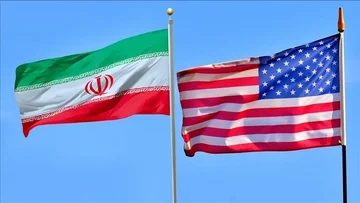
It's hard to speculate about that. In the United States, we are not dealing with a government camera that comes up with a stand in foreign policy. Depends on how the measure of political forces in Washington turns out. Bolton is an interesting political actor. He is determined against Iran. His attitude towards Syria will certainly be influenced by the conviction that Iran must be surrounded. That's why I believe Bolton will not be among those who definitely insist, that troops withdraw. Trump has problems with his foreign policy right now. The new Congress started working. At the moment it can happen that Trump does not insist on withdrawing troops from Syria, so the arm that is against attraction can gain more ground.
If Washington has plans to surround Iran, can Turkey be part of those plans?
Iran's isolation is for some actors in Washington very important. There is no doubt at this point there is expectations towards Turkey. I think it is initially expected, that to what extent Turkey can replace American troops. Among those interests is Iran, but another country, which Turkey has not diplomaticly violated. Turkey must re-enact its relationship with Iran in a competitive and conflict- laden atmosphere. Therefore, negotiations with Ankara are so important, they can change regional dynamics and balance.
Serhat Güvenc is professor of International Relations at Kadir Has University in Istanbul.
Gökhan Yivciger developed the conversation. / DW/