8 hours ago
The drastic decline of students in Kosovo, more than 11,000 less by 2004

Periskopi(8 years ago)
(8 years ago)The number of students enrolled in the first grade in Kosovo schools has dropped by over 11,000, compared to a decade ago. Of the 36 thousand and 129 in the 2004/2005 school year, in 2017/2018, only 27 thousand and 406 were registered. And this year, 2 thousand less than in [...]
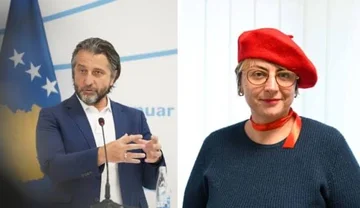
Even Science and Technology Minister Shyqi has claimed there is a decline in the number of students starting primary schooling. Even as he said this year, over 25 thousand first - grade students were enrolled. While statistics say a year ago there were 27 thousand and 406 students registered.
There is a drop of students from information coming to us, in all schools in Kosovo. That's for many reasons because of migration and other reasons. But it is still a satisfactory number for a new year for first-grade students”, he has expressed himself.
Education affairs expert Dukagjin Pupovci has argued the decline in the number of students with women's emancipation.
“If the birth rate is transmitted, it is in constant decline. I think it's, like, the price of emancipation, if I can say so, of society, in particular of women. Because a wife intends to work, to make a career, except to be a mother. And all of this affects the decline in children. Therefore, according to projections there will be many more people over 65 years of age than there are in today.”, he said.
And Isajl Kurteshi, a member of the Commission for Education, Science, Technology, Culture, Youth, Sports, Innovation and Intervention, says that along with the decline of nightliness, population migration has also affected the number of students.
“Sorting out two factors. One is migration of young people who are not finding jobs in Kosovo and are heading west. That's the age that's about raising families and having little children, and on the other hand, family planning. The new couples are now planning families much smaller than were planned 15 years ago and those 15 years ago when the number of children inside a family was much bigger than families planning with their children then”, he said.
And another one has given it to Kosovo Preress and the former education director in Pristina municipality, Arberie Nagavci, who has talked about rural areas and the capital in particular.
And what is obvious is that it notes reducing the number of students in certain regions and represents some disbalancing between urban and rural areas. For example, in Pristina there is no problem with reducing the number of students, exclusively in some rural schools, this number in other municipalities is getting smaller and smaller talking about the large movements of citizens more and more than within the country, leaving the Republic of Kosovo”, Nagavci said.
Otherwise, evidence shows that between 2005 and 2010, the number of students who started primary education was over 30,000, while in 2011/2012 dropped to 29 thousand, which continued to decline the following years.