13 minutes ago
AFP: Albanians and Presevo Serbs don't depend on correction of borders, want jobs

Periskopi(8 years ago)
(8 years ago)In the Presevo Valley, neither Albanians nor Serbs pay much attention and do not talk about changing the border between Kosovo and Serbia. So writes the AFP, which is quoted by other international media. They are busy trying to cope with life's difficulties, the newspaper writes away. “One of the poorest regions [...]
So writes the AFP, which is quoted by other international media. They are busy trying to cope with life's difficulties, the newspaper writes away.
“One of Serbia's poorest regions, Presevo in 2001, had a brief conflict when ethnic Albanian guerrillas took up arms seeking to join neighbouring Kosovo”.
Most ethnic Albanians declared independence from Serbia in 2008, a decision Belgrade still refuses.
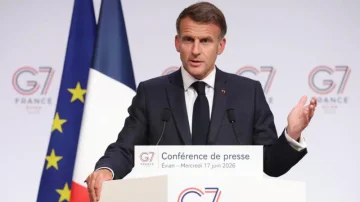
But this summer, the presidents -- the Kosovo one Hashim Thaci, and the Serbian one, Aleksandar Vucinq -- suggested that the correction of borders be finally resolved in their long-standing conflict.
The AFP says the media have reported on a possible exchange of northern Kosovo, inhabited mainly by Serbian ethnicity in the divided town of Mitrovica and the Presevo Valley, a majority ethnic Albanian area.
Of the 75,000 residents of the valley, 60,000 are believed to be Albanians.
War does not exist, but established between Serbia, Macedonia and Kosovo, Valley remains an area hit by high unemployment and pursued by Serbian security services.
Although there is no official figure, hundreds of soldiers and police operate in the valley.
Major Yugoslav-era companies have disappeared, such as the plastic factory “7 July”, the press factory “Grafofleks”, commercial firm “Budrunost” and a tobacco classification plant.
Unemployment is about 70%, official figures show.
The destroyed Presevo facades testify to the misery. The average monthly salary can barely reach $100 or $117.
In the other town of Bujanoc, where the mineral water factory Heba offers jobs, the average salary totals 200 euros, though it is half Serbia's average salary.
Without the prospect of work, we will all end up leaving”, Jonuz Kamberi, a 24-year-old Albanian, told AFP.
The unemployed youth spoke little about the exchange of territories between the two countries.
“Anyway, they will not get my opinion”, he said.
“An exchange of territory would be “bullshit”, said Bratislav Trajkovic, a 64-year-old Serb from the multiethnic village of Reljan.
“What we need is work, and all Serbs and Albanians think the same thing”, Trajkovic said.
Serbs and Albanians against border correction require work.
Both sides are under pressure from Brussels to conclude an agreement.
Serbia is negotiating to join the European Union. Kosovo wants to open membership talks with the bloc and also become a member of the United Nations.
In another town, Slavujevc, about 500 residents are Serbs.
55-year-old Stojan Nedeljkovic said he believed a new border line “will not solve any problems, either for Serbs or for Albanians”.
The main concern is that people have no means to live, Nedelkovic, the unemployed father of five girls, added.
They require the construction of a factory in these areas.
“A factory will change everything”, said Nenad Djordjevic, a metal worker.
But if nothing changes “all children will be removed”, Djerdjevic, who works in an Albanian-run factory, added.
Amend Aliu, deputy head of the Presevo municipality, said the Serbian state “endorsed simple demands”, as an industrial zone to attract investors, a new border crossing with Macedonia and Albanian-language textbooks.
Belgrade's “Disaction could spur nationalist aspirations”, he said.