7 hours ago
Trump says the US can launch “launch” bombs unless Iran “silles well”
Periskopi(13 hours ago)
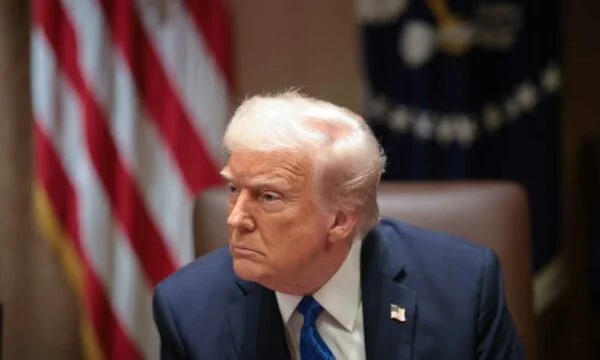
(13 hours ago)US President Donald Trump said the United States could resume military action on Iran if it is unhappy with implementing the memorandum of understanding that has reached Washington and Tehran, while world leaders have welcomed the possibility of ending the war.
Speaking during his meeting with Egyptian President Abdel Fattah el-Asi at the G7 summit in France on 17 June, Trump said the memorandum is only an initial agreement and warned that military actions could resume if Iran fails to meet US expectations.
It's a memorandum of understanding. And, if I don't like it, I'm going to start shooting at them, throwing bombs on the head”, Trump said.
He added: If they don't behave, we'll be right back to the bombing, right in the middle of their head, okay? Because they've been misbehaved for 47 years”
Also, Trump dismissed reports that the US will invest $300 billion in Iran under the memorandum, naming these claims as untrue. However, he said Washington would not prevent other countries from investing in Iran.
The American president also said the memorandum does not provide direct US payments to Iran. He also dismissed claims that the document requires the immediate removal of sanctions, stressing that any easing of sanctions would be linked to future negotiations and to meeting Iran's obligations.
On June 16th, Iran and the US announced that they had electronicly signed the memorandum of understanding aimed at ending the conflict. Both sides are expected to officially sign the agreement on 19 June in Switzerland.
G7 welcomes “Historical option” for Middle East
The news has been welcomed by leaders worldwide who have described it as a positive step towards the end of the war between Washington and Tehran, which began with American and Israeli air strikes on Iran on 28 February.
The G7 leaders welcomed the Framework Agreement between the US and Iran, praising it as a “historic opportunity to prevent Tehran from having nuclear weapons, according to a statement issued by members of the group on the morning of June 17th.
In the statement, it was said that it would likely be “to have peace and tranquillity throughout the region”.
The heads of these states, stressing their support for implementing the agreement's provisions, expressed readiness to help facilitate the process.
As for the Hormuz Strait, leaders stated that <x0 rights for free and unhindered passage, as well as the need for payment of corresponding tariffs, are the foundation of international trade”.
The G7 leaders cited the need for continuing negotiations on achieving a comprehensive and irreversible diplomatic agreement “, with the aim of facing Iran's “threats in the region and beyond” and ensuring that “Iran never has nuclear weapons”.
Meanwhile, according to a site for tracking ships, the first tanks carrying crude Iranian oil have left the Hormuz Strait since the beginning of the American naval blockade, which began two months ago.
US does not publish details of the deal
Despite calls for the US government to publish the complete text of the memorandum of Understanding, US Vice President JD Vance said on June 16th that details were not made public due to diplomatic sensitivity involving Tehran and regional mediators.
Speaking on The Magic Kelly Show, Vance said that “has several sensitive diplomatic issues” and that Iran, along with the mediators, including Pakistan and Qatar, has asked Washington to act carefully in the process.
“has sensitivity in the Arab and Muslim world, so we try to be responsible and consider them”, Vance said, explaining the delay in publishing the document.
Vance also stressed that the memorandum is only a preliminary framework and not a detailed agreement.
The US vice president suggested that the US is negotiating from a position of force and could withdraw if the upcoming talks fail.
If they abide by this agreement, I think it would be much better for the US and much better for Iran”, Vance said.
However, if they do not adhere to the agreement, the straits will remain open, we will still have caused huge damage to their nuclear programme, and in the end, as a country we can continue our”, he added.
President Trump has said 16 June that negotiations have entered the second phase, which he described as easier than the first phase.
The 60-day phase is expected to focus on talks on technical issues related to Iran's nuclear programme and rich uranium reserves of the Islamic Republic. /Radio Free Europe