5 hours ago
Greece-Turkey conflict affected Albania

Periskopi(8 years ago)
(8 years ago)Greece Turkey, the history of a non-friendly relationship. Today's crisis between the two Balkan countries of Greece and Turkey, early NATO members is the continuation of unprecedented crises that have accompanied relations between these countries. Relations between the Greek state and Turkish are having alternative periods of mutual animosity and reconciliation that [...]
Today's crisis between the two Balkan countries of Greece and Turkey, early NATO members is the continuation of unprecedented crises that have accompanied relations between these countries.
Relations between the Greek state and Turkish are having alternative periods of mutual animosity and reconciliation since Greece gained its independence from the Ottoman Empire in 1832. Since then, the two countries have faced each other in four major wars: The First Balkan War of 1912-1913, World War I, 1914-1918 and finally the Greco-Tourke 1919-22 War, which was followed by the Greek-Turkish exchange of the population and a period of friendly relations in the 1930s and 1940s. The two countries entered NATO in 1952. And after that, crises between Turkey and Greece have been unprecedented. Among the most visible were crises that have deepened and expanded so much that they have led these two countries to the brink of war.
Among these crises, we might mention what had started with Cyprus since 1950 as a result of the emptiness created by British exile from the Cypriot colony. Perhaps this is the moment Turkey becomes an actress in this crisis, following Thessaloniki incidents that sparked the fire of a chain of clashes between the two countries.
The crisis of even greater magnitude then dates back to 1963-1964, when Cyprus declared its aspirations to join Greece. Armed and supported contingents from Greece and Turkey actively participated in the fighting.
The 1974 crisis was one of the worst - the start of Cyprus's eternal conflict. Tension on the island began in mid-July 1974, following a coup against then president of Cyprus, Archbishop Makarios III. Greek Cypriot Makarios III has been president of the island since 1959, when the island was no longer a British colony. He became the first president elected in the Republic of Cyprus, after agreeing to give up any plan for uniting the island with Greece.
However, the coup was organised by a military junta in Athens, demanding what Greeks called the island's enosis (joining) with Greece. Makarios III left office, and the Greek junta named Nikos Sampson as de facto president of the Republic of Cyprus. Turkey, concerned about annexing the island from Greece, ordered the invasion. And a container of 33 Turkish ships, 30,000 soldiers and at least 30 tanks invaded the island from the north coast. So Cyprus became a ball game of great powers. And since then, the Cyprus conflict is a permanent state.
Conflicts on the Aegean Sea in the 1970s-1987 marked the expansion of conflict beyond the borders of Cyprus. In addition to disputes over the militarize of Greek islands off the Turkish coast, new conflicts were linked after 1973 over territorial waters, demarcation and continental willow and airspace. The main cause of the quarrel in the Aegean Sea was the discovery of oil basin deposits in opposing waters. In March 1987 the two countries were on the brink of war.
Turkey and Greece came to the brink of war in 1996 on several islands off the Aegean coast. On December 25th 1996, the Turkish ship “Figen” crashed accidentally into one of the islands. Upon learning this fact, the Greek navy came to his aid, but the ship's captain refused their help, saying he was in Turkish territorial waters. Greeks agreed to escort him to the nearest Turkish port, filling the event's process with the financial cost of their assistance. The event was held away from the public eye until January 20, 1997, when it was published in the Greek magazine “Grama”. The published history raised many tensions between the two countries on charges and threats from both sides.
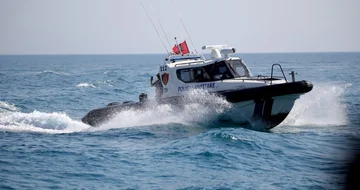
We are now in 2018, and again this year's beginning, an incident irritated relationships. The Turkish newspaper Hurriyet published the video of an incident occurring in January this year between a Turkish coast guard ship and an armed Hellenic Navy ship. The incident occurred in the area near Imise. On the video it looked like the Turkish ship Koycegiz quickly approached the Hellenic Navy ship Nikiforos, which had nearly led to a crash that could be fatal in relations between the two countries. The Turkish ship rushed to Nikiforo's side, creating contact with the Greek ship, but without influence.
The Greeks viewed this as a provocation on the part of Turkey, which is the second in a row. This wasn't the last incident. On January 28th, Turkish coastal guards blocked Greek Defence Minister Panos Kammenos from approaching islands in the Aegean Sea. Coastal guards warned the minister, who was heading towards the Kardak Islands and shortly after that the Greek ship left Turkey's territorial waters. The crisis once again restored all bilateral claims, starting 65 years ago. All claims have been rediscovered and all options for conflict are announced.
The two biggest losers will be the countries in the conflict themselves, which apparently do not want war, but have hardly given up on the power use option. The big lost will certainly be our Balkan region as well.
What are the real causes of Greece's conflict?
In history, Turkish-Greek relations have taken a fluctuating course. There have even been times when both countries have approached the threshold of war. Therefore, problems between Turkey and Greece occupy an important place in the two countries' foreign and defence policies.
The Cyprus problem from 1955 to the present day is the most important issue in Turkish-Greek relations. In 1974, the military dictatorship in Athens organized a stamp in Nicosia aimed at uniting Greece and Cyprus. Turkey has since been ruled democraticly as a guarantee power to protect Turkish Cypriots from attacks. So Cyprus became a ball game of great powers. And since then, the Cyprus conflict is a permanent state.
On the other hand, the Aegean issue is also one of the main issues causing the two countries to have a headache. As you know, the Aegean problem is four different problems, which are related to each other. These four problems are: 1) Determining the sea borders and the continental platform, 2) the breadth of territorial waters, 3) air space control, and 4) Greece's armed islands in the Aegean.
Many initiatives have been undertaken in the past with the aim of approaching Turkey and Greece. But existing prejudices between the two countries have always reflected negatively in these approaches.
Conflict with Greece/ Turkey, military base for protection
The several-year conflict Greece - Turkey seems to not end, taking into account the two countries' reactions after any event or incident between them.
Over the years Turkey has been somewhat calmer in terms of conflict, while Greece has not. At least the time Turkey was ready to act even militarily was in March with the idea of creating a military base.
Turkish media in March of this year announced the launch of work on the construction of a military base on the coast opposite two rocky islands, which Ankara recognises as Karadak and Greece named Imia.
The two rocks were the target of the next collision between the two countries. Tensions returned in January to 2018 when a Turkish ship crashed another Greek and then left on its banks.
Construction of the military base, according to Cumhuriyet, has started and will patrol a military ship all the time at Gumushluk Beach Bay.
Sovereignty over the Karadak Islands for Turks and Imia for Greeks is claimed by both countries.
Rescheduled tension has attracted international attention. Washington has called for calm and diplomatic solutions, calling on both sides to respect the 1996 agreement, when the two countries are found almost on the brink of war.
Overall in this several-year-old conflict with Greece, Turkey has never followed a combat and expansionist policy, while Greece has done the opposite.
Conflict with Turkey/ Greece ready to show “ ” at any time
Greece-Turkey relations seem never to be more friendly. Many initiatives have been undertaken in the past with the aim of approaching Turkey and Greece. But existing prejudices between the two countries have always reflected negatively in these approaches.
First of all, there is a “in Greece for a long time The Cypriot syndrome” and there have been concerns that a peaceful operation, similar to what Turkey organised in 1974, could also be repeated for Turks living in Western Thracians.
While Turkey has never followed a combat and expansionist policy. On the other hand, most Greek academics and politicians ignore Turkey's rights and interests in the Aegean, as the Aegean Sea views it all as a Greek sea. Due to Ankara's demands regarding the Aegean Sea, several districts in Greece often accuse Turkey of pursuing a enlargement policy towards the West. Even developments in the context of the Cyprus issue also contribute to keeping antiTurkish prejudices fresh in Greek public opinion.
Due to Turkey's perception of the threat, Greece has made significant military spending for years. In recent years, it is understood that Greece's military expenditures have been reduced due to the economic crisis. In 2016, the amount Greece had earmarked for military expenditures has been the size of 2.6% of the country's domestic production Bruto (PBB). In EU member states, this ratio (for GDP protection expenditures) averages 1.5%, while in Turkey it is 1.7%.
Greece even celebrated through a military parade in Athens on March 25th of this year, the 197th anniversary of independence. The festivities were held throughout the country, but the climax was the one in the Greek capital, where the largest military parade of recent years was held, where the Hellenes demonstrated their military power in a period of occasional tensions with Turkey.
Heavy military artillery was exhibited in front of Greek President Prokopis Pavlopoulos as tanks on the road, helicopters and aircraft in the air. This year's speeches by all representatives of the Greek state had a special symbol, following provocations and episodes with Turkish neighbours, providing an open message of support to the two Greek officers investigating in Turkey.
Defence Minister Kamenos sent a powerful message of unity to the Greek people for Turkey, stressing that the Greek army is ready to respond to any challenge the threat of sovereignty and territorial integrity, for the protection of peace in the country.
In Turkish public opinion, the belief that Greece is trying to solve the problems of Cyprus and the Aegean according to its own interests is widespread, using the European Union as an instrument.
How It Has Affected NATO in resolving the crisis between Greece and Turkey?
Today's crisis between the two Balkan countries of Greece and Turkey, early NATO members is the continuation of unprecedented crises that have accompanied relations between these countries. Since their membership in NATO, by many scholars, the current crisis is seen as the fifth crisis, with trends towards escalation in conflict.
The biggest paradox in the analysis of crises between Greece and Turkey lies in the fact that both are NATO members integrated into the alliance's political and military structures and participants in joint operations. And, as it is known, NATO is the most powerful security organisation, but in this case obviously challenged not only from the outside, but from within, from its members.
A number of questions arise in this situation: How does NATO operate in preventing crises among countries within the alliance? Does the organisation have sufficient and effective mechanisms to manage internal crises? Do NATO consider the crisis between Greece and Turkey a challenge to its mission? Can NATO make the role of reliable and powerful moderator in this crisis? Do all NATO members have the same assessment of the crisis, and does the assessment affect maintaining the Alliance's cohesion? Will there be other actors who can engage in the management of the current crisis?
The only goal is to recognise and understand NATO's role and influence in resolving internal crises.
The current situation in NATO, by many analysts, is assessed as no longer an optimist. The crisis between Greece and Turkey adds dilemmas to NATO ranks, and is challenging him for his role and opportunities. It is estimated that NATO has only three structures that can be engaged in crisis cases: Secretary General, Atlantic Council and NATO Commander.
But how was Greece and Turkey found in NATO? The initiative to join the alliance came neither from NATO nor from the West, but from Greece and Turkey itself as two states reflecting their priority interests in the Western alliance. The first applications of these two Yugoslav Mediterranean states were not accepted in November 1948. They were admitted to NATO in 1952. Did he have complete information? NATO for continued Greek-Turkish tensions? Of course I do. But, at the time of their NATO accession, potential bilateral tensions between Turkey and Greece were not considered issues either in Washington or the NATO Council.
NATO's confrontation with crises between Turkey and Greece has been continuous.
Among these crises, we might mention what had started with Cyprus since 1950 as a result of the emptiness created by British exile from the Cypriot colony. That was the time it showed that NATO was not prepared in dealing with the internal conflicts of its allies. NATO not only did not resolve the crisis, but showed major differences and a lack of unity among allies.
The crisis of even greater magnitude then dates back to 1963-1964, when Cyprus declared its aspirations to join Greece. NATO again found itself unprepared and with major bureaucratic obstacles to action. In these conditions, looking at the danger of an inevitable Greek-Turkish war, President Johnson sent an extremely severe ultimatum to Ankara and threatened to withdraw NATO protection from Turkey if it did not give up its combat plan. The success of war prevention is dedicated to the United States.
The 1974 crisis was one of the most serious where the Greek military junta's policy for Cyprus had the most severe reaction on the part of Turkey that did not hesitate to deploy troops in the northern part. Both countries mobilised forces for war. This conflict sometimes resulted in direct confrontations between the regular armed forces of the two allies in NATO. Even in this case, although NATO structures tried to influence the two opposing allies to continue dialogue to prevent an open war, the results were not optimistic.
Conflicts on the Aegean Sea in the 1970s-1987 marked the expansion of conflict beyond the borders of Cyprus. In March 1987 the two countries were on the brink of war. Despite NATO through the Secretary General, but also the NAC tried to mediate by seeking to settle differences between them peacefully, it threatened to use possible “sanctions” in this case. The State Department again was the one who gave the most decisive and effective influence.
Turkey and Greece came to the brink of war in 1996 on several islands off the Aegean coast. Again, NATO could not become an actor for resolving the crisis. The numerous dyvergences among Western allies blocked the alliance to take a firm and firm stand. It was the administration of President Bill Clinton who avoided a possible war.
The year 2018 and Greece's crisis continues. The causes are the same, perhaps curving into even more severe forms. The main media partners remain again: NATO (in a difficult position); The United States (in its dilemmas); Western powers and other geopolitical actors who will try to seize every kind of opportunity to take advantage of the situation.
In all, it can be said that although the North Atlantic Alliance is unable to resolve conflicts between its members, simply because of its forms, it has tried to influence long term on the most fundamental principles of creation and existence. But, the Alliance has neither in format nor in a mission intended to engage in internal crises, among its members.
Despite this fact, NATO, in many cases for avoiding crisis resolution, is based on triangle: Secretary-General- NATO's Atlantic Commander Council. However, the effectiveness of this triple is also closely defined by the engagement of key actors, the US and major powers within NATO.
Can Albania be affected by tension in Ankara - Athens?
The several-year-old Greek-Turkey conflict seems to not end, especially after this year's events. Such conflict brings consequences for the two countries, but not only for the entire Balkans. But can Albania be affected by these tensions? And if so, how?
The show “Kastriot Myftaraj's analysis on February 26th of this year after several incidents, and after the show that the Greek president had delivered a week earlier at a ceremony in Ionina, boarding a military tank.
Myftaraj: A very interesting event happened last week. Greece's president, Prokopis Pavlopoulos, in a very special act for a statesman, head of state, at a ceremony held in Janina boarded an active military tank in the middle of the city with a Greek Army officer, and that is to deliver a kind of militant message, threatening against enemies endangering Greece.
It's natural that countries have an army to protect themselves from dangers, and at certain moments of major dangers comes the head of state himself and delivers such messages. Special is the place she was chosen to deliver the message, Janina. Albanian and foreign media delivered the news with interest, with curiosity but linked it to the escalation of military tension between Greece and Turkey in the Aegean Sea. Recently, there has been increased military tension with threats between military planes and ships on both sides, and this has been due for the Greek president to find fit to give Turkey but to Europe such a message.
Then he said: Greece is a quiet force that respects its neighbours but is not intimidated by its enemies and its Armed Forces are able to prove it at all times.
At the moment, you cannot say that Albania poses a military threat to Greece. The Military Forces report is absolutely in favour of Greece, Albania practically has no army, no military shock force, no defence force. Greece is a highly armed country with great shock force and military protection, with modern weapons of all kinds.
Greece is threatened by Turkey in the moments we speak, threatening statements from Turkey have come and are countering Greece's ambition to push the sea border, permanent these that occasionally explode into crisis. To push the maritime border so that it descends to the coastline of continental Turkey, I mean the Aegean islands, Greek islands very close to Turkey. Turkey has made accurate threats and military action to stop it or to let it know that if the other side continues that way, it will invade the islands. Turkey's permanent threat.It is the conquest of islands near Turkish territory, and Greek Cyprus at first in the event of this conflict.
Greece knows that if the conflict between the two sides takes that lead, Turkey is very easily able to invade islands close to its own continental territory.
In this case Greece remains as a threat to a frontal attack in that area of Istanbul in the north, on the land border between the two countries, but this would be a huge human attack, which Greece cannot afford. It does not have the country's moral power to lose 100,000 soldiers in a frontal war on the Greek-Turkish border with the main goal of Istanbul.
He returns and does some kind of blackmail and to the EU, doing this tank ceremony in Ionia that we attack. If the threat was addressed to Turkey, it should have been either in any of these islands near Turkish territory or in a city bordering Turkey north of Thrace. If it were addressed to Macedonia, which is unlikely, it should have been done in a city bordering Macedonia.
It has been made in a city far from the borders of Macedonia, Turkey, in a town very close to Albania. With this. Greece says: If Turkey takes me to the islands I will invade Albania.
Disregard sovereignty for violation of sovereignty. That as far as it will take over, southern Albania or higher, it is a matter that depends on and on the great powers that Albania has no military power to defend itself. To this clear Greek threat coming from the head of state silences the Albanian state, political parties -- the opposition -- were held in silence by the government.
Any serious state should have called Greece's ambassador to Tirana within the day. He should have said: What is that ceremony over there in Ionina, with the head of state riding up the top of the tank? To whom do you address the enemy that you will fight, we have no known.
And Greeks say the law of war is a routine, it's not a cause for military action of modern times. The same way it should have acted, and the Albanian ambassador to Athens, by order of the government, should have gone to the foreign ministry to ask for explanations.
The fact that the Albanian state is silent is too heavy and compromising for the government in the first place shows that the Greek president when making that statement knew there would be no reaction. That if there was a reaction and there was a loud noise she wouldn't make that statement.
Albania was right and has the right to urgently call the NATO political council meeting and ask Greece for an explanation. The Greek-Turkish military crash is a very possible thing to happen. And now we know what Greece will do, it will conquer at least southern Albania in this case.
The Ankara conflict, Athens, Albanians protect the Greeks?
The situation has been very tense between Greece and Turkey in recent months with constant friction in the sea, air and land. Greeks and Turks have not yet weighed among themselves on several islands in the Aegean, while the internal problems of both governments give even more incentive to artificially increase tensions abroad.
In March of this year, Turkish border guards arrested members of the Greek Army in the border zone between the two countries on the Evros River (Turkishs call him Meric). It seems to be a common event that has been resolved in a few hours before, but this time the situation changes.
Since those days, Albanian boys serving in the Greek Army were contacted, right in the border area with Turkey, where the incident took place, receiving preliminary information that one of the arrested soldiers was suspected of Albanian origin, which later proved untrue.
It seems incredible, but it was Albanians who were protecting the Greeks from the Turkish danger, and this did not happen by any chance.
This, after learning that 40 percent of soldiers found in the area between Turkey and Greece were exactly sons of Albanian families who had emigrated to the Hellen State years ago.
“Here we are, on the border of Turwa, in Evros, are 40 percent Albanians. Greeks have friends and stay in Athens, while they bring us to the border with Turkey at the height of tensions. As I learned here, this is the policy of Minister Kamennos, who heads a nationalist party and has targeted all Albanians who have Greek passports”., confessed to an Albanian youth serving in the Greek Army.
“KThe last 20 has gotten worse. When it took place, the ship (a Turkish ship struck the Greek ship on the Imya Islands) was sent every day with tanks, rockets, and heavy weapons to the” border line. He said it.
“From officers here we are treated well, but 95 percent of Albanians who make the army in Greece behave to serve at the border with Turkey”After that confession.
It was learned that the last platoon of young recruits sent to the border area consisted of 8 Albanians and only 4 Greeks.
Albanians make up a considerable number in the Greek Army, for which the situation has deteriorated with the arrival of Panos Kamenos at the head of the Ministry of Defence.
With the recruited, they are sent to Greece's most problematic area, as is the exact Greek-Turkish border, where the risk of any conflict is too great with the rigors of language by official Ankara.
Strange, but true...
Why is Greece viewed as a loser in the conflict with Turkey?
Prime Minister Alexis Tsipras said in March this year, following several incidents with Turkey, that Greece would not tolerate any moves from Turkey after Turkish and Greek coast ships crashed near the disputed islands in the Aegean Sea.
He said: “Our message, now, tomorrow and always, is clear... Greece will not allow, accept or tolerate any challenge to its territorial integrity and sovereign rights”. “Greece is not a playground,” Said Tsipras.
The crash involving two ships occurred on the island of Imi, known as Kardak in Turkish. Each side blamed the other for the incident.
Turkey and Greece, NATO allies, have been at odds with a host of issues from ethnically divided Cyprus to sovereignty over airspace and flights. They came to the brink of war in 1996 in a dispute of sovereignty over the islands, but tensions have been alleviated since then.
Noting that Greece's eastern border is also the European Union's, Tsipras said: “Challenges and aggressive rhetoric against the sovereign rights of an EU member state oppose EU in its entire body”. Tensions between the two countries have been on the rise after a Greek court blocked the extradition of eight Turkish soldiers, whom Ankara accused of involvement in a failed coup against President Tayip Erdogan in 2016.
And after those events, Erdogan's Turkish adviser said Greece was “as a fly fighting a giant”.
The adviser said he “has no doubt” that the US has a plan to make Greece attack Turkey while its army is engaged in Syria. Turkey's response, Yigit Bulut said, will be difficult, adding that Greece does not account for Turkey's power. It would be like a “miz that would fight a giant flying”, he said, and warned that it would have dire consequences for Greece.
Bulus made similar comments before saying We will break the weapons and legs of every officer, prime minister, or any minister who dares enter Immi, “said Bulut.
Thus, it is clear that Turkey “does not fear” Greece, and that in this conflict Turkey desperately sees losing Greece.