a few seconds ago
Euphoric, sceptical Preseanors with idea of joining Kosovo

Periskopi(8 years ago)
(8 years ago)Deutsche Welle has visited the Presevo Valley to look at the atmosphere after statements on border correction. A kind of euphoria is seen in Albanians. Right? Work day in Presevo. No room for parking. Although almost nowhere does it find a shadow to protect against the blazing sun, roads are crowded. [...]
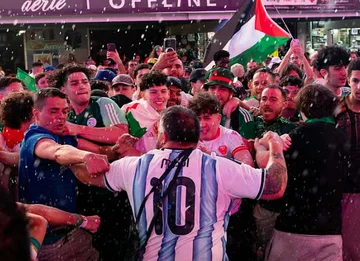
Work day in Presevo. No room for parking. Although almost nowhere does it find a shadow to protect against the blazing sun, roads are crowded. Coffees full, and around tables you almost see only men. Music with a loud voice, in Albanian, is heard everywhere. In cafes as well as in cars. A caravan of Albanian flags passes through the street.
Recent statistical data shows that over 95% of residents in Presevo are Albanians. Very rarely do you hear the Serbian language on the street. The city market is a mess. “Isvolite” (execut), says an elderly woman. But once I hear I'm a journalist, the interest in communication disappears.
How do you think we're living here? Look at the names of the streets, of the shops... See any Serbian names? Do you think we're in Serbia? I don't want to say anything more, because then nobody's gonna buy any vegetables from me”, she says. The same concern is shared by a man near her.
Albanian children without textbooks”
Most people on the street are quiet. So says Mayor Shqirim Arifi, who five years ago has returned from Germany to Presevo. He's in charge of mayor for the second time. Arifi doesn't speak Serbian, so we need to communicate with the help of translators.
“Minds are divided. Some think that joining Kosovo would mark the realization of past dreams, others are sceptical”, Arifi tells Deutsche Welle. “Yet the position of Albanians here differs greatly from that of Serbs in northern Kosovo. They have legal reliefs, have the right to make decisions for police leaders, in the courts have influence, and also in the Kosovo Parliament, they have reserved seats”.
Not even three direct questions are enough for Arifi to firmly say what he thinks about the idea of joining Kosovo. He says he deals with real policy and will carry out the will of the people expressed 26 years ago in the referendum, when Albanians have been declared joining the Presevo Valley with Kosovo. But Arifi willingly speaks of the possibility that Albanians will be employed in the Energy Corporation of Serbia (EPS), in the Post, at border crossings, customs, cadastre, Telekom... Arifi claims that almost only Serbs work in state enterprises.
We're a separate municipality and we should have independent courts, but we don't. We don't even have the Attorney General. Albanian children do not even have textbooks and are forced to take notes at school all the time. We are now in democratic Serbia, but do the same standards apply to all? We had no drinking water. Had it not been for the international community, this problem would never have been solved. Why? Is this democracy or nationalistic consciousness?
In Bujanoc the situation is a bit different. A little less than 13,000 Serbs live there and just over 20,000 Albanians. But that does not change the situation on the ground at all. Many flags of Germany, France, the US, the EU, but not Serbia's, can be seen on the streets. Two city and EU flags have been placed in the municipality building. The atmosphere in the mayor's cabinet, Shaip Kamberi, is the same as the one on the street. Here you can find all the flags, but not that of Serbia.
The Presevo Valley is a forgotten theme for years. This is the first time this issue is being internationalised and I hope President Thaci will keep his promise that this issue will be opened even in the Brussels negotiations”, Kamberi tells DW.
“We have expected that with the opening of chapters 23 and 24 positive things will happen to us and that human rights, minorities, rule of law will be established... It now appears that the EU is dedicated more to Chapter 35 and reports with Kosovo. So we have asked President Thaci and the Kosovo delegation to open this issue in dialogue with Serbia”, Kamberi says.
Kosovo has forgotten us”
Kamberi, who speaks perfectly Serbian, also speaks of “definitions”. He is skeptical about the exchange of territories, in particular if even after the establishment of new borders in Serbia remains a large number of Albanians. This would cause exile and a new humanitarian catastrophe. Kamberi says he will not be involved in negotiations between Serbia and Kosovo.
Regarding Aleksandar Vuciqi's promise that for the eventual agreement with Kosovo, citizens should finally decide in the referendum, Kamberi says: “depending on the question, Albanians will also participate in the referendum. But authorities in Belgrade have all mechanisms to influence the outcome of the referendum if they want to do so. ”
The Pristina has completely forgotten us. And now suddenly you're crying for us”
We return to Presevo and talk to a local journalist who is also human rights activist, Belzim Kamberi. He is surprised at what is happening recently, with the euphoria created. Kamberi recalls that Albanians in southern Serbia have a huge problem -- do not recognise diplomas achieved in Kosovo. Kamberi doubts that Thaci and Vucci may agree on important things when it is known that they have not even agreed on recognition of diplomas.
I think the main word for the fate of the Presevo Valley must have people living here. Serbia has first had to speak with Albanians here, as a state that speaks with its citizens. This should happen even between Kosovo and Kosovo Serbs. How can you have a dialogue “that's up”, if you don't have dialogue between the state and its citizens?”, Kamberi asks in conversation with DW.
They're creating euphoria. You know what? Belgrade has been discriminating us for years, and Kosovo has forgotten us. Full of 20 years, Kosovo has given no cents to the Valley. That's very important! That means Pristina has completely forgotten us. And now suddenly you're crying for us. That sounds weird to me. I'm afraid they're shopping with Belgrade”, Kamberi says.
Directed euphoria can bring Kosovo and any more argument in talks with Serbia. What, though, will bring to the citizens of this region? Camber shakes his head: ”