15 minutes ago
Crossing referendum threshold, challenge for Macedonia

Periskopi(8 years ago)
(8 years ago)Macedonia's government has announced that the referendum campaign will have more information characters than it will be oriented to convince citizens to vote in favour. Political policy officials say that to be successful in the referendum, the challenge will be reaching the election exit threshold [...]
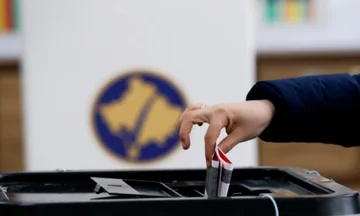
Political affairs recognisers say that to be successful in the referendum, the challenge will be reaching the 50 per cent voter exit threshold, as much as the citizens' conviction to vote in favour.
One million and 800 thousand voters are registered on Macedonia's election list. While experts have consistently stressed that this number is unrealistic for a country that has 2 million inhabitants. This, they say, makes the threshold of 50 plus one percent of the electoral body problematic, for the referendum to be successful, and that half of those appearing in the vote should be positively expressed.
Albert Musliu from the Association for Development of Democracy recalls that for the arrival of the 50 per cent threshold, he has presented difficulties in presidential elections, so parties used this fact as a topic and, during the adoption of legal changes, reduced it to 40 percent.
The “remember that in the election of the president of state, the provision of the electoral body, which must go out to vote, dropped from 50 percent to 40 respectively. The achievement of the 50 - percent cepsus may present concern”, Musliu says.
Opposition Party, V MRO-DPMNE has not yet been hinted at what position it will take regarding the referendum.
This party says that after consulting with membership, it will decide whether to invite the electorate to vote against or boycott the referendum as a whole.
VMRO-DPMNE estimates that the referendum question that “A are for Macedonia's membership in NATO and the EU with the acceptance of the Agreement with Greece” is manipulative and has demanded that it be clear, asking citizens that “A are for changing the name of the state in Northern Macedonia”.
Political Affairs Recognitions Say Largely, Success of Referendum Will Depend on V Position MRO DPMNE's.
“The DPMNE, though it may call for citizens to vote against, yet I believe it will not allow for the luxury itself that a matter that is so important for the country's future, invite for boycotts and then be attacked as a party that has stayed out of the process. So I believe that vulnerability can actually be achieved and on the other hand, it seems that the Government has no concern with the outcome of the referendum, because all surveys show that citizens have expressed pro-questioning question to referendum”, Musliu says.
On the other hand, former diplomat Denko Malevski says certain pro-Russian circles want to undermine the referendum process with the opinion that the pro-communal referenda are Albanians by over 90 per cent, while Macedonians almost have an equal pro attitude and against changing the name of the state, in the function of the country's Euro-Atlantic prospects, stressing that Macedonia's fate would decide Albanians.
“Must clearly be understood that all citizens of Macedonia share the same fate in this state, and what is most important is how the majority of Macedonia's citizens will be determined to vote”, Malevski says.
He says he does not hold the thesis imposed on media and social networks on the eve of the referendum, presenting the positions of individuals designated that Macedonia is forced by decision-making centres at any cost to make concessions to join NATO and the EU does not stand.
I think that Macedonia is ahead of a historic perspective and in no way dare I unleash this chance. I believe that citizens will recognize this and make it to referendum”, Maleski says.
The electoral list in Macedonia has been consistently seen as problematic by nongovernmental organisations and proved international, promoting distrust of citizens, while the state enters the referendum body on September 30th without applying OSCE and ODIHR recommendations.