3 minutes ago
VV: National issues do not disappear, nor do they take final solutions with EU integration

Periskopi(8 years ago)
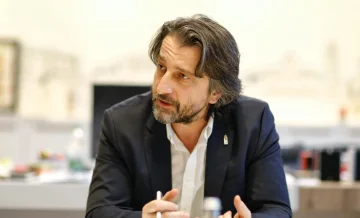
(8 years ago)Vetevendosje movement has organised the second table under the title “in Tirana today Albanians and European integration”, as a continuation of the table held on May 15th 2018 in Pristina with the same title. As in Pristina, academics, researchers, artists, journalists, civil society activists, professionals of [...] participated in the table.
As in Pristina, academics, researchers, artists, journalists, civil society activists, professionals of various fields and representatives of political subjects participated in the table, it is revealed through a communique for the media, broadcast Koha.net.
It further becomes known that the table in Pristina was opened by Vetevendosje Chairman Albin Kurti, who, among other things, explained the 5 resolutions coming out of Pristina's table: (1) the need for an integration process seen and appreciated as the process of becoming a member and not of going to the EU; (2) the strategic importance of unilateral integration of the Western Balkan countries; (3) economic development and justice as priorities; (4) the harmonisation of a common policy of Albania-Kosovo and Albanians in general; and (5) working with five EU member states that still do not recognise Kosovo.
The table participants in Tirana expressed agreement with the conclusions drawn from the table in Pristina, adding additional consensuss as follows:
1. National issues neither disappear nor receive final solutions with EU integration. The actual case of Catalonia in Spain is an example of that fact.
2. One of the biggest obstacles to Albanians' integration in broader processes, including the one in the EU, has been the status quo in Albanian political representation, which must change by changing the quality of representatives in Parliament.
3. Misunderstanding and misinterpreting of the European Union only as a technical process from abroad, and as formal standards oversight it has not allowed Albanian society to express itself actively on the basis of the elements and constituent capacities of integration.
4. One of the most important European integration drivers starts with the fuller recognition of capacities as national collectiveity, rather than as instrumental use of civil, political and international actors.
5. Co-ordination and the unification of Kosovo and Albanian markets and products.
6. Global cultural integration is a must to be realised in parallel with European integration.
7. The platform of the national issue is not missing, as it insists on the dominant speech, but it has been announced that in the Prizren League, therefore today it should not be reduced to government exclusive, but to a joint political intellectual act.
At both tables organised to date on this topic by the Vetevendosje Movement, the great need Albanians have to discuss openly and consistently regarding European integration has been clearly identified, beyond the solid and strict, technical and bureaucratic formulas often used on this topic by Albanian political elites and EU officials in our countries. We will continue to enable uncomplexed discussion according to the idea and not according to narrow interests that disrupt politics itself.