11 minutes ago
Thaci invites parties to face-to-face, dialogue with Serbia vows to lead it on its own

Periskopi(8 years ago)
(8 years ago)Despite the opposition's lack of political support, Kosovo President Hashim Thaci is ready to report and face parliamentary debate in the Kosovo Assembly about the process of talks with Serbia. Over the next week, he has warned a meeting with the political spectrum in an effort to form a team [...]
Over the next week, he has warned a meeting with the political spectrum in an effort to form a new, comprehensive negotiating team. Thaci is inviting everyone around him, meanwhile, no signal has been given that he is willing to launch his lead role in the dialogue.
Currently, it is in search of securing support from a larger number of political parties -- primarily opposition -- to lead the final phase of dialogue with Serbia, which is being facilitated by the European Union and is said to conclude with a legally binding agreement on both sides.
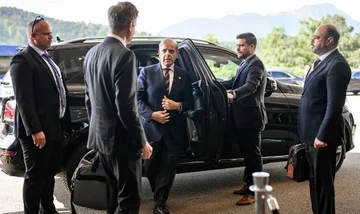
The office of the Kosovo president has indicated that the president, Hashim Thaci, will be ready to report to the Assembly whenever asked of him regarding his meetings in Brussels with counterpart from Serbia, Aleksandar Vuciq.
President Bekim Colak told Radio Free Europe that the president is very prepared and willing to lead this process responsibly, institutionally and transparently.
He stressed that for this purpose, he has publicly invited all political parties, civil society and media to be involved in the process.
“As far as accountability is concerned, I think this is a vital element in all of this process, and given this consideration to the president of the Republic of Kosovo is willing to report or inform the Kosovo Assembly of the prosperity of the dialogue process, so many times or whenever the Kosovo Parliament demands such”, Colak said.
Transparency over Brussels dialogue and reports in the country have also asked Prime Minister Ramush Haradinaj.
But, while Thaci is ready to report to the Assembly, the opposition has another problem with Kosovo president. Opposition parties are urging him to withdraw from this process, denying him the leading role in these talks.
In an interview for Radio Free Europe, Democratic League of Kosovo deputy leader Lutfi Haziri had declared that the president is exploiting constitutional mechanisms that give him legitimacy in the process, but has underlined, dialogue without the opposition would fail.
Meanwhile, Dardan Sejdiu, deputy of the opposition subject, the Social Democratic Party, says the president of the Republic should take into account that the main role in the dialogue should be the Kosovo Parliament.
“directly must be requested report. At the same time, as reported The PSD, the Assembly should be the host of dialogue and even platforms and team and after each meeting should be reported to the Assembly. Even at the PSD table, we've proposed this plan. This is what we think ensures that the national interests of the Republic are protected, not the interests of the president”, Sejdiu said.
On the other hand, in the Alliance for the Future of Kosovo, the party -- which is headed by Prime Minister Ramush Haradinaj -- say the Parliament should have its role in dialogue, but rather in the process of adopting or ratifying the agreement or agreements that can be reached.
AAK MP Muharrem Nitaj told Radio Free Europe that under the Constitution, the country's president is obliged to report the Assembly once a year, but since it is about an important process for the country, according to him, the president must be binding, if he will be at the head of the delegation for talks with Serbia to report to the Republic Assembly after any meeting.
“Whatever agreement can be reached between the Kosovo delegation and that of Serbia, in negotiations taking place in Brussels, it is worthless for us unless previously it is ratified in the Assembly of the Republic of Kosovo”, Nitaj said.
After the last meeting in Brussels, among the presidents Thaci and Vuciq, which took place on 24 June in Brussels under the relief of EU High Representative Federica Moghrini, the common conclusion was for the dialogue to intensify so as to reach a final agreement that would lead to the normalisation of reports between Kosovo and Serbia.
The hottest point of these talks remains the issue of establishing the Association of Serb majority municipalities. Belgrade insists that this association, or this community as they call it in Belgrade, have executive competencies, while Pristina has agreed that the association will be a liaison of municipalities inhabited by representatives of the Serbian community, without any executive competence.